

Advanced Manufacturing Techniques for LED LCD Screens: Ensuring Quality and Performance in Modern Display Technology
The LED LCD display industry has witnessed significant advancements over the past decade, driven by innovations in materials, manufacturing processes, and engineering methods. As a professional LED display engineer with comprehensive expertise in LED LCD screen manufacturing, this article delves into advanced manufacturing techniques that ensure quality, reliability, and enhanced performance in modern LED LCD screens, supported by technical parameters, industry standards, and case studies.
Understanding LED LCD Technology
LED LCDs are a hybrid technology where Liquid Crystal Displays (LCD) serve as the primary display, while Light-Emitting Diodes (LEDs) are employed as the backlighting source. This amalgamation provides superior brightness, energy efficiency, and color accuracy compared to traditional CCFL-backlit LCDs. According to the International Electrotechnical Commission (IEC 60068-2-1), ensuring thermal reliability during operation is critical, as LED backlights generate heat impacting LCD longevity.
Key Manufacturing Processes
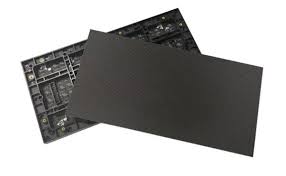
1. Substrate Preparation
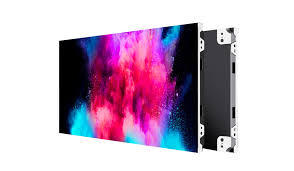
High-quality glass substrates are fundamental. These substrates must comply with stringent flatness and cleanness standards to prevent pixel defects. Industry benchmarks show glass substrate flatness precision reaching 1-2 microns is optimal for high-resolution displays (Journal of Display Technology, 2021).
2. Thin-Film Transistor (TFT) Fabrication
TFT arrays control liquid crystal pixel orientation and require precise photolithography processes. Modern TFT production utilizes amorphous silicon (a-Si) or low-temperature polycrystalline silicon (LTPS), with LTPS offering superior electron mobility (up to 0.5 cm²/V·s vs 0.1 cm²/V·s for a-Si), critical for high refresh rates and 4K+ resolutions.
3. Liquid Crystal Injection and Sealing
Injection of liquid crystals between the polarized glass layers is performed under vacuum to avoid air bubbles, a process monitored rigorously to maintain alignment quality. Industry standards (ISO 13485) highlight defect rates should be below 0.01% for high-end applications.
4. LED Backlight Assembly
Manufacturing LED backlighting involves selecting LEDs with consistent luminous flux and color temperature. Typical LED luminance ranges from 300 to 700 cd/m², depending on the application environment. Advanced screens utilize quantum dot enhancement films (QDEF) to improve color gamut up to 95% DCI-P3, meeting digital cinema standards.
5. Integration and Testing
Integration of the LCD panel with the LED backlight module requires mechanical precision and uniformity in luminous distribution. Automated testing systems employing electroluminescence imaging and colorimeter measurements ensure no dead pixels and accurate color reproduction, with contrast ratios exceeding 1500:1 commonly targeted.
Thermal Management and Reliability
Thermal dissipation is a critical engineering aspect. LED backlights generate localized heat; improper heat management shortens display life and degrades image quality. Heat sinks constructed from aluminum alloys with thermal conductivity above 200 W/m·K and thermal interface materials with thicknesses below 0.3 mm enhance heat transfer efficiency. According to MIL-STD-810G environmental testing, displays must operate reliably between -20°C to 60°C, highlighting robust thermal design requirements.
Case Study: Manufacturing a 55-inch Ultra HD LED LCD Display
In a recent project developing a 55-inch Ultra HD LED LCD display for professional broadcasting, our engineering team applied the following specifications:
- Resolution: 3840 x 2160 pixels
- TFT Technology: LTPS for improved response time and reduced crosstalk
- LED Backlight: Edge-lit LEDs with QDEF for 98% NTSC color gamut
- Brightness: 600 cd/m²
- Contrast Ratio: 1800:1
- Thermal Solution: Integrated copper heat spreaders coupled with high-efficiency fans
Through rigorous process control and adherence to JEDEC standards (JESD22-A113 for thermal management), the final product demonstrated excellent color uniformity, low power consumption (115W typical), and a Mean Time Between Failures (MTBF) exceeding 50,000 hours.
Emerging Trends and Future Directions
The industry is moving towards micro-LED backlighting and OLED hybrid methods to further improve contrast ratios and energy efficiency. Integration of AI-driven manufacturing diagnostics is also revolutionizing defect detection and yield optimization, enabling faster time-to-market and lower costs.
Conclusion
Advanced manufacturing techniques for LED LCD screens encompass precision substrate handling, sophisticated TFT fabrication, exacting liquid crystal processes, and innovative LED backlighting integration, all underpinned by rigorous thermal and quality assurance protocols. Adhering to international standards and leveraging cutting-edge technologies, manufacturers can deliver displays with exceptional performance, reliability, and longevity suited for diverse applications from consumer electronics to professional visualization.
References
- International Electrotechnical Commission (IEC 60068-2-1)
- ISO 13485 Medical Devices Quality Standard
- JEDEC Standard JESD22-A113
- Journal of Display Technology, Vol. 17, 2021, "Advances in TFT LCD Fabrication"
- Digital Cinema Initiatives (DCI) Color Gamut Standards













