

Comprehensive Insights into LED Display Technology: Applications, Advantages, Challenges, and Future Trends
LED display technology has evolved significantly over the past decades, becoming a cornerstone in digital visualization across diverse industries. As a professional LED display engineer with extensive experience, this article delves into the multifaceted aspects of LED displays including their practical applications, technical advantages, common challenges, and emerging trends shaping the future.
Practical Applications of LED Displays
LED displays are widely used in various environments due to their high brightness, scalability, and flexibility. Outdoor advertising is one of the most prevalent uses, where large-format LED billboards deliver vivid and dynamic content visible even under direct sunlight, thanks to luminance levels often exceeding 5000 nits, complying with standards like IEC 62471 for eye safety. In indoor settings, LED video walls enhance conference rooms, retail spaces, and entertainment venues, exhibiting pixel pitches ranging typically from 1.2mm to 4mm, allowing for extremely high resolution and immersive visual experiences.
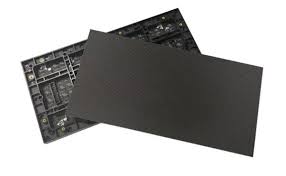
Transportation hubs, sports arenas, and control rooms rely on LED displays for real-time information dissemination. Additionally, emerging applications include augmented reality (AR) integrations and wearable LED tech for immersive user interfaces.
Advantages of LED Display Technology
LED displays offer several performance advantages over traditional LCDs and projection systems. Firstly, LED modules achieve superior color accuracy with a color gamut that can reach up to 95% of the DCI-P3 spectrum, ensuring vivid and true-to-life colors. Secondly, their contrast ratio typically exceeds 5000:1, enabling clear visibility even in ambient light conditions. Energy efficiency is another benefit, with modern LEDs consuming up to 40% less power than equivalent displays. Moreover, LED panels boast long lifespans—often rated around 100,000 hours under standard use—and modular construction facilitates easy maintenance and scalability.
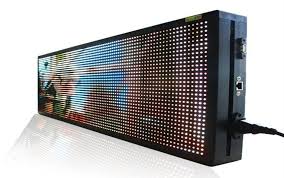
The lightweight and thin form factor of LED displays, alongside flexible and transparent LED solutions, expands design possibilities. High refresh rates (often 3840 Hz or greater) minimize flicker, critical for broadcast compatibility and preventing eye strain.
Common Challenges in LED Display Implementation
Despite these advantages, LED displays face certain challenges. Thermal management is a critical factor; high-brightness LEDs generate substantial heat, which must be dissispated to avoid color degradation or failure. Advanced heat sinks and fanless cooling designs are industry best practices.
Uniformity and calibration are crucial for maintaining consistent color and brightness across large video walls. Engineers utilize software-driven calibration tools and hardware solutions like lookup tables (LUT) conforming to ITU-R BT.1886 standards to optimize image uniformity.
Another common issue is pixel failure or dead pixels, often originating from solder joint fatigue or driver IC failures. High-quality SMD (Surface Mount Device) LED chips and robust PCB design minimize these risks. Environmental factors such as moisture ingress and physical impact can also degrade performance, making IP65-rated enclosures a standard for outdoor units.
Latest Trends in LED Display Technology
Innovation continues to accelerate LED technology. Mini-LED and micro-LED developments push pixel pitches below 1mm for ultra-high-resolution displays suitable for smartphones, medical equipment, and VR headsets. These smaller LEDs facilitate enhanced contrast ratios and extremely high dynamic range (HDR) performance, supporting standards like HDR10+ and Dolby Vision.
Flexible and transparent LED displays are gaining momentum, enabling embedded digital signage in glass facades and curved architectures. Companies are exploring AI-powered display management systems to perform predictive maintenance and content optimization, increasing operational efficiency.
Furthermore, seamless integration of 5G networks promotes smoother, higher bandwidth content delivery and real-time interactivity, essential for smart city applications and interactive advertising.
Technical Parameters Summary
- Pixel pitch: Typically 0.9mm to 10mm depending on indoor/outdoor application
- Brightness: 600–10,000 nits (higher for outdoor)
- Refresh rate: >3840 Hz for flicker-free performance
- Viewing angle: 140° horizontal / 120° vertical typical
- Color gamut: Up to 95% DCI-P3
- Lifespan: ~100,000 hours (half-brightness)
- IP rating: IP20 for indoors, IP65 or higher for outdoors
In summary, LED displays stand out for their versatility, visual performance, and adaptability across industries. Addressing the technical challenges proactively with robust design and cutting-edge calibration ensures long-term reliability. With rapid advancements in miniaturization, flexible substrates, and AI-driven management, LED display technology remains at the forefront of digital communication solutions globally.
References:
1. International Electrotechnical Commission (IEC), IEC 62471: Photobiological safety standards for LEDs
2. ITU-R BT.1886: Electro-Optical Transfer Function for Flat Panel Displays
3. Society for Information Display (SID) Technical Digest
4. LED Display Industry Technical Whitepapers – Various manufacturers including Samsung, Leyard, and Unilumin













