

LED Display Technology in Modern Applications: Benefits, Challenges, and Emerging Trends
LED display technology has become a cornerstone in various industries, revolutionizing the way visual information is presented. As a professional LED display engineer with years of experience in design, manufacturing, and deployment, this article delves into the practical applications, inherent advantages, common challenges, and latest trends shaping the LED display industry today.
Practical Applications of LED Displays
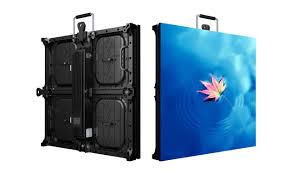
LED displays are widely used in several sectors:
1. Advertising and Outdoor Signage: High brightness LED screens are ideal for outdoor billboards, transit displays, and stadium screens. Their ability to maintain clarity under direct sunlight makes them superior to conventional LCD or projection solutions. For instance, pixels per inch (PPI) in outdoor LED displays typically range from 4mm to 16mm, balancing visibility with cost.
2. Control Rooms and Command Centers: Fine-pitch LED video walls, with pixel pitches as low as 0.9mm, provide ultra-high resolution critical for mission-critical surveillance, utilities monitoring, and military operations. They offer seamless, immersive displays essential for real-time data analysis.
3. Retail and Hospitality: Transparent LED displays and curved LED panels enhance customer engagement by blending digital content with physical spaces. These solutions drive foot traffic and improve branding.
4. Broadcast and Entertainment: With refresh rates reaching 3840Hz or higher, LED displays avoid flickering on camera, making them indispensable for live performances, TV studios, and event backdrops.
Advantages of LED Displays
Multiple benefits drive the preference for LED over other display technologies:
- Brightness and Color Accuracy: LEDs can achieve peak brightness over 5,000 nits, ensuring high visibility even in bright ambient environments. With calibrated color temperature and a wide color gamut (often 95%+ of NTSC), images are vivid and consistent.
- Energy Efficiency: Modern LED modules utilize efficient driving ICs and power management, consuming significantly less power per square meter compared to LCD panels, which reduces operational costs.
- Durability and Lifespan: Rated for over 100,000 hours of operation, LEDs exhibit superior longevity and are resistant to thermal and mechanical stress—key advantages for outdoor or industrial environments.
- Scalability and Customization: Modular design allows LED displays to be constructed in virtually any size or shape, from small indoor signage to massive stadium walls.
Common Problems and Mitigation Strategies
Despite their strengths, LED displays encounter several challenges:
- Pixel Failure and Color Uniformity: Over time, individual LEDs may fail or degrade, causing dead pixels or color shifts. Employing redundancy in LED chips per pixel and implementing robust calibration software can minimize visual defects.
- Heat Dissipation: High-brightness LEDs generate significant heat, potentially reducing lifespan. Advanced thermal management with heat sinks, forced air cooling, or even liquid cooling in demanding environments is imperative.
- Signal Latency and Processing: Complex video processing for large LED walls can introduce latency. Using FPGA-based controllers and optimizing data transmission protocols (e.g., HDMI 2.1, HDBaseT) ensures smooth, real-time content delivery.
- Cost and Installation Complexity: Fine-pitch LED displays remain expensive and require precise installation. Training and documentation, following industry standards such as IEC 62368 for safety and IEC 62471 for photobiological safety, can streamline installation and maintenance.
Latest Trends in LED Display Technology
The LED display landscape is rapidly evolving, with new innovations pushing the boundaries of performance and applications:
- Mini and MicroLED Displays: Featuring pixel pitches below 0.5mm, microLEDs offer ultra-high resolution and brightness while reducing power consumption drastically. These are poised to disrupt consumer electronics such as smartphones, augmented reality (AR), and wearable displays.
- Transparent and Flexible LED Panels: Advances in substrate materials enable see-through displays usable for shop windows or vehicle windshields. Flexible panels allow for curved installations, opening creative design possibilities.
- Integration with AI and IoT: Smart LED displays equipped with sensors and AI-driven content management provide dynamic advertising tailored to audience metrics like foot traffic and demographics, enhancing engagement and marketing ROI.
- High Dynamic Range (HDR) Support: New generation LED modules support HDR imaging, delivering greater contrast ratios and richer colors, significantly improving visual impact.
Standards and Quality Assurance
Compliance with standards such as ISO 9001 for manufacturing quality and IPC-A-600 for PCB inspection ensures product reliability. Industry consensus also advocates rigorous environmental testing, including IP ratings (e.g., IP65 or higher for outdoor modules) and anti-glare surface treatments to accommodate diverse installation conditions.
Conclusion
LED display technology continues to be a transformative force across industries by providing unmatched brightness, durability, and adaptability. While challenges remain, ongoing innovations and adherence to quality standards are propelling LED displays toward new realms of performance and application. Manufacturers, integrators, and end-users should collaborate closely to leverage these advancements for optimal deployment, ensuring reliable, high-impact visual communication in an ever-more digital world.
References:
- International Electrotechnical Commission (IEC) standards: IEC 62368-1, IEC 62471
- Smith, J. & Lee, H., "Advancements in MicroLED Technology," Journal of Display Technology, 2023
- LEDinside Market Reports, 2023-2024
- IEC/IP Ratings explained, UL Certification guidelines
- IEEE Spectrum, “Emerging Trends in Display Technologies,” 2024













