

Advancements and Best Practices in LED LCD Screen Manufacturing
The LED LCD screen industry has witnessed significant technological advancements, leading to higher resolution displays, enhanced color accuracy, and improved energy efficiency. As a professional LED display engineer, understanding the intricate details of manufacturing processes, material selection, and quality control is crucial for delivering top-performing products that meet international standards such as ISO 9241-302 for visual ergonomics and IEC 62368 for product safety.
Material Selection and Substrate Technology
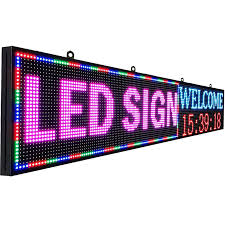
High-quality LED LCD screens rely on optimal substrate materials such as high-transmittance glass and flexible polymers. Advances in substrate technology, including In-Plane Switching (IPS) panels, allow wider viewing angles (up to 178°) and consistent color reproduction. Employing low-temperature polysilicon (LTPS) transistors enhances pixel response times to under 5ms, catering to high refresh rate demands in applications from medical imaging to gaming.
Backlighting and LED Integration
The integration of LED backlights in LCD manufacturing is critical for brightness uniformity and color gamut coverage. Utilizing quantum dot enhancement films (QDEF) can expand the color gamut up to 100% of the DCI-P3 space, essential for high-end monitors and professional displays. Moreover, adopting mini-LED or micro-LED arrays as backlighting sources significantly improves contrast ratios (exceeding 1,000,000:1 in HDR displays) and dynamic local dimming capabilities, delivering deeper blacks and richer visuals.
Manufacturing Process and Quality Control
Precision in the layer deposition and thin-film transistor (TFT) array fabrication dictates the final panel’s reliability and performance consistency. State-of-the-art manufacturing facilities employ real-time inline optical inspection tools that ensure pixel defect rates remain below 0.01%, complying with AQL standards. Furthermore, environmental stress screening (ESS) tests including thermal cycling between -20°C and 70°C and humidity tests at 85% RH ensure durability in diverse operating environments.
Calibration and Color Management
Achieving true-to-life color representation demands rigorous calibration protocols. Professional LED LCD screens undergo factory calibration using spectroradiometers and colorimeters, ensuring Delta E values under 2, a threshold perceptually indistinguishable to the human eye according to the CIEDE2000 standard. Consistent gamma curves (2.2 or 2.4 depending on content requirements) and luminance uniformity across the panel are imperative for professional applications such as video production and medical diagnostics.
Sustainability and Energy Efficiency
Modern LED LCD manufacturing addresses environmental concerns by employing mercury-free LED backlights, recyclable substrates, and energy-efficient drivers that conform to ENERGY STAR and EPEAT standards. Innovations in power management have led to displays operating at around 120 nits per watt, substantially lowering the carbon footprint.
Case Study: Implementation in Medical Imaging Displays
In a recent project with a leading medical imaging provider, integrating high-resolution 4K LED LCD screens with IPS technology and enhanced LED backlighting resulted in diagnostic displays capable of rendering subtle grayscale differences with DICOM Part 14 compliance. This not only enhanced diagnostic accuracy but also met rigorous FDA requirements for medical devices, demonstrating the industry’s capability to meet specialized sector standards.
In summary, continuous innovation in LED LCD screen manufacturing—ranging from material science and backlight technology to quality control and calibration—underpins the development of reliable, high-performance displays. Adherence to international standards and investment in cutting-edge processes ensures these products address global market demands for clarity, durability, and energy efficiency.













