

Advanced Engineering and Manufacturing Techniques in LED Display Screens
The global LED display market has experienced significant growth over the last decade, driven by advancements in technology and expanding applications across various industries. As a professional LED display engineer with extensive expertise in design, manufacturing, and quality assurance, this article provides a comprehensive analysis of the current state-of-the-art techniques utilized in the engineering and manufacturing of LED screens. It highlights critical technical parameters, practical insights, industry standards, and case studies, offering an authoritative reference for suppliers, integrators, and end users worldwide.
1. Overview of LED Display Technology
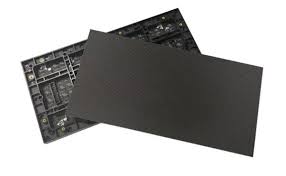
LED (Light Emitting Diode) displays consist of an array of LEDs forming pixels capable of emitting vibrant colors with high brightness and contrast ratios. These displays can be categorized broadly into indoor and outdoor types, curved and flat screens, flexible and rigid panels, each optimized through careful engineering to meet application-specific requirements.
The core components of an LED display include the LED modules, driving ICs, power supplies, control systems, and protective outer casings. Advances in LED chip technology, such as the use of InGaN (Indium Gallium Nitride) for blue and green LEDs and AlGaInP (Aluminum Gallium Indium Phosphide) for red LEDs, have considerably improved color gamut and efficiency.
2. Key Technical Parameters and Industry Standards
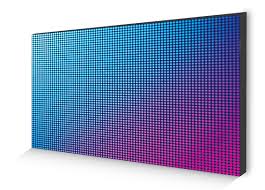
When evaluating LED display performance, several technical parameters play a crucial role:
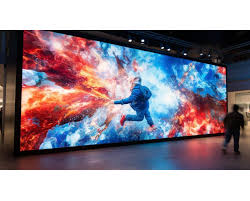
- Pixel Pitch (mm): The distance between the center of two adjacent pixels. Smaller pixel pitches (e.g., 0.9 to 2.5 mm) are used for close-viewing indoor displays, while larger pitches (e.g., 4 mm and above) suit outdoor or large-scale signage. Pixel pitch directly affects resolution and viewing distance.
- Brightness (cd/m² or nits): Outdoor LED displays often require high brightness levels (5,000 to 8,000 nits) to remain visible under direct sunlight, whereas indoor screens typically operate around 800 to 1,000 nits.
- Refresh Rate (Hz): A minimum of 1920 Hz refresh rate is recommended to ensure flicker-free performance on camera devices and for the human eye, especially in broadcast and event displays.
- Color Reproduction and Gray Scale: True 16-bit grayscale offers smooth gradations in color transitions, essential for high-quality image playback.
- Viewing Angle (degrees): Both horizontal and vertical viewing angles matter to ensure consistent color and brightness distribution. A typical range is 140° to 160° horizontally and vertically.
- Ingress Protection (IP) Rating: For outdoor displays, IP65 or higher offers protection against dust and water ingress, critical for operational reliability in harsh environments.
International standards such as IEC 60598 and EMC Directive 2014/30/EU govern electrical safety and electromagnetic compatibility, ensuring products meet legal and safety requirements.
3. Manufacturing Techniques and Quality Control
Manufacturing high-performance LED display screens involves precision processes and robust quality assurance systems:
- Surface Mount Technology (SMT): Modern LED modules are assembled using automated SMT lines with accuracy reaching 0.01 mm, ensuring uniform soldering and reduced defect rates.
- Calibration and Binning: LEDs are rigorously bin-sorted according to luminous intensity and wavelength to guarantee color consistency across modules. Advanced color calibration techniques utilize spectrometers and software algorithms to maintain uniform brightness and color temperature.
- Module and Cabinet Assembly: Each LED module undergoes heat dissipation optimization, often involving high-quality aluminum PCBs and thermal interface materials. Cabinets integrate frames designed for easy alignment and electrical connectivity, with precise tolerances to maintain seamless display surfaces.
- Testing Procedures: Manufacturers conduct extensive environmental stress tests, including thermal cycling, salt-spray for corrosion resistance, and vibration testing. Optical tests assess brightness uniformity and color accuracy using standardized reference panels.
- Reliability Engineering: Mean time between failures (MTBF) exceeding 100,000 hours is achievable through careful component selection and design redundancy, ensuring long-lasting product performance.
4. Innovations Driving the Industry Forward
Emerging trends further enhance LED display capabilities:
- MicroLED Displays: Utilizing microscopic LEDs capable of individual addressing, microLEDs provide unprecedented contrast ratios and response times, with exceptional efficiency. While manufacturing scalability remains a challenge, ongoing research promises commercial breakthroughs.
- Flexible and Transparent Displays: Flexible substrates and transparent LED arrangements enable new formats such as curved facades, wearable screens, and holographic projections. Projects like Samsung’s “The Wall” showcase cutting-edge modular, bezel-less designs.
- High Dynamic Range (HDR) Capability: Integration of HDR support enables LED displays to render images with superior brightness and deeper blacks, elevating visual realism.
- IoT and Smart Control Integration: Modern LED displays incorporate networking features for remote monitoring, diagnostics, and automated brightness adaptation to ambient light conditions, improving energy efficiency.
5. Case Studies: Global Applications and Best Practices
- Times Square, New York: One of the most iconic outdoor LED installations, featuring over 400,000 LEDs with pixel pitches around 6 mm, operating 24/7 under extreme weather conditions. The display utilizes robust IP67 rated cabinets with redundant power supplies ensuring uninterrupted operation.
- Shanghai Tower Lobby: This indoor installation uses a microLED display with pixel pitch under 1 mm, delivering ultra-high definition content with minimal latency, often synchronized with environmental lighting for an immersive user experience.
- Sporting Arenas: LED perimeter and center-hung displays exemplify rapid refresh rates (>3840 Hz) and high brightness levels (up to 6,000 nits), complying with global broadcast standards such as SMPTE ST 2110 for live production reliability.
6. Environmental and Sustainability Considerations
Sustainable manufacturing practices are increasingly embedded in LED display production. Using lead-free solder, recyclable aluminum materials, and energy-efficient components minimizes environmental impact. Moreover, at end-of-life, established recycling protocols reclaim valuable semiconductor elements, reducing electronic waste.
7. Conclusion
The manufacturing and engineering of LED display screens combine precision electronics, advanced optics, and cutting-edge materials science. By adhering to industry standards and leveraging ongoing technological innovations, manufacturers can produce durable, vibrant, and efficient displays suitable for a diverse range of applications worldwide.
For manufacturers and system integrators, investing in robust quality assurance, adopting emerging technologies like microLED, and tailoring designs to specific environmental demands are critical strategies to maintain competitiveness in the rapidly evolving LED display market.
References:
- International Electrotechnical Commission. IEC 60598-1: Luminaires - Part 1: General requirements and tests.
- Society of Motion Picture and Television Engineers (SMPTE) Standards, ST 2110.
- Chen, Y., et al. “MicroLED Displays: Technology Status and Market Prospects.” Journal of Display Technology, vol. 16, no. 4, 2020, pp. 177-192.
- Samsung Electronics. “The Wall: Modular MicroLED Display Technology.” Samsung Reports, 2021.
- LEDinside Market Analysis Reports, 2023.













