

Advanced Technologies and Quality Standards in LED LCD Screen Manufacturing
In the rapidly evolving industry of display technologies, LED LCD screens continue to play a critical role across diverse applications—from consumer electronics to large-scale digital signage. As a professional LED display engineer with extensive experience in manufacturing, design, and quality assurance, this article explores the advanced technologies, manufacturing processes, and industry standards that ensure high performance, reliability, and visual excellence in LED LCD screens.
LED LCD Screen Structure and Technology
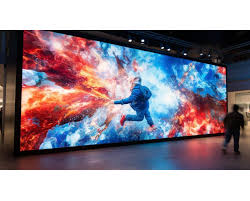
An LED LCD screen combines an LCD panel with an LED backlight. The LCD (Liquid Crystal Display) acts as the image formation layer, while the LED (Light Emitting Diode) array provides the illumination source. Compared to older CCFL backlit LCDs, LED backlighting enhances brightness, contrast, and energy efficiency, with typical brightness levels ranging from 300 to 1000 nits depending on the application (Consumer Technology Association, CTA-861-G standard).
There are various LED backlighting techniques, including edge-lit and direct-lit configurations. Edge-lit LED displays place LEDs along the perimeter of the panel with light guides to distribute light, resulting in a thinner, more economical design. Direct-lit setups position the LEDs directly behind the LCD matrix for more uniform brightness and better local dimming capability, critical for higher contrast ratios reaching up to 5000:1 or more in premium displays.
Key Manufacturing Parameters and Quality Control
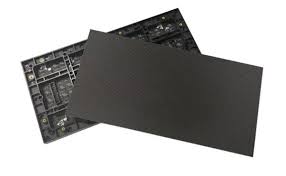
1. Pixel Pitch and Resolution: Pixel pitch directly influences image sharpness. Typical LED LCD modules for consumer TVs and monitors utilize pixel pitches from 0.3mm to 0.7mm, enabling HD to 4K resolutions. In professional or outdoor signage, larger pixel pitches may be used to improve visibility over distances.
2. Color Accuracy and Calibration: Achieving accurate color reproduction involves precise LED spectrum control and LCD color filters. Industry standards such as Rec. 709 for HD content and Rec. 2020 for UHD displays guide manufacturers in color gamut coverage. Calibration processes often include gamma correction and white point adjustments using spectroradiometers to attain ΔE values below 2, imperceptible to the human eye.
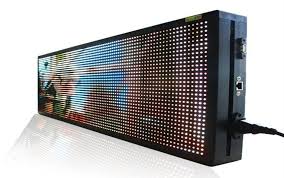
3. Brightness and Contrast Management: Advanced LED LCDs incorporate dynamic backlight dimming and HDR (High Dynamic Range) technologies. HDR displays deliver peak brightness from 600 to 1000 nits or higher and contrast ratios surpassing 10000:1, significantly enhancing visual depth. Compliance with HDR10 or Dolby Vision ensures worldwide content compatibility.
4. Reliability and Lifespan: LED modules typically offer lifespans exceeding 50,000 hours at standard brightness levels. Thermal management through heat sinks and advanced materials prevents LED degradation, maintaining consistent luminance over time. Industry-standard tests, such as IEC 62087 for energy consumption and MIL-STD-810G for environmental durability, are essential in validating product reliability.
Industry Standards and Certifications
Adhering to international standards guarantees interoperability and safety. Relevant specifications include:
- IEC 62368-1: Safety requirements for audio/video equipment
- ISO 9241-307: Ergonomic requirements for display screens, emphasizing flicker reduction
- UL 8750: Safety standards specific to LED lighting systems
- RoHS and REACH: Restriction on hazardous substances aligning with environmental regulations
Manufacturers often pursue certification from TÜV Rheinland or SGS to validate claims on energy efficiency and durability, providing end-users with confidence in product quality.
Emerging Trends in LED LCD Manufacturing
Next-generation displays integrate mini-LED and micro-LED backlighting, offering thousands of individually controlled dimming zones. This innovation achieves near-OLED levels of contrast and color accuracy while maintaining LCD longevity and cost advantages. Additionally, quantum dot enhancement films (QDEF) improve color purity, expanding color gamuts up to 90% of DCI-P3 or more, critical for professional broadcasting and cinema-grade monitors.
Manufacturers are also focusing on sustainability by adopting recycled materials and improving energy efficiency—aligned with global efforts toward greener electronics. Advanced automation and AI-driven quality inspection systems further enhance manufacturing precision and reduce defects.
Conclusion
Mastering LED LCD screen manufacturing demands a comprehensive understanding of backlight technology, optical engineering, material science, and stringent adherence to international standards. Continuous innovation in LED systems, panel design, and color calibration drives improvements in brightness, contrast, color fidelity, and operational reliability. As global demand for high-quality displays escalates, industry professionals must maintain rigorous quality protocols and adopt cutting-edge advancements to deliver superior products.
For engineers and manufacturers, following standards such as CTA-861-G, IEC 62368-1, and ISO 9241-307, investing in reliable testing methods, and embracing emerging LED technologies are key to sustaining excellence in the competitive LED LCD market.
References:
- Consumer Technology Association (CTA), “CTA-861-G: Video Formats and Timing for Consumer Electronics,” 2019.
- IEC 62368-1 Safety standard for audio/video and information technology equipment.
- ISO 9241-307: Ergonomics of human-system interaction - Requirements for electronic visual displays.
- UL 8750 Standard for LED equipment safety.
- “Emerging trend of mini-LED backlights in next-generation LCD displays,” Display Industry Journal, 2023.













