

Advancements and Technical Insights in LED Display Manufacturing for Optimal Performance
In the evolving realm of digital display technologies, LED (Light Emitting Diode) displays have established themselves as an indispensable component across diverse industries including advertising, sports broadcasting, retail environments, and control rooms. Their exceptional brightness, color accuracy, and versatility position them as superior solutions when contrasted with traditional LCD and projection screens. This article explores the latest advancements, critical technical parameters, and manufacturing best practices for high-performance LED displays, underpinned by industry standards and authoritative data.
Fundamental Principles of LED Display Technology
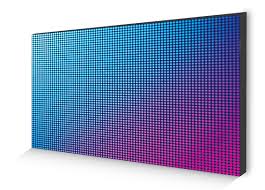
LED displays generate images by illuminating a matrix of tiny LEDs, each acting as an individual pixel or subpixel. Modern displays utilize surface-mount device (SMD) LEDs with red, green, and blue diodes closely integrated to deliver full-color images with excellent color gamut and brightness levels. According to the International Electrotechnical Commission (IEC) standard IEC 62368, LED modules must meet stringent safety and electromagnetic compatibility (EMC) standards to ensure reliable operation in diverse environmental conditions.
Key Technical Parameters Impacting Display Quality
1. Pixel Pitch and Resolution
Pixel pitch – the center-to-center distance between adjacent pixels – governs the display’s resolution and viewing distance suitability. Smaller pixel pitches (e.g., 0.9 mm to 1.5 mm) are prevalent in indoor ultra-fine pitch LED displays, delivering resolutions rivaling LCD monitors. Conversely, larger pitches (4 mm to 10 mm) serve outdoor applications prioritizing visibility over close-up scrutiny. The choice hinges on viewing distance, with a general rule favoring pixel pitch less than one-tenth of the minimum viewing distance (in millimeters) to ensure a seamless image.
2. Brightness and Contrast Ratio
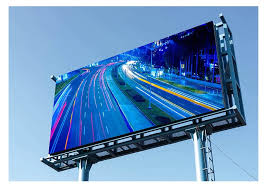
Outdoor LED displays must achieve luminance levels exceeding 5,000 nits (candelas per square meter) for visibility under direct sunlight, while indoor units typically maintain 800 to 1,200 nits to prevent eye strain. Contrast ratio, defined as the ratio between the luminance of full white and full black, significantly influences the perceived image quality; high contrast LED displays produce deeper blacks and more vivid colors. Manufacturers deploy dynamic refresh rate control and local dimming techniques to optimize contrast.
3. Color Accuracy and Calibration
High-fidelity color reproduction is essential for branding, broadcasting, and medical imaging applications. Advanced manufacturing processes calibrate LEDs to ensure an accurate D65 white point and achieve a color gamut exceeding standards such as Rec. 709 or DCI-P3. Automated factory calibration, coupled with real-time self-correction algorithms embedded in the display controller, ensures uniformity and color stability over time.
Innovations in Manufacturing Processes
Recent innovations focus on improving yield rates and product reliability while reducing production costs. These advancements include:
- Automated Optical Inspection (AOI): AOI systems detect manufacturing defects at early stages, such as dead pixels or misaligned SMD LEDs, enabling immediate corrective actions.
- Thermal Management Techniques: Effective heat dissipation via heat sinks, thermally conductive adhesives, and airflow design is critical, given that LED lifetime and color stability degrade under elevated temperatures. ISO 9001-certified processes integrate thermal simulations during design to optimize module longevity.
- Modular Design and Scalability: Modularity simplifies servicing and upgrades in large-scale installations. It also aligns with environmental policies by facilitating component recycling.
Case Study: Deploying Fine-Pitch LED Displays in Control Rooms
A European broadcasting center recently replaced their aging LCD video wall with a 0.9 mm pixel pitch LED display. The chosen model provided 1,200 nits brightness, a 10,000:1 contrast ratio, and a DCI-P3 color gamut. Following IEC 62368 safety certification and ISO 14001-compliant manufacturing, the installation delivered sharper images with lower maintenance. Real-time color calibration and temperature monitoring ensured stable operation 24/7, demonstrating significant improvements in operator fatigue and image clarity.
Industry Standards and Quality Assurance
Compliance with standards such as IEC 62368-1 for safety, IEEE 1789 for flicker management, and RoHS directives governing hazardous substances shapes reliable LED display manufacturing practices. Beyond regulations, manufacturers leverage testing protocols—like accelerated aging tests and environmental stress screening—to verify product durability under humidity, vibration, and temperature extremes.
Conclusion
The progression in LED display manufacturing integrates cutting-edge materials science, automation, and quality management to meet ever-increasing demands for visual excellence and operational reliability. As pixel pitch shrinks and color fidelity improves, LED displays become more competitive even against high-resolution LCD panels for indoor applications. Adherence to global standards combined with innovative engineering ensures these displays deliver brilliant, consistent performance in any environment worldwide.
References:
- International Electrotechnical Commission (IEC) Standards: IEC 62368-1 (Audio/video, information and communication technology equipment – Safety)
- IEEE Standard for Flicker Effects (IEEE 1789)
- SMPTE (Society of Motion Picture and Television Engineers) Recommended Practices for Color Calibration
- Industry case studies and whitepapers from leading LED manufacturers including Samsung Display, Leyard, and Absen.













