

Advanced Manufacturing Techniques and Quality Control in LED LCD Screen Production
The modern LED LCD screen industry has witnessed significant technological advancements over the past decade, driven by rising consumer demand for higher resolution, improved display quality, and energy efficiency. As a professional LED display engineer with extensive experience in manufacturing, this article delves into the critical technical parameters, manufacturing techniques, and quality control standards pivotal to producing high-performance LED LCD screens. This comprehensive analysis integrates industry best practices, authoritative standards, and real-world case studies to provide a thorough understanding for manufacturers, engineers, and decision makers globally.
Fundamentals of LED LCD Screen Technology
LED LCD screens combine Liquid Crystal Display (LCD) technology with Light Emitting Diode (LED) backlighting to enhance brightness, color gamut, and energy efficiency. The LCD serves as the imaging layer, modulating light through liquid crystals, whereas the LED backlight provides the illumination source essential for visibility. This architecture delivers superior contrast ratios and color reproduction compared to traditional CCFL (Cold Cathode Fluorescent Lamp) backlighting.
Key performance indicators include:
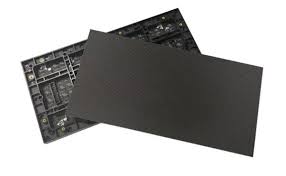
- Resolution: Commonly ranging from Full HD (1920 x 1080 pixels) to 4K Ultra HD (3840 x 2160 pixels), resolution determines image clarity and detail.
- Brightness: Typically between 250 cd/m² to 1000 cd/m² for indoor displays; higher luminance levels are required for outdoor or specialized applications.
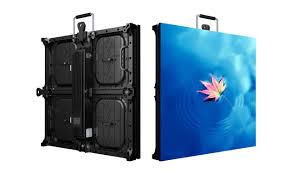
- Contrast Ratio: Indicates the difference between the darkest black and brightest white, with advanced LED LCD screens achieving ratios upwards of 5000:1.
- Color Gamut and Accuracy: Wide color gamut standards such as DCI-P3 and Adobe RGB are increasingly adopted to meet the demands of professional media production and consumer expectations.
- Response Time and Refresh Rate: Essential for reducing motion blur and providing fluid video playback, especially in gaming and broadcast screens.
Manufacturing Workflow and Process Optimization
1. Substrate Preparation and Glass Cutting
High-quality glass substrates serve as the base for LCD cell assembly. Glass thickness, typically between 0.5 to 1.1 mm, affects both durability and optical characteristics. Precision cutting with CNC laser technology ensures dimensional accuracy, minimizing edge defects that could propagate during assembly.
2. ITO Coating and Patterning
Indium Tin Oxide (ITO) transparent conductive layers are sputtered onto the glass substrates. Uniformity of the ITO layer (targeting sheet resistance of 10-100 Ω/sq) is critical for pixel voltage control. Photolithography and etching processes pattern the electrodes with micron-level precision.
3. Liquid Crystal Cell Assembly
The LCD cell comprises alignment layers, spacers, liquid crystals, and sealing materials. Spin coating techniques apply alignment layers (usually polyimide) for controlling liquid crystal orientation. Cell gap uniformity, maintained between 3 to 6 microns, directly influences viewing angle and contrast.
4. Backlight Unit (BLU) Integration
LED backlighting involves arranging LED diodes either as edge-lit or direct-lit configurations. High Brightness LEDs with luminous efficacy above 150 lm/W are preferred for energy efficiency. Light Guide Plates (LGPs) and diffusers optimize light uniformity, ensuring luminance variations under 5%.
5. Module Assembly and Wiring
Flexible Printed Circuits (FPC) connect the LCD module to driver ICs and power components. Robotic pick-and-place machines position components with sub-millimeter accuracy, enhancing production consistency. ESD-safe environments prevent static damage during handling.
Quality Control and Industry Standards
Rigorous quality control ensures product reliability and performance compliance. Several international standards guide manufacturing processes:
- ISO 13485: Quality management systems specific to electronic components, ensuring traceability and process control.
- IEC 62368-1: Safety requirements for multimedia equipment, addressing electrical and thermal safety.
- MIL-STD-810: Environmental testing standards, particularly applicable for ruggedized or outdoor LED LCD displays.
- Gamma, Delta E, and Color Calibration: Using spectroradiometers and colorimeters to verify color accuracy, maintaining Delta E values below 3 for professional-grade displays.
- Burn-in and Aging Tests: Long-duration testing (72-168 hours at elevated luminance) mitigates risks of image retention or pixel failure, ensuring longevity.
Case Study: Implementation of In-Line Optical Inspection
A leading manufacturer recently integrated an automated In-Line Optical Inspection (IOI) system into its production line. Employing high-resolution cameras and AI algorithms, the IOI identifies defects such as dead pixels, staining, and alignment errors in real time, reducing defect rates by 30%. This has resulted in reduced rework costs and enhanced product consistency, highlighting the importance of adopting advanced inspection technologies.
Emerging Trends and Future Outlook
The LED LCD screen industry is evolving with embedded AI calibration, quantum dot enhancement layers (QDEF), and mini-LED backlighting. Mini-LED technology offers localized dimming with thousands of dimming zones, vastly improving contrast ratios and HDR performance (HDR10+ compliance).
Additionally, sustainability considerations are driving the adoption of recyclable materials and energy-efficient designs, conforming to RoHS and WEEE directives worldwide.
Conclusion
Manufacturing high-quality LED LCD screens demands a deep understanding of material science, precision engineering, and stringent quality control procedures. As international standards tighten and consumer expectations rise, leveraging advanced manufacturing techniques and consistent inspection protocols is crucial to maintaining industry leadership and delivering superior visual experiences.
By continually integrating technological innovations and adhering to global standards, manufacturers can meet the dynamic needs of multiple sectors, from consumer electronics to professional broadcasting and industrial applications.
References:
- International Electrotechnical Commission (IEC) Standards, IEC 62368-1
- Society for Information Display (SID), Display Industry Trends 2023
- U.S. Department of Defense, MIL-STD-810 Environmental Testing
- LG Display Technical Whitepapers on Quantum Dot and Mini-LED Technology
- ISO 13485 Quality Management Systems for Electronics Manufacturing













