

Advanced LED Display Manufacturing: Industry Standards and Technical Insights
The modern era of LED display technology demands not only innovative design and superior visual quality but also a deep understanding of manufacturing processes and industry standards to ensure reliability and outstanding performance. As a professional LED display engineer with extensive expertise in the sector, I will delve into the advanced manufacturing aspects, key technical parameters, and critical standards that collectively define today’s LED display production.
Core Technical Parameters in LED Display Manufacturing
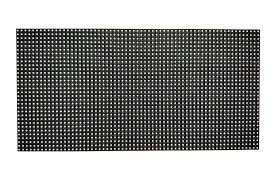
When approaching LED screen manufacturing, a handful of critical technical parameters govern product quality and application suitability:
1. Pixel Pitch (mm): The distance between the centers of adjacent pixels dictates the resolution and optimal viewing distance. For indoor displays, pixel pitches typically range between 0.93mm and 2.5mm, providing high-resolution images ideal for close-viewing areas. Outdoor displays usually have a larger pitch of 4mm to 20mm for visibility over longer distances.
2. Brightness (cd/m²): Brightness levels vary depending on the usage environment. Indoor displays generally require brightness between 800 and 1500 cd/m², while outdoor installations require much higher luminance, often exceeding 5000 cd/m², to ensure readability in direct sunlight.
3. Refresh Rate (Hz): A higher refresh rate, usually above 1920 Hz, minimizes flicker and artifacts, critical for video applications especially in broadcast environments. Lower refresh rates can cause visible flicker on camera feeds, which is undesirable in professional settings.
4. Color Depth and Gray Scale: The ability to render millions of colors is essential for accurate image reproduction. Most quality LED modules support at least 16-bit color depth and 14-bit gray scale levels, facilitating smooth gradients and vivid images.
5. Viewing Angle (degrees): Wide viewing angles, generally 140° horizontal and vertical or greater, ensure consistent image quality for viewers from different positions.
Manufacturing Process and Quality Control
The LED display manufacturing line integrates several complex stages, each leveraging precise engineering and quality assurance protocols:
- PCB Design and SMT Assembly: The foundation lies in the printed circuit board quality, utilizing high-frequency PCBs to enhance signal transmission. Surface Mount Technology (SMT) with automated pick-and-place machines places LEDs precisely to maintain uniform brightness and color consistency.
- LED Bin Sorting and Calibration: Prior to assembly, LEDs undergo rigorous binning based on luminosity and chromaticity. This step is crucial to achieve uniform color temperature across the display and maintain consistency over time.
- Module Assembly and Repair: Modules are encapsulated and assembled with anti-static measures. Manufacturers employ automated optical inspection (AOI) systems and manual quality checks to detect defective LEDs or solder joints early. In-line repair stations ensure immediate correction, enhancing yield rates.
- Encapsulation and Waterproofing: For outdoor displays, the conformal coating and IP65 or higher-rated sealing technologies protect components against dust, moisture, and harsh weather conditions, extending longevity and performance stability.
- Final Testing and Burn-in: Each finished module undergoes burn-in testing for 72-168 hours under operational conditions to identify early failures and ensure product reliability in real-world usage.
Industry Standards and Certifications
Adherence to international industry standards guarantees product quality, safety, and interoperability. Key standards and certifications include:
- IEC 62368-1: Safety requirements for audio/visual and information technology equipment, ensuring user protection and electrical safety.
- RoHS Compliance: Restriction of Hazardous Substances in manufacturing processes to minimize environmental impact and health risks.
- ISO 9001: Quality management system certification that imposes stringent process controls throughout manufacture.
- ANSI/IES RP-27: Standards relating to photobiological safety of lamps and lamp systems, addressing blue light hazards and display safety.
- UL Certification: Ensuring compliance with North American electrical safety standards.
Case Study: High-Resolution Indoor LED Wall for Control Rooms
In a recent project for a command and control center, a 1.2mm pixel pitch LED display was developed to provide high-definition visualization critical for real-time monitoring. Key insights included:
- Implementing an LED binning strategy to achieve uniform color temperature (6500K ±200K).
- Using high-refresh-rate drivers (1920 Hz) to avoid camera flicker as feeds are recorded frequently for incident analysis.
- Employing rigorous quality control protocols reduced defective units to less than 0.01%, significantly lowering maintenance costs.
Conclusion
Building superior LED displays requires a marriage of detailed engineering, stringent adherence to international standards, and precise manufacturing techniques. Attention to pixel pitch, brightness, refresh rate, and color consistency are foundational to product quality. Proper manufacturing processes including binning, calibration, protective encapsulation, and extensive testing culminate in displays that meet the robust demands of both indoor and outdoor environments. Staying abreast with global standards and certifications further anchors credibility and reliability in the competitive LED display market.
By mastering these technical and procedural facets, manufacturers can deliver cutting-edge LED displays that not only meet but exceed user expectations worldwide.













