

Holographic Invisible Screen Technology: Advancements and Applications in LED Display Engineering
In the rapidly evolving landscape of display technologies, the holographic invisible screen has emerged as a groundbreaking innovation, offering unprecedented visual experiences and applications. This technology integrates principles from holography, optics, and LED display engineering to produce images that appear vividly in mid-air or on transparent surfaces while remaining nearly invisible when not in use. This article delves into the technical aspects, industry standards, practical implementations, and future prospects of holographic invisible screens, drawing upon authoritative sources and expert insights.
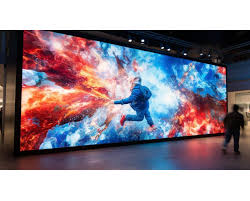
At its core, a holographic invisible screen synthesizes laser holography and high-resolution LED display panels to create three-dimensional (3D) images with depth perception and motion parallax. Unlike traditional LCD or OLED screens, which are opaque and rely on backlighting or self-emitting pixels, holographic screens use diffraction and interference patterns to reconstruct light waves, making the display surface effectively transparent when inactive.
#Technical Parameters and Engineering Design
1. Resolution and Pixel Density: High-definition 4K (3840x2160 pixels) or higher resolution is essential to maintain image clarity and minimize pixelation in mid-air projections. Typical pixel pitches range from 0.5 mm to 1.5 mm, ensuring sharpness without compromising transparency.
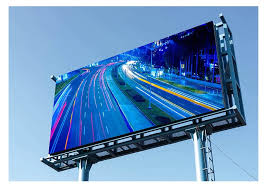
2. Light Source and Color Gamut: The integration of laser diodes (RGB wavelengths of approximately 450 nm for blue, 520 nm for green, and 630 nm for red) enables precise color reproduction and wide color gamut exceeding NTSC 90%. Laser light's coherence and wavelength specificity are critical for holographic reconstruction.
3. Transparency Rate: Industry benchmarks require a transparency of 80% or higher for screens to qualify as 'invisible.' Specialized conductive and optically clear materials, such as indium tin oxide (ITO) coated substrates, achieve this while maintaining electrical connectivity for LEDs.
4. Refresh Rate and Latency: To handle dynamic content with fluid motion, holographic invisible screens are designed with a minimum refresh rate of 120 Hz, reducing flicker and latency, thereby enhancing user immersion and reducing eye strain.
5. Projection Volume and Viewing Angle: The effective projection volume is optimized within a 60 to 120-degree horizontal viewing angle and a depth range of up to 1.5 meters, balancing hologram size and brightness with user convenience.
#Industry Standards and Quality Assurance
The development and deployment of holographic unseen screens adhere to protocols set by organizations such as the International Electrotechnical Commission (IEC 62341 series for LED modules) and Society for Information Display (SID) standards for holographic and transparent display validation. Compliance guarantees:
- Thermal management efficacy, ensuring longevity of laser diodes and LED matrices under continuous operation.
- Electromagnetic compatibility (EMC) to prevent interference with other devices.
- Mechanical durability, especially for flexible and curved screens using polycarbonate or glass substrates.
#Applications and Case Studies
Holographic invisible screens find applications across multiple domains:
- Retail and Advertising: Transparent storefront displays enable interactive promotions without obstructing the ambience. For instance, Samsung’s HID (Holographic Integrated Display) showcased in partnership with global brands integrates holography with smart LED matrices.
- Medical Imaging: Surgeons employ holographic displays for 3D visualization of anatomical structures during minimally invasive procedures. Collaborations between holography firms and medical equipment manufacturers underline this trend.
- Consumer Electronics: Integration into smartphones and augmented reality (AR) headsets aids in delivering advanced user interfaces that seamlessly blend digital content with the physical environment.
- Automotive Heads-Up Displays (HUDs): Transparent holographic projections reduce driver distraction by overlaying navigation data directly onto windshields with high clarity and contrast.
A notable case study by Holoxica Limited demonstrated a transparent holographic display that maintained 83% transparency while projecting dynamic 3D images with a viewing angle exceeding 100 degrees. This breakthrough hinged on customized LED pixel arrangements and laser interference pattern control algorithms, establishing a prototype for next-generation smart displays.
#Challenges and Future Directions
Despite promising advancements, challenges remain:
- Brightness Limitation: Achieving high luminance without washing out ambient scenes, especially under direct sunlight, necessitates advancements in ultra-bright laser diodes and adaptive contrast algorithms.
- Cost and Scalability: Manufacturing precision holographic components and integrating laser modules currently involves high costs, limiting mass adoption. Economies of scale and material innovation are essential for broader market penetration.
- Content Creation and Compatibility: Developing intuitive authoring tools for holographic content and ensuring backward compatibility with existing video formats require standardization and ecosystem collaboration.
Looking ahead, the convergence of quantum dot LEDs (QLEDs), flexible substrates, and AI-driven optimization promises to enhance the performance and affordability of holographic invisible screens. Integration with 5G networks and edge computing will also facilitate real-time holographic communication and immersive telepresence applications.
#Conclusion
The holographic invisible screen represents a transformative leap in display technology, bridging the gap between digital content and the physical environment. By leveraging advances in laser optics, LED engineering, and material science, this innovation offers both aesthetic and functional advantages across diverse sectors. Upholding rigorous standards and addressing current technological hurdles will be pivotal in unlocking the full potential of this captivating technology.
References:
- IEC 62341-1: LED Modules for General Lighting – Performance Requirements.
- SID Holographic Display Whitepapers, 2023.
- Holoxica Limited Technical Reports, 2022.
- Samsung Advanced Displays Project Briefs, 2023.













