

Advanced Technologies and Best Practices in LED Display Manufacturing for Superior Performance
The LED display industry has witnessed unprecedented growth, driven by advancements in manufacturing processes and technology integration. As a professional LED display engineer with extensive experience, this article delves into the critical aspects of LED display manufacturing, providing a comprehensive understanding of the state-of-the-art technologies, quality standards, and practical insights necessary for producing high-performance LED screens that meet the demands of modern applications.
Introduction to LED Display Manufacturing
LED (Light Emitting Diode) displays have become ubiquitous across various sectors including outdoor advertising, broadcast, transportation, sports arenas, and retail environments. Their advantages — superior brightness, energy efficiency, longevity, and vibrant color reproduction — depend heavily on precise manufacturing and rigorous quality control. Achieving these qualities requires an integration of advanced materials science, precision electronics, and meticulous assembly techniques.
Fundamental Components and Technical Parameters
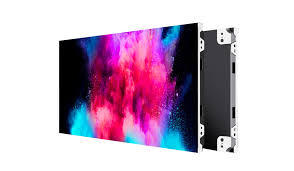
LED displays are composed mainly of LED modules, power supplies, control systems, and protective enclosures. The key technical specifications that determine display effectiveness include:
- Pixel Pitch: The center-to-center distance between two adjacent pixels. Typical values range from 0.9mm (fine pitch) to over 20mm for large outdoor displays. Smaller pitch values enable higher resolution images, critical for close-viewing situations.
- Brightness: Measured in nits (cd/m²), brightness levels vary depending on the installation environment. Outdoor displays typically require 5,000 to 8,000 nits to overcome sunlight, whereas indoor panels require 300-1,000 nits.
- Refresh Rate: Modern LED panels operate at refresh rates above 1,920 Hz to prevent flicker and ensure smooth video playback, complying with broadcast standards (e.g., 1080p at 60Hz).
- Color Accuracy and Gamut: The use of RGB LED chips allows displays to achieve color gamuts approaching Rec. 709 or DCI-P3, essential for broadcasting and cinema applications.
- Viewing Angle: A wide horizontal and vertical viewing angle (≥120°) ensures uniform image visibility from diverse audience positions.
Manufacturing Process Excellence
1. LED Chip Selection and Testing:
The initial step hinges on selecting LEDs with consistent luminance and chromaticity coordinates. High-quality epitaxial wafers and rigorous binning processes—sorting LEDs by color and brightness—lead to uniform panel display characteristics. Industry leaders rely on automatic optical inspection (AOI) systems capable of identifying even minute color or brightness deviations.
2. Module Assembly and Soldering Technology:
The substrates (usually PCB or flexible circuits) undergo solder paste application followed by precise placement of LED packages using high-speed pick-and-place machines. Soldering methods such as reflow soldering are optimized for temperature profiles to avoid thermal damage to LED chips. Reliability tests per IPC-A-610 ensure solder joint integrity.
3. Encapsulation and Optical Enhancements:
Advanced encapsulation materials protect LEDs from humidity, UV radiation, and mechanical shock. Silicone resins with high light transmission rates are preferred. Additionally, lens design and optical diffusers are refined via ray tracing simulations to optimize viewing angles and reduce glare.
4. Quality Assurance and Calibration:
Post-assembly, critical quality controls are implemented—luminance uniformity mapping, chromaticity calibration using spectroradiometers, and automated repair stations to replace defective LEDs. Calibration software aligns color temperature (typically 6500K for standard white), gamma curves (2.2–2.4), and gray scales to strict tolerances, supporting HDR content compatibility.
5. Environmental and Durability Testing:
Conformity with environmental standards such as IEC 60529 IP rating (commonly IP65 for outdoor displays) ensures resistance to dust and water ingress. Thermal cycling tests (e.g., -40°C to +85°C) validate long-term operational stability. Vibration and shock tests simulate transportation and installation stresses.
Integration of Advanced Technologies
- Surface Mount Technology (SMT) Enhancements:
SMT advancements enable smaller pixel pitches and higher LED density, leading to ultra-fine pitch displays (~0.9mm). The introduction of micro-LED technology promises even superior pixel integration with lower power consumption and longer lifespan.
- Intelligent Control Systems:
Modern LED controllers feature FPGA-based real-time processing for high refresh rates, seamless video stitching, and robust error correction algorithms. Network protocols compliant with standards like NDI and HDMI 2.1 facilitate live content delivery.
- Energy Efficiency Improvements:
LED binning focused on efficacy (lumens per watt) helps reduce electricity costs and thermal output. Advanced power supplies with PFC (Power Factor Correction) and digital dimming provide stable driving currents and extend component life.
Industry Case Study: Using Fine Pitch LED Displays in Broadcast Studios
Delving into a practical example, a leading international television network installed a 1.2mm pixel pitch LED wall spanning 100 sqm within their news studio. Leveraging full-color gamut calibration and 3D LUT (Look-Up Table) adjustments, the display delivered consistent brightness and lifelike color reproduction under varying studio lighting. Subsequent quality testing revealed >98% pixel uniformity and zero flicker at 4K/60Hz playback, matching stringent EBU broadcast standards.
Emerging Trends and Future Directions
- Micro-LED Technology:
Micro-LED, characterized by LED chips sized in microns, is expected to revolutionize display technology, offering pixel-perfect images with improved energy efficiency and unprecedented contrast ratios akin to OLED but with superior durability.
- Flexible and Transparent LED Displays:
Materials innovation facilitates bendable and see-through LED screens, opening new possibilities in automotive HUDs (Heads-Up Displays) and architectural design.
- AI-powered Maintenance and Diagnostics:
Integration of AI systems to monitor display health in real-time enables predictive maintenance, reducing downtime and improving lifecycle management.
Conclusion: Best Practices for Reliable LED Manufacturing
Consistency in component quality, precision in assembly, comprehensive calibration, and adherence to international standards (such as IEC 62368 for safety, and UL certifications for product reliability) are pivotal. Manufacturers must implement robust testing protocols, embrace innovative technologies, and maintain close collaboration with LED chip suppliers and end-users to deliver superior displays that meet ever-evolving demands.
References:
- International Electrotechnical Commission (IEC) standards: IEC 60529, IEC 62368
- IPC-A-610: Acceptability of Electronic Assemblies
- EBU Tech Review: Broadcast Display Technologies, 2022
- Journal of Display Technology: Advances in Micro-LEDs, Vol 18, Issue 7
- "LED Displays: Fundamentals and Applications," by John Davies, Wiley, 2021
Through rigorous engineering and continual innovation, LED display manufacturing will continue to advance, offering transformative visual experiences across industries worldwide.













