

LED Cube Screen Technology: Design, Applications, and Industry Insights
The evolution of display technology has ushered in innovative formats that captivate audiences by providing immersive visual experiences. Among these, the LED cube screen stands out as a transformative medium, combining three-dimensional display capabilities with the dynamic qualities of LED technology. As a professional LED display engineer with extensive experience in LED manufacturing and system integration, this article delves into the technical design, material considerations, applications, and industry trends essential to understanding and leveraging LED cube screens effectively.
Understanding LED Cube Screens
An LED cube screen consists of a multi-layered or three-dimensional array of LED modules arranged typically in a cubic or cuboidal structure. Unlike flat LED screens that display images on a single plane, LED cubes deliver volumetric visualization by illuminating LED pixels positioned on multiple faces and depths of the cube. This design enhances the viewer’s spatial perception, making these screens ideal for cutting-edge applications in advertising, exhibitions, entertainment, and architectural installations.
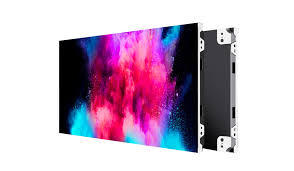
Technically, LED cubes can vary in size from small desktop models (e.g., 8x8x8 LED matrices) to large-scale installations measuring several meters per side. The pixel pitch — that is, the distance between adjacent LEDs — typically ranges from 2mm to 10mm for fine-detail smaller cubes, to 20mm or above for larger cubes intended for distance viewing. Generally, the smaller the pixel pitch, the higher the resolution and clarity, though cost and power consumption increase accordingly.
Key Technical Parameters
1. LED Type and Color: High-brightness SMD (Surface Mount Device) LEDs, such as 3535 or 5050 packages, are standard due to their efficiency, lifespan (>100,000 hours in optimal conditions), and wide viewing angles (typically 120°+). Full RGB LEDs enable 16 million color combinations using pulse width modulation (PWM) control of red, green, and blue diodes.
2. Refresh Rate and Gray Scale: A minimum refresh rate of 1920Hz is preferred to eliminate flickering and ensure smooth animations or videos. Gray scale depth of 14-16 bits ensures color gradients appear smooth and images retain depth realism.
3. Control System: LED cube screens use advanced driving ICs such as the MBI5124 or ICN2038 that support high refresh and grayscale performance. Dedicated controllers enable 3D content mapping and synchronization across multiple cube faces.
4. Power Considerations: Power efficiency is critical since LED cubes have LEDs exposed over three dimensions, necessitating optimal heat dissipation mechanisms. LEDs consume approximately 0.06-0.1 watts per LED under typical operation, requiring robust power supplies.
5. Structural and Material Quality: Aluminum alloy frames with precise CNC machining ensure dimensional accuracy and rigidity. The optical diffuser or lens covering the LEDs must maintain uniform light output and protect from environmental dust and damage. IP rating (Ingress Protection) of IP54 or higher is recommended for outdoor or semi-outdoor installations.
Manufacturing Insights and Challenges
Producing LED cube screens poses unique manufacturing challenges. The interconnection of LED arrays in three-dimensional space requires precision wiring and soldering to maintain signal integrity and uniform brightness. Thermal management differs significantly from planar panels; heat sinks and airflow channels must be engineered into all sides of the cube. Furthermore, calibration across different LED facets is critical — factory calibration systems use photometric equipment and software to ensure color and brightness consistency.
Modular design is a key trend. Engineers increasingly design LED cubes in panelized units that can be assembled on-site, reducing transportation complexity and installation time. Incorporating hot-swappable LED modules facilitates maintenance and minimizes downtime, particularly for permanent architectural installations.
Applications and Industry Use Cases
The LED cube screen’s three-dimensional effects provide dramatic appeal in numerous contexts:
- Advertising and Retail: Brands use LED cube screens in flagship stores or exhibition stalls to create attention-grabbing product showcases. The cubes often display looping 3D animations or interactive media that respond to gestures or audience movement, elevating user engagement.
- Entertainment: Concerts and stage performances integrate giant LED cubes as centerpiece installations offering dynamic, volumetric visual effects synchronized with live music. Integration with motion capture and augmented reality (AR) technologies pushes creative boundaries.
- Architectural and Public Spaces: LED cube installations in plazas, malls, and museums create artful lighting displays and immersive experiences. Examples include multi-cube networks that form configurable shapes, responding to environmental data or social interactions.
- Scientific Visualization and Education: Smaller LED cubes serve as physical platforms for demonstrating 3D data patterns, such as molecular structures or volumetric simulations, enhancing conceptual understanding in academic settings.
Future Trends and Innovations
The future of LED cube screens aligns with advances in flexible LED substrates, micro-LED technology, and AI-driven content creation:
- Flexible and Curved Cubes: Emerging flexible printed circuit boards (FPCBs) allow LED panels to bend and create organically shaped cubes or spherical displays with seamless visuals.
- Micro-LED Integration: Micro-LEDs, with pixel pitches below 100 microns, offer unrivaled brightness, contrast ratios (>100,000:1), and ultra-low power consumption, paving the way for ultra-high resolution 3D cube screens.
- Interactive Controls and AI Content: Integration with AI algorithms enables dynamic content adjustments based on audience behavior or real-time data analytics, enhancing interactivity and relevance.
Industry Standards and Quality Assurance
Compliance with industry-wide standards, such as IEC 62368-1 for safety and IEC 60598 for luminaires, guarantees operational reliability and user safety. Additionally, international certifications including CE, FCC, RoHS, and UL are essential for product acceptance in global markets.
Quality assurance protocols involve extensive environmental testing — exposure at varying temperatures (-20°C to 50°C) and humidity levels (up to 95% RH) to simulate real-world conditions. Long-term reliability is validated through accelerated aging tests and LED binning processes that group LEDs according to color and brightness consistency.
Conclusion
LED cube screens represent a compelling convergence of design ingenuity and electronic engineering, offering a multidimensional canvas for creative visual communication. For manufacturers and system integrators, a thorough understanding of underlying technology parameters, materials, and production methodologies is critical to delivering high-performance and durable LED cube solutions. Continued innovation in LED component technology, control electronics, and interactive software will expand the capabilities and applications of LED cubes, ensuring their place as a futuristic display medium.
References
- Zhao, X. et al. (2022). "Advances in Micro-LED Technology for Three-Dimensional Displays." Journal of Display Technology, IEEE.
- International Electrotechnical Commission (IEC), "IEC 62368-1: Audio/video, information and communication technology equipment - Safety requirements," 2020.
- Smith, J. (2021). LED Display Fundamentals. Springer Publishing.
- LED Manufacturer Data Sheets and Application Notes from Cree, Nichia, and Epistar.













