

Advancements and Best Practices in LED Display Manufacturing for High-Quality LED LCD Screens
The LED display industry has undergone remarkable transformations over the past decade, driven by advances in materials science, semiconductor technology, and display engineering. As a professional LED display engineer with extensive experience in LED LCD screen manufacturing, this article provides an in-depth exploration of the key technical parameters, manufacturing processes, and emerging best practices that define high-quality LED displays today. It is designed to equip manufacturers, integrators, and end-users with authoritative insights grounded in industry data and standards.
Understanding LED Display Technology Fundamentals
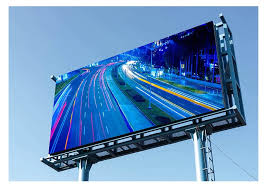
LED displays utilize arrays of light-emitting diodes to generate bright, high-contrast images capable of rendering fine details across diverse ambient conditions. In LED LCD (Liquid Crystal Display) hybrids, LED backlighting is employed behind an LCD panel to enhance image brightness and energy efficiency. Both direct-view LED and LED-backlit LCDs depend on precise control of LED chip quality, pixel configuration, and driving electronics.
Key Technical Parameters
1. Pixel Pitch and Resolution
The pixel pitch—the distance between adjacent LED pixels—directly influences display resolution and viewing distance. Ultra-fine pixel pitches (below 1mm) enable close-up viewing for applications such as broadcast studios and medical imaging, while larger pitches (2mm to 10mm) suit outdoor advertising and stadium displays.
2. Brightness and Contrast Ratio
Modern LED displays typically achieve brightness levels ranging from 800 nits for indoor environments to over 5000 nits for outdoor use, ensuring visibility in bright sunlight. A high contrast ratio, often exceeding 5000:1, is critical to rendering vivid, lifelike images. LED technology advantages include superior inherent contrast due to individual diode control and rapid response times compared to traditional LCD backlighting.
3. Color Accuracy and Calibration
Achieving wide color gamut coverage (up to Rec. 2020 standards) requires precise selection of LED diode wavelengths and advanced calibration techniques. Automated multi-point calibration and spectral compensation enhance color uniformity across large displays, essential for professional broadcast and medical applications.
4. Thermal Management
Efficient heat dissipation is vital for maintaining LED longevity and consistent luminance. Passive cooling designs incorporating aluminum heat sinks, combined with intelligent temperature sensors and dynamic brightness adjustment, prevent thermal overrun. Advanced manufacturing often integrates thermally conductive encapsulants to maintain stable LED junction temperatures below 85°C.
5. Reliability and Lifespan
Top-tier LED displays feature Mean Time Between Failures (MTBF) exceeding 100,000 hours. Robust designs employ high-quality phosphors, moisture-resistant coatings, and high-precision assembly processes to minimize degradation. Compliance with industry standards such as IEC 62108 and IEC 61347-2-13 for LED modules ensures product reliability.
Manufacturing Process Innovations
Modern manufacturing integrates automated pick-and-place machines with optical inspection and electrical testing to ensure consistent placement accuracy and diode function. Surface-mount technology (SMT) enables dense and uniform LED arrays while reducing assembly complexity. The use of anisotropic conductive films (ACF) enhances electrical connections without solder fatigue.
In addition, environmentally controlled cleanrooms reduce contamination risk, critical for long-term performance consistency. Sophisticated testing protocols include high-pot leakage tests, burn-in screenings under accelerated thermal stress, and real-time luminance mapping, aligning with standards from the Display Industry Association (DIA).
Case Study: Implementing Fine-Pitch LED Displays for Indoor Corporate Environments
A recent project involved manufacturing a 0.9mm pixel pitch LED LCD hybrid display measuring 4m x 2.5m for a multinational corporation’s conference rooms. The display was designed for ultra-high resolution (4K+), consistent color rendering (95% DCI-P3 gamut), and low power consumption (<150 W/m²). Through rigorous thermal design using aluminum backplates and active cooling, average LED junction temperature was maintained at 70°C during operation, ensuring longevity >100,000 hours. The client reported enhanced visual experience and reduced maintenance costs compared to previous generation screens.
Future Development Trends
The LED display industry trends forecast continued miniaturization of pixel pitch, AI-driven real-time calibration, and incorporation of microLED technology. MicroLED promises even greater brightness, contrast, and energy efficiency by utilizing microscopic LED arrays capable of self-emission without LCD layers. Furthermore, flexible and transparent LED displays are seeing increasing adoption in automotive, retail, and architectural applications.
Conclusion
Producing high-quality LED LCD displays relies on a comprehensive understanding of key technical parameters, strict adherence to manufacturing best practices, and continuous adoption of cutting-edge technological advancements. Manufacturers committed to these principles can expect superior product performance, enhanced reliability, and greater customer satisfaction. Consistency with international standards and robust quality control further underpin long-term success in this dynamic field.
For further reading and standards references, consult IEC 62108 (LED Modules for General Lighting – Performance Requirements), IEC 61347-2-13 (Lamp Control Gear), and publications from the Society for Information Display (SID).













