

Advances and Best Practices in LED Display Manufacturing: Technical Insights and Industry Standards
The LED display industry has witnessed remarkable advancements over the past decade, driven by the growing demand for high-resolution, energy-efficient, and durable display solutions across diverse applications such as advertising, sports arenas, control rooms, and public information systems. As a professional LED display engineer with extensive experience in manufacturing and quality control, I aim to provide an authoritative overview of current best practices, key technical parameters, and relevant industry standards that underpin the production of cutting-edge LED LCD screens.
Introduction
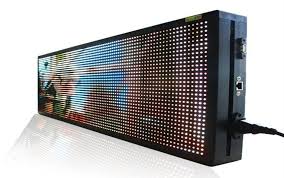
Understanding the fundamentals of LED display manufacturing requires a thorough grasp of several core technical elements. LED (Light Emitting Diode) displays combine arrays of tiny diodes emitting colored light to reproduce images and video. Unlike traditional LCDs that rely on backlighting, LED displays offer superior brightness, contrast, and energy efficiency. However, producing high-quality LED displays demands precision engineering, rigorous quality assurance, and adherence to industry norms such as IEC 62471 (Photobiological Safety of Lamps and Lamp Systems) and the International Electrotechnical Commission standards related to electronic and optical performances.
Main Body
1. Core Technical Parameters
Key technical parameters significantly influence LED display performance:
- Pixel Pitch: Defined as the center-to-center distance between adjacent pixels, pixel pitch determines resolution and viewing distance. Smaller pixel pitches (e.g., 0.9mm to 2.5mm) are favored for close-range indoor displays delivering high pixel density, while larger pitches (e.g., 4mm to 10mm) suit outdoor applications. Industry-leading manufacturers achieve consistency within ±0.05mm tolerance in pixel pitch, critical for uniform imaging.
- Brightness and Contrast Ratio: Typical indoor LED displays exhibit brightness levels of 800-1500 nits, while outdoor displays can reach 5000 nits or higher to ensure visibility under direct sunlight. Contrast ratios exceeding 3000:1 are desirable for vivid color reproduction and image depth. Utilizing SMD (Surface Mount Device) LEDs with high lumen output and low power consumption aids in reaching these parameters.
- Color Calibration and Uniformity: Precision color calibration via embedded IC controllers ensures all pixels display consistent RGB balance. Uniformity standards mandate no more than 10% deviation in luminance and color temperature across the screen surface, minimizing visual artifacts and enhancing viewer experience.
- Refresh Rate and Gray Scale: A minimum refresh rate of 1920Hz is standard for flicker-free video performance, especially for broadcast and filming environments. The gray scale (color depth) of 14-bit or higher is essential for smooth gradients and detailed image rendering.
2. Manufacturing Best Practices
Advanced LED display manufacturing involves several critical processes:
- PCB Quality Control: The printed circuit board’s material and design impact heat dissipation and signal integrity. High-grade FR4 or polyimide PCBs with multilayer copper plating optimize performance and longevity.
- LED Bin Sorting and Testing: LEDs are categorized (binned) by wavelength, brightness, and forward voltage. Matching these bins strictly during module assembly prevents inconsistencies and color shifts. Automated testing with CCD (Charge-Coupled Device) cameras ensures pixel-level defect detection before final assembly.
- Module Assembly and Cabinet Construction: The modular design allows large-scale displays to be assembled from smaller LED panels for easy maintenance and transport. Precision mechanical structures with adjustment mechanisms maintain flatness and alignment to within 0.1mm, avoiding distortions.
- Thermal Management: Efficient heat dissipation systems employing aluminum die-cast cabinets and integrated heat sinks prevent overheating, which can degrade LED lifespan and color stability. Considering LED junction temperatures is critical in design, typically maintained below 60°C.
3. Industry Standards and Certifications
Compliance with international standards guarantees safety, performance, and interoperability:
- IEC 62087: Specifies methods of measurement for the power consumption of audio, video, and related equipment, ensuring energy efficiency benchmarks.
- RoHS (Restriction of Hazardous Substances): Ensures environmentally safe materials and processes are used during manufacturing.
- CE and FCC Certifications: Confirm electromagnetic compatibility and electrical safety, mandatory for products marketed worldwide.
- Calibration and Photometric Testing: Adherence to standards such as ISO 3664 (Viewing Conditions for Graphic Technology and Photography) ensures color accuracy under standardized light conditions.
4. Industry Case Studies
Leading brands such as Samsung, Leyard, and Daktronics demonstrate the practical applications of these best practices. For instance, Samsung’s high-end LED walls employ micro-LED technology to push pixel pitch below 0.7mm with high brightness and exceptional uniformity, targeting premium indoor venues. Meanwhile, Leyard’s large-scale outdoor video boards utilize ruggedized cabinets and advanced thermal designs to maintain durability and performance in extreme weather.
Conclusion
Mastering LED display manufacturing demands a comprehensive approach integrating meticulous design, precise assembly, stringent testing, and compliance with international standards. Optimizing pixel pitch, brightness, contrast, and color uniformity ensures superior image quality, while advanced thermal management and quality control prolong lifespan and reliability. As display technologies evolve with micro-LEDs and flexible substrates, adherence to best practices remains essential. Continuous innovation combined with robust manufacturing protocols will drive the LED display industry forward, meeting the ever-growing demands for dynamic, high-resolution visual solutions worldwide.













