

Advancements and Technical Insights in LED LCD Screen Manufacturing
The LED LCD screen industry has witnessed rapid technological advancements, driven by the relentless pursuit of enhanced display quality, energy efficiency, and durability. As a professional LED display engineer, this article delves into the critical aspects of LED LCD manufacturing, providing a comprehensive overview of the technical parameters, industry standards, and best practices that shape the modern landscape of display technology.
Evolution of LED LCD Technology
LED (Light Emitting Diode) backlighting for LCD (Liquid Crystal Display) has revolutionized the display sector since its commercialization in the early 2000s. The integration of LED backlights replaced traditional CCFL (Cold Cathode Fluorescent Lamp) backlights, offering significant improvements in brightness uniformity, contrast ratio, and power consumption.
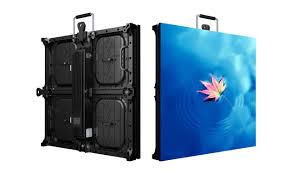
Current generation high-end LED LCDs utilize advanced backlighting techniques such as Full-Array Local Dimming (FALD), which enables precise contrast enhancement by dynamically controlling local LED segments. This technology supports contrast ratios exceeding 1,000,000:1, essential for superior image reproduction in high dynamic range (HDR) content.
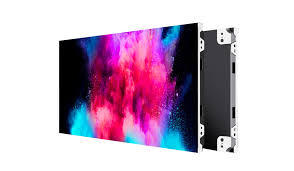
Key Technical Parameters
1. Resolution and Pixel Pitch:
The resolution has progressively moved from HD (1280x720) to 4K UHD (3840x2160) and beyond. Pixel pitch, the distance between centers of adjacent pixels, fundamentally impacts image sharpness. Typical LCD panels now achieve pixel pitches below 0.25 mm, enabling crisp visuals even on compact displays.
2. Color Gamut and Calibration:
Modern LED LCD displays cover wide color spaces, including sRGB, Adobe RGB, and DCI-P3 standards. Industry-grade screens feature color calibration tools adhering to ICC profiles to ensure consistent color reproduction. Achieving over 95% DCI-P3 gamut coverage is now standard for professional uses, especially in video production.
3. Brightness and Contrast:
Average brightness levels range from 250 to 1000 nits, depending on applications. Outdoor or specialized industrial displays can exceed 2000 nits. High contrast ratios facilitated by LED backlighting and effective panel technology enhance image depth, improving user experience in varied lighting environments.
4. Response Time and Refresh Rate:
A response time below 5 ms is critical to reduce motion blur in video playback and gaming. LED LCDs typically offer refresh rates of 60Hz to 240Hz, with higher frequencies favored in competitive gaming or professional visualization for smooth motion rendering.
Manufacturing Process and Quality Control
Manufacturing LED LCD panels involves several intricate stages: substrate fabrication, thin-film transistor (TFT) layering, liquid crystal alignment, color filtering, LED backlight assembly, and final module integration. Each phase demands stringent environmental controls to minimize particulate contamination and maintain yield rates.
Quality control protocols comply with international standards such as ISO 9001 and IEC 62368 (Safety requirements for audio, video, and similar electronic apparatus). Post-production performance testing includes uniformity mapping, luminance measurement, color accuracy validation, and durability stress tests simulating operational environments.
Energy Efficiency and Sustainability
With global emphasis on energy conservation, LED backlighting contributes substantially to lowering power consumption due to its superior luminous efficacy compared to CCFL. Modern designs integrate intelligent dimming algorithms and advanced power supply units to optimize energy use without compromising display performance.
Sustainability efforts focus on reducing hazardous materials (aligning with RoHS directives), enhancing recyclability, and extending product lifespan. Manufacturers increasingly adopt eco-friendly materials and promote modular designs facilitating repairability and upgrades rather than disposability.
Industry Applications and Case Studies
LED LCD displays are ubiquitous across sectors such as consumer electronics, healthcare imaging, automotive dashboards, and commercial signage. For example, in medical imaging, ultra-high brightness and precise color calibration support diagnostic accuracy. Automotive applications benefit from ruggedized panels designed to withstand extreme temperature variations and vibrations.
A notable case study involves a global LED LCD manufacturer who successfully deployed Full-Array Local Dimming technology combined with quantum dot enhancement films (QDEF). This integration delivered unprecedented color brightness and energy efficiency in premium TV models, gaining competitive advantages in global markets.
Future Trends and Innovations
Looking ahead, micro-LEDs and OLED hybrids present promising pathways to further improve display contrast and reduce form factor thickness. Advanced machine learning algorithms are integrating into calibration and defect detection processes, significantly enhancing manufacturing precision and reducing wastage.
Additionally, flexible and transparent LED LCD screens are creating new opportunities in architectural design, wearable technologies, and transparent advertising panels, widening the horizon of functional display applications.
Conclusion
Mastering LED LCD manufacturing requires a profound understanding of material science, electronic engineering, and optical design, bound together with rigorous quality standards. Continuous innovation, adherence to international standards, and a focus on sustainability are essential to meet the escalating demands for high-performance displays worldwide.
For professionals aiming to stay at the cutting edge, aligning with global benchmarks such as IEC standards, adopting state-of-the-art calibration tools, and investing in energy-efficient technologies will ensure competitiveness and relevance in a dynamic market landscape.
References:
- International Electrotechnical Commission (IEC) Standards, IEC 62368-1:2020
- Society for Information Display (SID) Reports on Display Technology Advances
- "Display Technology: Fundamentals and Applications," Academic Press, 2021
- RoHS Directive (2011/65/EU) on the restriction of hazardous substances
- Case study data from leading manufacturers including Samsung Display, LG Display, and BOE Technology Group













