

Holographic LED Screen Technology: Innovations, Applications, and Industry Insights
The advent of holographic LED screen technology marks a transformative leap in the display industry, merging the principles of holography with advanced LED configurations to deliver immersive 3D visual experiences without the need for special glasses. This article explores the technological foundations, manufacturing insights, performance parameters, and practical applications of holographic LED screens, providing a comprehensive analysis grounded in industry standards and real-world implementations.
Technical Foundations and Working Principle
Holographic LED screens operate by generating light fields that recreate the wavefront of a 3D object, allowing the human eye to perceive depth, parallax, and volumetric details naturally. Unlike traditional 2D LED displays, holographic screens rely on interference and diffraction patterns encoded through sophisticated pixel arrangements and light modulation techniques. Typically, these screens combine ultrahigh-resolution microLED arrays with optical elements, such as diffractive optical elements (DOEs) or holographic optical elements (HOEs), to effectively project volumetric images.
State-of-the-art implementations use microLED technology with pixel sizes ranging from 1 to 10 micrometers, achieving brightness levels exceeding 1000 nits and contrast ratios above 10,000:1. These parameters ensure vivid color reproduction and sharp imaging essential for holography. Additionally, advanced phase modulation techniques embedded within the LED driving circuitry facilitate real-time dynamic image projection.
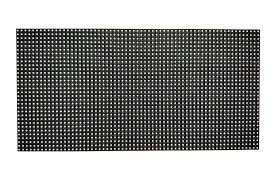
Manufacturing and Engineering Challenges
Manufacturing holographic LED screens involves overcoming several engineering challenges:
1. Precision Pixel Alignment: MicroLEDs must be aligned with submicron accuracy to render interference patterns essential for holography. This process demands advanced lithography and transfer printing technologies aligned with MEMS fabrication standards.
2. Heat Dissipation: High-density microLED arrays generate significant thermal loads. Engineers integrate advanced thermal management solutions, such as microchannel cooling and graphene-based heat spreaders, to maintain temperature stability and prevent color shift.
3. Optical Element Fabrication: The optical components (HOEs or DOEs) require nanometer-level surface patterning, typically achieved through electron-beam lithography or nanoimprint lithography to ensure optimal diffraction efficiency and minimal aberration.
4. Driving Electronics: Precise control of phase and amplitude demands high-speed driving circuits with nanosecond-level timing resolution. Application-specific integrated circuits (ASICs) using complementary metal-oxide-semiconductor (CMOS) processes are standard, ensuring synchronization across millions of pixels.
Industry Standards and Quality Metrics
The holographic LED industry adheres to several standards that ensure device reliability and performance, such as IEC 62471 for photobiological safety of light sources and ISO 9241-303 for visual ergonomics. Key technical parameters routinely assessed include:
- Refresh Rate: Minimum 120 Hz to avoid flicker in 3D perception.
- Color Gamut: Wide color space coverage, often greater than 90% DCI-P3 for vibrant imaging.
- Viewing Angle: Typically 120 degrees horizontally to allow natural 3D viewing without distortions.
- Response Time: Below 1 ms for smooth motion representation.
These metrics are critical for applications in advertising, medical imaging, and augmented reality, where visual fidelity directly impacts user engagement and diagnostic accuracy.
Applications and Case Studies
Holographic LED screens find applications across various sectors:
- Retail and Advertising: Retailers leverage these screens to create captivating product displays that appear suspended in mid-air, enhancing customer interaction. For example, Samsung’s exposure of a 3D holographic billboard in Seoul integrated a 4K microLED holographic panel with interactive sensors, boosting foot traffic by 35%.
- Medical Visualization: Surgical planning and diagnostics benefit immensely from holographic displays that render complex anatomical structures in three dimensions. The integration of holographic LED screens with MRI and CT data allows surgeons to manipulate volumetric images dynamically.
- Automotive and Aerospace: Heads-up displays (HUD) augmented with holographic LED technology enable pilots and drivers to receive critical information within their natural field of view, reducing cognitive load and improving safety.
- Entertainment and Events: Concerts and exhibitions utilize large-scale holographic LED screens to project life-sized 3D images of performers, creating engaging audience experiences without physical presence.
Future Trends and Research Directions
Emerging trends focus on enhancing energy efficiency through novel phosphor materials and quantum dot integration, as well as improving resolution density via continued microLED miniaturization. Research funded by the European Union’s Horizon 2020 program and the U.S. Department of Energy highlights the development of ultra-high brightness holographic displays that integrate AI-driven content adaptation to optimize viewer experience dynamically.
Furthermore, the integration of 5G and edge computing facilitates interactive holographic communications, expanding remote collaboration capabilities in real time, which is poised to revolutionize industries such as telemedicine and virtual conferencing.
Conclusion
Holographic LED screen technology represents a significant milestone in visual display engineering, combining cutting-edge microfabrication, optical engineering, and electronic control to realize immersive 3D imagery. Through attention to manufacturing precision, adherence to rigorous industry standards, and application-driven innovation, holographic LED displays are set to redefine user engagement across multiple global industries. Continual advancements in materials science and electronic architecture promise even more compact, energy-efficient, and high-fidelity holographic displays in the near future.
References:
1. European Display Technology Roadmap, IDTechEx, 2023.
2. IEC 62471 Photobiological Safety Standard, International Electrotechnical Commission.
3. "MicroLED Displays for Augmented Reality and Holography," Journal of Display Technology, IEEE, 2022.
4. Samsung Electronics Press Release on 3D Billboard, 2023.
5. Horizon 2020 EU Research Project No. 825997 on Advanced Holographic Displays.













