

Advanced Technologies and Best Practices in LED Display Manufacturing
In the rapidly evolving realm of display technologies, LED displays stand out for their versatility, brightness, and energy efficiency. As a professional LED display engineer with extensive experience in the manufacturing process, this article aims to provide a comprehensive, practical, and authoritative insight into the state-of-the-art manufacturing techniques, technical parameters, and quality control standards that define modern LED display production.
#Understanding LED Display Technology
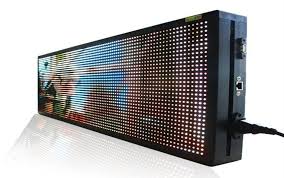
LED (Light Emitting Diode) displays consist of thousands to millions of tiny LEDs combined to create images and videos with exceptional brightness and contrast. The key technical specifications include:
- Pixel Pitch: The distance between the centers of two adjacent pixels, typically ranging from 0.8 mm for fine-pitch indoor displays to over 10 mm for large outdoor screens.
- Brightness: Indoor LED displays typically have a brightness range of 800 to 1,200 nits, whereas outdoor LED displays reach 5,000 to 7,000 nits or more to ensure visibility in direct sunlight.
- Refresh Rate: A critical factor to prevent flickering, modern LED panels often support refresh rates above 3,000 Hz.
- Color Calibration: True color reproduction is ensured through factory calibration ensuring over 16-bit color depth and precise gamma correction.
#Manufacturing Process Overview
The manufacturing of LED displays integrates multiple steps, each requiring precision and strict quality assurance:
1. SMD LED Selection and Testing
Surface-Mounted Device (SMD) LEDs are selected based on chromaticity, luminous intensity, and forward voltage to maintain uniformity. The LEDs undergo rigorous binning processes according to international standards like CIE 1931 to minimize color discrepancy.
2. PCB Design and Fabrication
The printed circuit board (PCB) is the backbone of the LED module. High-quality FR4 or aluminum PCBs with controlled impedance traces are fabricated to withstand thermal expansion and ensure electrical reliability.
3. Component Placement and Reflow Soldering
Automated pick-and-place machines position LEDs with micron-level accuracy. Reflow soldering processes follow IPC-A-610 standards to guarantee robust mechanical and electrical joints.
4. Module Assembly and Testing
Modules are assembled into panels with rigorous in-line testing, including:
- Pixel Failure Tests: Identifying dead or hot pixels with AOI (Automated Optical Inspection).
- Color Uniformity Tests: Using spectroradiometers to verify consistency.
- Thermal Stress Testing: Ensuring stability under operational heat cycling.
5. Integration and Calibration
Multiple panels are seamlessly integrated with precise mechanical fixtures and electronic synchronization. Factory calibration tools adjust timing, brightness, and color parameters, ensuring uniform display output.
#Quality Control and Industry Standards
Adherence to international standards is essential to ensure reliability, longevity, and safety:
- IEC 62368-1 for electrical safety in audio/video equipment.
- RoHS Compliance restricting hazardous substances in electronic components.
- IP Ratings: Outdoor LED displays must meet minimum ingress protection, typically IP65 to IP68, to resist dust and moisture.
- MIL-STD-810 for ruggedness in harsh environments.
Using accelerated aging tests, manufacturers simulate extended operational periods to identify potential failures early. This practice, combined with real-time environmental monitoring during operation, enhances product lifetime up to 100,000 operational hours or more.
#Case Studies and Industry Application
A notable project involves the installation of a large-scale LED screen in Times Square, New York. This 24/7 operational screen, incorporating full HD resolution with a 4 mm pixel pitch, withstands extreme weather conditions and intensive ambient light, leveraging cutting-edge silicon-based LEDs and advanced thermal management with integrated heat sinks and active cooling.
Similarly, indoor fine-pitch displays for command centers demand ultra-high refresh rates (≥4,000 Hz) and pixel pitches below 1 mm. These displays prioritize color accuracy and uniformity for critical mission applications, requiring tighter calibration tolerances.
#Future Trends in LED Display Manufacturing
With advances such as Mini-LED and Micro-LED technologies, displays promise higher pixel densities, improved color gamut, and reduced power consumption. Machine learning algorithms optimize manufacturing yield by predicting and minimizing defects. Additionally, sustainability is increasingly prioritized by developing recyclable materials and reducing energy footprint in production cycles.
#Conclusion
Mastering the manufacturing of LED displays requires in-depth expertise in electronic assembly, optical calibration, thermal management, and quality control. By adhering to industry standards and integrating the latest technological advancements, manufacturers can produce LED displays that offer superior performance, reliability, and durability across diverse environments.
References:
- CIE 1931 Colorimetry (Commission Internationale de l'Éclairage)
- IPC-A-610 Standard for Acceptability of Electronic Assemblies
- IEC 62368-1 Safety Standard for Audio/Video Equipment
- RoHS Directive (Restriction of Hazardous Substances)
- MIL-STD-810 Environmental Engineering Considerations and Laboratory Tests













