

Advanced Manufacturing Techniques and Technical Insights in LED Display Screen Production
The LED display industry has witnessed remarkable growth over recent years, driven by advancements in both manufacturing technologies and material sciences. As a seasoned engineer specializing in LED LCD screen production, I aim to provide a comprehensive and authoritative exposition on the current state of LED display manufacturing. This article offers insights into key technical parameters, manufacturing processes, quality control standards, and emerging trends that shape the industry globally.
Core Technical Parameters of LED Displays
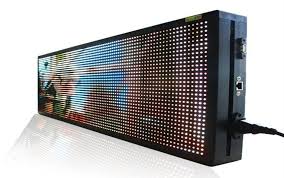
An LED display's performance is primarily characterized by parameters such as pixel pitch, brightness, contrast ratio, color accuracy, refresh rate, and viewing angle. Pixel pitch refers to the distance between the centers of adjacent LED pixels, fundamentally determining the display’s resolution and viewing distance suitability. For example, outdoor LED displays typically have a pixel pitch ranging from 6mm to 20mm, balancing visibility and cost-efficiency, whereas indoor displays commonly utilize pitches between 0.9mm and 2.5mm to deliver high-definition visuals.
Brightness levels are critical, especially for outdoor displays subjected to intense ambient light. Industry standards such as those outlined by the Illuminating Engineering Society recommend minimum brightness values of 4,000 to 7,000 nits for outdoor applications to maintain visibility under direct sunlight. Contrast ratio, along with calibrated color reproduction (often adhering to NTSC or sRGB color spaces), ensures accurate and vibrant imagery, critical for applications in advertising, broadcasting, and control rooms.
Manufacturing Processes and Quality Control
The production of LED display screens involves a multi-stage process, including substrate preparation, LED diode wafer fabrication, binning, assembly into modules, and final integration into comprehensive display panels. High-precision pick-and-place machines position thousands of LEDs accurately on Printed Circuit Boards (PCBs), each programmed with strict tolerances to guarantee uniform light output and color consistency.
Quality control plays a pivotal role in manufacturing. Adhering to standards such as IPC (Institute for Printed Circuits) for PCB quality and ISO 9001 for overall process management ensures reliability and durability. Additional testing, including 'burn-in' tests under variable temperature and humidity conditions, helps detect early failures. Sophisticated calibration systems adjust individual LED currents and color outputs, a process termed “gray scale calibration,” which directly contributes to the seamless visual performance of the finished display.
Emerging Trends and Innovations
A significant development in LED display technology is the transition toward MicroLED displays, which utilize microscopic LEDs to offer higher resolution, lower power consumption, and enhanced lifespan compared to conventional LEDs. Though currently costly, MicroLEDs are increasingly used in premium applications such as virtual reality and ultra-high-definition video walls.
Flexible and transparent LED displays are gaining traction as well, enabling innovative applications in automotive heads-up displays and architectural aesthetics. The integration of AI-driven diagnostics and automated defect detection during manufacturing fosters higher yields and consistent product quality.
Case Studies and Industry Applications
One relevant case is the deployment of ultra-fine pitch LED screens for control room environments, where the need for real-time data visualization demands both sharp resolution (pixel pitch ≤1.2mm) and fast refresh rates (≥3840Hz) to avoid flicker during camera capture. Manufacturers often customize modules to meet such stringent requirements, underpinning the importance of close collaboration between engineering and client teams.
Outdoor LED billboards in metropolitan areas typically combine anti-glare coatings and robust weatherproofing layers rated against IP65 or higher ingress protection standards, ensuring uninterrupted operation across seasons.
Conclusion
The evolution of LED display manufacturing is marked by continuous refinement of technical parameters, rigorous adherence to quality standards, and adoption of cutting-edge innovations such as MicroLED and flexible display technologies. For global markets, understanding and implementing these advances not only improve performance and reliability but also elevate user experience across diverse applications, from advertising and broadcasting to specialized industrial uses.
Leading manufacturers and engineers must stay abreast of international standards and emerging trends to maintain competitiveness. Technical expertise, combined with robust manufacturing practices, underpins the delivery of high-quality, visually stunning LED display solutions worldwide.
References:
- Illuminating Engineering Society (IES) Lighting Handbook
- IPC Standard for Printed Circuit Board fabrication (IPC-2221)
- ISO 9001 Quality Management Systems
- Journal of Display Technology, IEEE Publications
- Market Reports from LEDinside and IHS Markit













