

Cutting-Edge Technologies and Best Practices in LED Display Manufacturing
In the rapidly evolving landscape of visual display technology, LED screens have emerged as a dominant solution for diverse applications ranging from outdoor advertising to large-scale event broadcasting. As a professional LED display engineer with extensive experience in manufacturing, I will delineate the critical technological advancements, precise technical parameters, and stringent production standards that guide the fabrication of industry-leading LED displays.
1. Advanced LED Chip Technology and LED Types
At the heart of any LED display lies the LED chip, commonly made from gallium arsenide (GaAs) or gallium nitride (GaN) materials. The latest manufacturing processes use SMD (Surface Mounted Device) and COB (Chip on Board) packaging techniques, offering enhanced brightness and uniformity. SMD LEDs typically have pixel pitches ranging from 0.9mm to 20mm, making them suitable for indoor displays where close viewing distance requires high resolution. For larger outdoor screens, COB technology enhances brightness up to 10,000 nits and improves weather resistance.
2. Pixel Pitch and Resolution Considerations
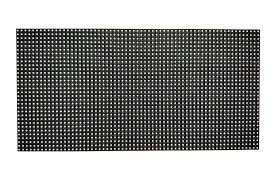
One of the most pivotal parameters in LED display design is the pixel pitch – the distance between two adjacent LED pixels, usually measured in millimeters (mm). It directly influences resolution and viewing distance. For instance, a pixel pitch of 1.5mm is ideal for indoor applications like corporate boardrooms, providing high-resolution imagery at close distances. Conversely, outdoor installations typically employ pixel pitches of 10mm or higher to balance cost and visibility over longer distances.
3. Brightness, Contrast, and Color Accuracy
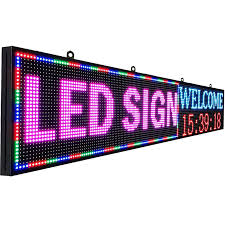
LED displays need to achieve high brightness levels to remain visible even in direct sunlight. Industry standards, such as those from the International Electrotechnical Commission (IEC 62717), specify luminance levels of 6,000 to 10,000 nits for outdoor LED screens, while indoor displays generally require 800 to 1,200 nits for comfortable viewing under ambient lighting.
Contrast ratio is equally critical; a higher contrast ratio enhances picture quality by deepening blacks and enriching colors. State-of-the-art LED panels now feature dynamic contrast control algorithms integrated with sensors that adjust brightness based on ambient lighting conditions, improving power efficiency and viewer comfort.
Color accuracy relies on precisely calibrated LED chips with stable chromaticity coordinates. Using the CIE 1931 color space standard, high-end LEDs achieve color coverage exceeding 110% of the NTSC gamut, ensuring vivid and lifelike visual content.
4. Module and Cabinet Design for Reliability and Ease of Maintenance
LED modules typically involve tightly integrated LED units mounted on Printed Circuit Boards (PCBs). Industry best practice recommends using gold wire bonding combined with silicone potting for moisture protection, which enhances long-term reliability against harsh environmental conditions.
Cabinet construction utilizes lightweight yet durable aluminum or die-cast magnesium alloy frames, facilitating heat dissipation and providing structural integrity. Front-serviceable designs have become prevalent, allowing technicians to perform quick maintenance without dismantling entire cabinets, thereby significantly reducing downtime.
5. Power Management and Thermal Design
Efficient power distribution is essential for consistent brightness and energy-saving operation. Quality LED displays conform to IEC 62368-1 standards governing electrical safety and thermal management. Power supplies with high Power Factor Correction (PFC) and low Total Harmonic Distortion (THD) are standard, ensuring stable operation with reduced energy losses.
Thermal management employs heat sinks, forced air cooling, or even liquid cooling in ultra-high-brightness installations. Maintaining optimal junction temperatures (Tj) below 85°C maximizes LED lifespan, which can exceed 100,000 hours under ideal conditions.
6. Quality Control and Industry Standards
Adherence to international quality standards is non-negotiable. Key certifications include CE, UL, and RoHS, ensuring safety, electromagnetic compatibility, and environmental compliance.
Manufacturers utilize automated Optical Inspection (AOI) systems combined with rigorous manual inspection to detect manufacturing defects at every production stage. Tests such as burn-in, vibration, moisture resistance, and color consistency checks guarantee that every LED display performs to expectations in real-world scenarios.
7. Future Trends: MicroLED Integration and Smart Displays
Looking ahead, MicroLED technology promises even higher resolution, peak brightness, and energy efficiency by using microscopic LEDs assembled at the wafer level. Additionally, Smart LED displays with built-in IoT connectivity and AI-driven content optimization are revolutionizing digital signage, enabling personalized, interactive user experiences.
In conclusion, producing an LED display that meets the highest standards requires meticulous attention to component selection, module design, power and thermal management, and conformity with international standards. With over two decades of cumulative industry experience and continuous innovation, manufacturers can deliver displays that provide outstanding visual performance, reliability, and sustainability across a vast range of applications.













