

Advanced LED Display Manufacturing: Technical Insights and Industry Best Practices
The LED display industry has witnessed rapid advancements in recent years, driven by innovations in materials, manufacturing processes, and digital control technologies. As a professional LED display engineer with extensive experience in designing and producing high-quality LED LCD screens, I aim to provide a comprehensive overview of advanced manufacturing techniques, critical technical parameters, and quality assurance standards that define modern LED display production.
LED displays, whether used for outdoor billboards, indoor signage, or large-scale video walls, must meet stringent requirements for brightness, color accuracy, viewing angle, durability, and energy efficiency. Manufacturing these displays involves nuanced processes that integrate hardware precision with detailed calibration and testing protocols.
Key Technical Parameters
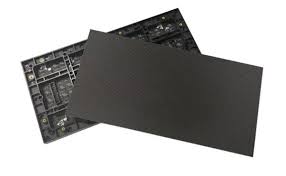
A fundamental technical parameter influencing LED display quality is pixel pitch, defined as the distance in millimeters between the centers of two adjacent pixels. Pixel pitch directly affects resolution and viewing distance; smaller pixel pitches (e.g., 1.2mm to 2.5mm) are ideal for close-range indoor applications requiring fine detail, whereas larger pixel pitches (e.g., 10mm to 20mm) suit outdoor displays viewed from afar.
The choice of LED package type is critical. SMD (Surface Mounted Device) LEDs, known for their compact size and superior color uniformity, dominate indoor displays. Conversely, DIP (Dual In-line Package) LEDs offer higher brightness and robustness, making them favorable for outdoor environments exposed to harsh weather conditions. Recent innovations include COB (Chip on Board) LED technology, which provides higher density and reduced pixel pitch in a single LED component.
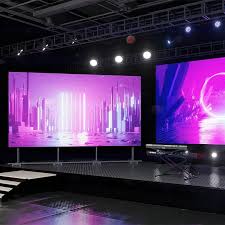
Brightness, measured in nits (cd/m²), dictates visibility under ambient lighting. Outdoor displays typically require brightness levels exceeding 5,000 nits to remain legible in direct sunlight. Indoor displays generally operate around 800 to 1,200 nits to balance visibility with eye comfort.
Viewing angle, often specified as horizontal and vertical angles in degrees, determines the range within which the display maintains consistent brightness and color. A wide viewing angle — commonly over 140° horizontally and vertically — ensures uniform image quality accessible to a broad audience.
Manufacturing Process Overview
The manufacturing workflow commences with LED module assembly, where precise placement and soldering of LEDs onto printed circuit boards (PCBs) are performed. Automated pick-and-place machines and reflow soldering lines are employed to optimize precision and throughput. Advanced quality inspection systems utilizing CCD cameras and automated optical inspection (AOI) technologies detect soldering defects and placement inaccuracies in real time, significantly reducing fault rates.
Module calibration follows, involving color and brightness adjustments through digital lookup tables (LUTs) to ensure uniformity across the display. This calibration is vital because slight variations between individual LEDs can cause color discrepancies, affecting visual consistency. Industry standards such as the ITU-R BT.709 and DCI-P3 color spaces guide the calibration protocols to achieve accurate color reproduction.
After module fabrication, modules are integrated into cabinets, which are structural frames equipped with power supply units, control cards, and cooling systems. Efficient thermal management is essential to protect LEDs and electronics from overheating, thereby extending lifespan and ensuring stable performance. Typical operating temperatures range between -20°C and 50°C, necessitating careful material selection and ventilation design.
Control systems comprising FPGA or advanced microcontrollers govern refresh rates (commonly 1920 Hz or higher) and communication interfaces (such as Ethernet and asynchronous protocols). Higher refresh rates reduce flicker, crucial for video applications and broadcasting compatibility.
Quality Assurance and Testing
Stringent quality assurance practices are imperative to uphold product reliability. Testing regimes encompass:
- Environmental testing: Simulating conditions such as humidity, temperature cycling, and UV exposure to verify durability.
- Electrical testing: Ensuring power stability and absence of shorts or open circuits.
- Optical testing: Measuring luminance and color uniformity using spectroradiometers and integrating spheres.
The adherence to industry standards including IEC 60529 (IP rating for ingress protection), ISO 9001 (quality management systems), and RoHS (Restriction of Hazardous Substances) confirm that displays meet global safety, environmental, and quality benchmarks.
Field case studies underscore the effectiveness of these manufacturing and testing approaches. For example, large-scale stadium LED displays employing COB LED modules have demonstrated exceptional uniformity under varying lighting conditions, enhancing spectator experience. Similarly, outdoor advertising panels adhering to IP65 or higher ingress protection ratings have sustained performance in challenging environments, showcasing longevity and reduced maintenance costs.
Future Trends and Innovations
Looking ahead, the integration of AI-driven manufacturing analytics promises to further improve yield rates by predicting defects and optimizing process parameters in real time. Emerging materials such as micro-LEDs offer potential breakthroughs in resolution and energy efficiency, fundamentally transforming LED display design paradigms.
In conclusion, mastering the delicate balance of precise assembly, rigorous calibration, environmental resilience, and compliance with international standards forms the cornerstone of successful LED display manufacturing. Professionals in this domain must combine hands-on engineering experience with updated knowledge of evolving technologies to deliver high-performance, reliable LED display solutions for diverse applications worldwide.













