

Advanced Manufacturing Techniques and Quality Standards in LED Display Production
In the rapidly evolving field of LED display manufacturing, technological advancements and stringent quality control are pivotal to producing high-performance LED screens that meet global market demands. As a seasoned LED display engineer, drawing from extensive experience and industry benchmarks such as IEC 62087 and tolled quality certifications like ISO 9001, this article delves into the integral aspects of LED display production, highlighting manufacturing techniques, technical parameters, and quality assurance measures essential for developing reliable and visually superior LED displays.
The LED display industry encompasses an array of display types, with popular categories including direct-view LED (dvLED) modules and LED-backlit LCD panels. The manufacturing processes vary accordingly. For dvLED screens, the assembly begins with the selection of high-quality LED chips, typically SMD (Surface-Mounted Device) packages such as 1R1G1B or 3-in-1 configurations, to ensure vivid color reproduction and uniformity.
Key manufacturing steps include precise LED binning, wherein LEDs are sorted based on luminance, wavelength, and forward voltage to guarantee color consistency; and printed circuit board (PCB) fabrication, employing rigid or flexible PCBs with stringent electrical tolerance, typically achieved with multilayer designs and 0.1 mm trace width accuracy. This is critical to maintaining signal integrity across densely populated pixel arrays.
A crucial parameter in LED displays is pixel pitch, the distance between the centers of adjacent pixels, which directly influences resolution and viewing distance. Modern applications demand pixel pitches ranging from 0.9mm for close-viewing environments such as broadcast studios to 10mm+ for large outdoor signage. Manufacturing precision at these microscopic scales requires micro-assembly robots and automated optical inspection (AOI) systems to detect soldering defects or misalignments.
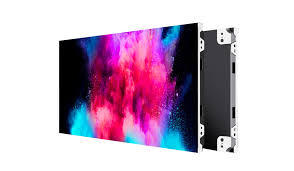
Thermal management is another cornerstone for LED display longevity. Advanced designs implement heat dissipation strategies using aluminum heatsinks, silicone thermal interface materials, and sometimes even active cooling for ultra-high brightness panels (>5,000 nits). Effective heat removal not only enhances LED lifespan (often exceeding 100,000 hours under standard operation) but also prevents chromatic aberrations caused by thermal drift—a vital consideration for color-critical applications.
From a materials standpoint, encapsulation technologies employing silicone or epoxy resins protect LED chips from moisture and mechanical damage while maintaining optical clarity. The choice of encapsulant and its refractive index directly influences light extraction efficiency and angular viewing characteristics.
Quality control protocols in LED manufacturing adhere to international standards to ensure product reliability and performance. The JESD22 standard outlines environmental stress test methods such as thermal cycling and humidity exposure, simulating real-world operating conditions. Manufacturers also conduct luminance and color uniformity testing following IEC 62341 specifications, utilizing integrating spheres and spectroradiometers to ensure the display meets promised specifications.
In addition, outdoor LED displays require compliance with IP ratings (Ingress Protection), typically IP65 or higher, to guarantee resistance against dust and water intrusion. This standard mandates specific sealing technologies in module enclosures and connectors, often validated through rigorous testing aligned with IEC 60529.
Case studies within the industry exemplify the efficacy of combining precision manufacturing and rigorous testing. For instance, a leading provider of fine-pitch LED wall solutions achieved a ±0.003mm registration tolerance across panels by integrating laser alignment systems and servo-driven pick-and-place machines. This precision facilitated ultra-fine pixel pitches of 0.9mm, delivering impeccable image quality and color fidelity demanded by global customers in control room and broadcast sectors.
The integration of software tools for quality data analytics is emerging as a best practice. Real-time monitoring with machine learning algorithms detects anomalies during manufacturing, reducing defect rates by up to 30%. Such Industry 4.0 solutions contribute significantly to scalability in high-volume production environments without compromising quality.
In conclusion, the manufacture of advanced LED displays requires a multidisciplinary approach encompassing material sciences, precision engineering, thermal dynamics, and stringent adherence to international standards. For manufacturers and clients, understanding these technical facets aids in selecting or producing LED display products that deliver superior visual performance, durability, and value in diverse industrial and commercial applications.













