

Advanced LED Display Manufacturing: Technical Insights and Industry Best Practices
The LED display industry has witnessed tremendous growth and technological advancements over the past decade, driven by expanding applications ranging from outdoor advertising to indoor control rooms. As a professional LED display engineer, understanding the intricate manufacturing processes, technical specifications, and quality control protocols is essential to deliver high-performance products that meet international standards.
Technical Parameters and Manufacturing Process
At the core of LED display manufacturing is the selection of LED components which significantly affects brightness, color uniformity, and lifespan. Typical LED module configurations involve SMD (Surface-Mounted Device) or DIP (Dual In-line Package) LEDs. For higher resolution indoor screens, SMD LEDs such as the 2121 or 3535 series are preferred due to their smaller pixel pitch, allowing pixel pitches from 0.9mm up to 3mm. Outdoor displays favor DIP LEDs with larger pixel pitches (10mm or more) for enhanced brightness and weather resistance.
The pixel pitch — the distance between the center of two adjacent LEDs — directly influences resolution and viewing distance. According to industry standards such as those outlined by the International Electrotechnical Commission (IEC 62717), a smaller pixel pitch correlates with finer image quality but requires more precise manufacturing. For instance, to achieve 4K UHD quality on an indoor LED wall, pixel pitches as low as 0.7mm are increasingly common, demanding exacting PCB designs and LED binning for uniform color rendering.
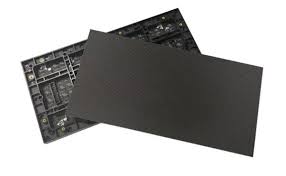
The manufacturing process commences with PCB (Printed Circuit Board) fabrication, typically employing high-TG (glass transition temperature) materials to withstand thermal cycling. PCBs then undergo automated SMT (Surface Mount Technology) LED placement and subsequent soldering. Precision is paramount, as even micron-level misalignments can cause display abnormalities. Post-assembly, modules are subjected to testing protocols including brightness calibration, color accuracy measurement via spectroradiometers, and burn-in tests extending 72 hours to detect premature failures.
Quality Control and Reliability
Delivering reliability is non-negotiable for commercial LED screens, especially those deployed outdoors or in mission-critical environments such as emergency command centers. Quality control includes aging test chambers where environmental conditions such as humidity, temperature (ranging typically from -20°C to 60°C), and UV exposure are simulated to assess durability.
One particular challenge addressed in modern LED manufacturing is heat dissipation. Excessive temperature can shorten LED lifespan and degrade color stability. Engineers use thermal conductive materials and consider effective cabinet design with ventilation or active cooling systems. The use of aluminum backplanes with thermal interface materials to facilitate heat transfer is standard practice.
Conformal coating applied to LED modules enhances moisture and dust resistance, ensuring an IP65 to IP67 ingress protection rating — critical for outdoor installations. This meets the standards specified by the IEC 60529 standard, guaranteeing protection against water jets and dust ingress.
Industry Case Studies
Leading LED professional manufacturers such as Leyard and Unilumin have documented success stories with installations in stadia, transportation hubs, and retail environments. For example, the 2019 LED display installed in a Shanghai subway depot utilized a pixel pitch of 1.5mm for clear, vibrant passenger information, employing strict binning and calibration protocols that improved color uniformity by 20% over previous generations.
Future Trends and Innovations
Recent advances include microLED technology, offering higher brightness and efficiency with longer lifespan and reduced power consumption. Integration of AI-driven calibration systems is emerging, improving real-time color and brightness correction automatically to extend operational life.
Furthermore, adherence to increasingly stringent environmental standards such as RoHS (Restriction of Hazardous Substances Directive) and REACH (Registration, Evaluation, Authorization, and Restriction of Chemicals) ensures that modern LED displays are both environmentally friendly and safe for users.
Conclusion
The manufacture of LED displays is a complex, multifaceted process demanding technical expertise, rigorous quality control, and compliance with international standards. By leveraging advanced materials, precise manufacturing techniques, and continual testing, LED display engineers can deliver durable, high-fidelity screens optimized for a wide range of applications. This expertise not only enhances product quality and reliability but also drives innovation in an ever-evolving global market.
References:
- International Electrotechnical Commission (IEC) 62717: LED modules for general lighting — Performance requirements
- IEC 60529: Degrees of protection provided by enclosures (IP Code)
- RoHS Directive 2011/65/EU
- Unilumin Technical White Paper on LED Display Calibration, 2022
- Leyard Case Studies, 2019–2023













