

Advanced Manufacturing Techniques and Performance Optimization in LED LCD Display Panels
The LED LCD display industry has witnessed rapid advancements driven by technological innovations, material science developments, and enhanced manufacturing processes. As a professional LED display engineer with extensive experience, it is imperative to understand the nuanced technical parameters and manufacturing methodologies that ensure LED LCD panels meet modern expectations for clarity, brightness, energy efficiency, and durability.
Material and Substrate Selection
The foundational step in LED LCD panel manufacturing is the choice of substrate material. High-grade glass substrates with ultra-flat surfaces are critical to achieving consistent liquid crystal alignment and uniform pixel response. Industry-leading manufacturers often utilize Corning® Eagle XG or equivalent glass, which offers a coefficient of thermal expansion (CTE) closely matching other components, minimizing stress during thermal cycling. This detail improves panel longevity and reliability under diverse environmental conditions, according to JEDEC standards for display device reliability (JESD22 series).
Backlight Unit and LED Integration
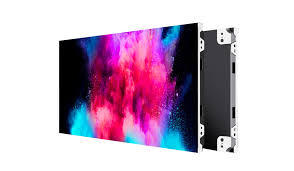
Achieving optimal luminance and color uniformity hinges on the precision assembly of the backlight unit (BLU) with LED backlights. Recent advances include the adoption of micro-LED arrays and edge-lit LED configurations that balance slim form factors with high brightness levels. Standard LED luminance ranges for commercial-grade displays vary between 300 to 1,000 nits, with HDR-ready models pushing beyond 1,500 nits. Critical considerations involve LED binning for color temperature consistency (typically 6,500K D65 white point) and thermal management employing heat sinks and thermally conductive adhesive layers to maintain LED lifespan, as per the IEC 62087 energy measurement standard.
Liquid Crystal Alignment and Cell Gap Control
The liquid crystal layer’s uniformity depends on precision control of the cell gap, ordinarily maintained within ±0.1 microns using advanced spacer technology. Variations here directly affect contrast ratio, response time, and viewing angles. Furthermore, the alignment layers use polyimide coatings that undergo rubbing processes tailored to induce precise liquid crystal orientation—impacting optical response characteristics such as contrast ratio often exceeding 1,000:1 and response times as low as 1-5 milliseconds for high-performance panels.
Color Filter Technology and Subpixel Arrangement
Integral to LED LCD quality is the color filter, traditionally fabricated with pigment-based or dye-based materials. The shift to quantum dot-enhanced color filters has dramatically expanded color gamut, reaching up to 110%-125% NTSC coverage, enhancing visual saturation and fidelity. Modern panels employ an RGB subpixel arrangement optimized for pixel density, measured in pixels per inch (PPI), where flagship devices operate beyond 400 PPI for razor-sharp images.
Electrical Design and Signal Processing
Advanced driver ICs (integrated circuits) manage the precise voltage levels driving the liquid crystals, with improvements targeting lower power consumption and faster refresh rates. Typical LCDs operate at a frame rate of 60 Hz, but many high-end panels now support 120 Hz and beyond for smoother motion rendering, critical in gaming and professional applications. The industry adheres to standards such as VESA’s DisplayHDR for standardized quality benchmarking and signal integrity.
Manufacturing Precision and Quality Control
Cutting-edge manufacturing lines integrate in-line optical inspection systems and automated optical inspection (AOI) to detect defects at sub-pixel resolution, thereby reducing dead pixel rates typically found below 0.0001%. Yield management systems leverage Statistical Process Control (SPC) to maintain process consistency. Environmental reliability testing involving thermal shock, humidity, and mechanical stress simulations comply with MIL-STD-810 and IEC 60068 standards, ensuring the panels perform reliably in varying global conditions.
Sustainability and Energy Efficiency
Environmental consciousness has directed manufacturers to optimize LED LCD panels for reduced power consumption. Techniques include the integration of local dimming zones, dynamic backlight adjustment, and the usage of low-power thin-film transistors (TFTs). Meeting ENERGY STAR certification requirements ensures devices minimize environmental impact without compromising performance.
In summary, the manufacturing of high-quality LED LCD display panels is an intricate process combining material science, precision engineering, and rigorous quality control. Innovations in LED technology, liquid crystal management, and driver electronics have progressively enhanced display performance metrics such as brightness, color accuracy, response times, and lifespan. Adherence to international standards, such as IEC, JEDEC, and VESA, guarantees products meet global market demands for reliability and excellence.
References:
- JEDEC Solid State Technology Association, JESD22 Series: Environmental and Reliability Test Methods.
- International Electrotechnical Commission (IEC), IEC 62087: Methods of Measurement for the Power Consumption of Audio, Video and Related Equipment.
- VESA (Video Electronics Standards Association), DisplayHDR Standards.
- Corning Incorporated, Eagle XG Glass Technical Datasheets.
- MIL-STD-810: Environmental Engineering Considerations and Laboratory Tests.













