

Advanced LED Display Manufacturing: Technical Insights and Industry Best Practices
The evolution of LED display technology has revolutionized the visual communication industry, offering vibrant, high-resolution screens that cater to a diverse array of applications from advertising billboards to home entertainment systems. This article explores the intricate engineering processes, critical technical parameters, and industry standards that define advanced LED display manufacturing, offering insights from extensive industry experience to equip readers with authoritative knowledge in this field.
Introduction
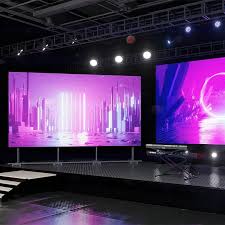
LED (Light Emitting Diode) displays have become ubiquitous due to their superior brightness, energy efficiency, and color accuracy. Their deployment ranges widely: indoor and outdoor advertising, stadium screens, control rooms, and consumer electronics. The complexity of producing these displays lies not only in the selection of components but also in integrating assembly processes that meet stringent quality and performance criteria. Understanding these factors is key for manufacturers, designers, and engineers aiming to optimize LED display solutions.
Main Body
1. Technical Parameters and Component Selection
Key specifications in LED display manufacturing include pixel pitch, brightness, refresh rate, viewing angle, contrast ratio, and lifespan—all pivotal to image quality and performance. Pixel pitch, commonly ranging from 0.9mm for fine-pitch indoor displays to over 10mm for large outdoor signage, dictates resolution and viewing distance (IEC 62087-2011 standard). Manufacturers must carefully select LED chip types—commonly SMD (Surface Mounted Device) or DIP (Dual Inline Package)—depending on application requirements. SMD LEDs are favored for high-resolution indoor displays due to their small size and high density, while DIP LEDs provide superior brightness and durability in outdoor environments.
Brightness levels are crucial for visibility; indoor screens typically range between 800 to 1500 nits, whereas outdoor displays exceed 5000 nits to counter sunlight. Refresh rates above 1920Hz are standard to prevent flickering on camera footage, crucial for events broadcasted live. The viewing angle, usually exceeding 140 degrees both horizontally and vertically, ensures wide visibility. High contrast ratios (over 3000:1) are essential for image depth and color differentiation, factors directly influencing visual impact.
2. Manufacturing Process and Quality Control
The manufacturing workflow encompasses PCB design, LED mounting, soldering, module assembly, and rigorous testing. PCB (Printed Circuit Board) quality influences heat dissipation—critical for longevity—as excessive heat lowers LED efficiency and lifespan. Using multilayer PCBs with high thermal conductivity substrates, such as aluminum-backed boards, is standard practice.
Precision in LED placement and automated soldering are mandatory given the fine pitches. Industry leaders deploy machine vision systems for defect detection during assembly, minimizing dead pixels and electrical faults. Post-assembly, modules undergo burn-in tests at elevated temperatures to identify early failures, complying with standards like IPC-A-610 for electronic assemblies.
3. Integration and Calibration
Effective calibration enhances color uniformity and grayscale accuracy. Calibration involves adjusting each LED’s brightness and color output according to gamma curves and color gamut targets (often Rec. 709 or DCI-P3). Advanced LED display manufacturers employ photometric calibration systems integrated with software algorithms ensuring consistent performance across modules.
Additionally, smart control systems facilitate real-time diagnostics and dynamic brightness adjustment to reduce power consumption and extend operational life. Compliance with international standards (IEC 62368-1 for safety, RoHS for hazardous substances) ensures market acceptability and consumer confidence.
4. Case Studies and Industry Applications
A notable example includes the deployment of fine-pitch LED walls in high-profile events such as the Olympic Games and major concerts, requiring ultra-high resolution and flawless performance under intense environmental conditions. These applications highlight the importance of rigorous testing and adaptive cooling solutions.
In the retail sector, energy-efficient indoor LED displays with pixel pitches as fine as 0.9mm provide immersive advertising experiences in confined spaces, demonstrating the impact of precise engineering and module integration on commercial success.
Conclusion
The manufacture of advanced LED displays is a sophisticated process demanding comprehensive understanding of electronic engineering, material science, and quality assurance principles. Through meticulous component selection, adherence to international standards, state-of-the-art assembly techniques, and precise calibration, manufacturers can produce displays that meet diverse and demanding market needs. Continuous innovation and adherence to best practices ensure that LED displays remain at the forefront of visual technology, delivering superior performance and reliability across all applications.













