

Advances and Best Practices in LED Display Manufacturing for High-Quality Visual Performance
In the rapidly evolving field of visual display technology, LED displays stand at the forefront due to their superior brightness, energy efficiency, and flexibility in application. As a professional LED display engineer with many years of experience in LED LCD screen manufacturing, I aim to present a comprehensive overview of current advancements, manufacturing processes, and quality assurance practices that align with industry standards to ensure outstanding product performance and reliability.
Technical Background and Industry Standards
LED displays consist of arrays of light-emitting diodes that emit light when an electric current passes through them. These can be categorized primarily by pixel pitch (distance between the center of two adjacent pixels), which critically influences viewing distance and resolution. Typical pixel pitches range from 0.7mm for ultra-fine indoor displays, such as control rooms and broadcast studios, to over 10mm for large outdoor billboards.
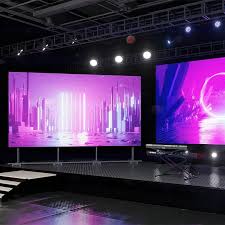
The International Electrotechnical Commission (IEC) and the Society for Information Display (SID) provide detailed standards such as IEC 62526 for safety and environmental compliance, and the ANSI/SMPTE standards that set benchmarks for color accuracy and luminance. Compliance with such standards ensures that LED displays meet strict requirements for visual performance, durability, and user safety.
Manufacturing Process and Quality Control
Manufacturing LED displays involves multiple critical phases starting from LED chip selection, PCB (printed circuit board) assembly, module formation, to final screen integration:
1. LED Chip Selection and Binning: LED chips are “binned” based on luminance, color temperature, and voltage characteristics. This ensures uniformity across the display. Typically, LEDs for high-end indoor displays maintain a color temperature of 6500K +/- 200K to match D65 white point standards used in imaging.
2. Precision PCB Assembly: The substrate must maintain excellent thermal conductivity to dissipate heat and ensure LED longevity. Typically, aluminum PCBs with thermal conductivity between 1.0-2.0 W/m·K are used.
3. Module Assembly: Modules are assembled in controlled clean-room environments to prevent dust contamination. Automated pick-and-place machines position LEDs with an accuracy of ±10 microns, essential for maintaining consistent pixel pitch and reducing visual artifacts.
4. Testing and Calibration: Each module undergoes electrical, optical, and environmental tests. Brightness uniformity is assessed using spectroradiometers, targeting less than 5% variance across the module. Color calibration is performed using 3D lookup tables (LUTs), aligning Red, Green, and Blue channels to a target color gamut—commonly Rec.709 for indoor applications or DCI-P3 for cinematic purposes.
Innovations in LED Display Technology
Recent advancements have focused on:
- Mini-LED and Micro-LED Technology: By further reducing pixel pitch to sub-millimeter levels, micro-LEDs offer exceptional contrast ratios and true blacks, rivaling OLED displays but with higher brightness and longevity. Challenges remain in cost-effective mass production, but leading manufacturers report yields improving over 85%.
- HDR (High Dynamic Range) Support: Modern LED panels now support HDR10 and Dolby Vision standards, enhancing luminance up to 1500 nits for HDR content, thereby improving the visual experience, especially in brightly lit environments.
- Smart Management Systems: Incorporating embedded IoT sensors for real-time monitoring of temperature, humidity, and pixel health allows predictive maintenance, prolonging display lifespan and reducing downtime.
Practical Considerations for End Users
Optimizing LED displays for various applications requires careful consideration of environmental factors:
- Indoor vs Outdoor Use: Outdoor displays require IP65 or higher-rated enclosures to protect against dust and water ingress, alongside higher luminance levels (typically 6000 to 10000 nits) to remain visible under direct sunlight.
- Viewing Distance and Placement: For instance, airport signage with a viewing distance greater than 10 meters often utilizes pixel pitches of 6-10mm. Indoor retail displays feature 1.5-3mm pixels for close viewing while maintaining cost-effectiveness.
- Maintenance and Accessibility: Front-maintenance LED screens provide simpler access for repairs in limited spaces, whereas rear maintenance models are more common in large-scale outdoor installations with ample space.
Conclusion
The field of LED display manufacturing integrates intricate engineering with stringent quality control to deliver vibrant, reliable, and durable visual solutions. Adhering to international standards and employing latest technologies such as micro-LED and HDR capabilities significantly enhance visual performance, catering to diverse application demands worldwide.
Continuous innovation and application-specific customization, backed by industry expertise and rigorous testing, ensure LED displays meet evolving user expectations for clarity, brightness, and operational stability.
References:
- IEC 62526: LED Display Safety Standards
- ANSI/SMPTE RP 431-2: Calibrating Color and Luminance
- Society for Information Display (SID) Technical Digest
- Journal of the Society for Information Display, 2023: Micro-LED Manufacturing Techniques
- Market Analysis by Display Supply Chain Consultants (DSCC), 2024













