

Comprehensive Insights into LED LCD Screen Manufacturing: Applications, Advantages, Challenges, and Emerging Trends
The manufacturing of LED LCD screens represents a sophisticated synthesis of advanced display technologies, combining the benefits of Liquid Crystal Display (LCD) panels with Light Emitting Diode (LED) backlighting. Over the past decade, LED LCD screens have become the cornerstone of diverse visual display applications, from consumer electronics to industrial systems, owing to their superior brightness, energy efficiency, and longevity.
Technical Overview and Manufacturing Process
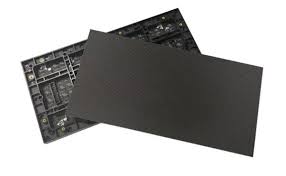
At the heart of LED LCD screen production is the integration of thin-film transistor (TFT) LCD panels with an LED backlight array. These backlights utilize arrays of light-emitting diodes either placed along the edges (edge-lit) or directly behind the LCD matrix (direct-lit or full-array). The choice impacts the display’s uniformity, thickness, and power consumption. Typical LED backlight brightness ranges from 250 to 1000 nits, with higher-end professional displays exceeding 1500 nits for HDR content compliance per ITU-R BT.2100 standards.
The manufacturing workflow involves multiple precision steps:
1. TFT Array Fabrication: Utilizing photolithography and etching on glass substrates, engineers create a matrix of thin-film transistors that control individual pixels’ liquid crystals.
2. Liquid Crystal Injection: Liquid crystals, which modulate light transmission, are inserted with precise control over alignment layers to ensure uniformity and rapid response times.
3. Backlight Module Assembly: LED arrays are assembled with diffusers, light guides, and optical films (such as prism sheets) to optimize light distribution and enhance contrast ratios often exceeding 1000:1.
4. Color Filter Attachment: RGB filters are aligned to individual pixels, enabling full-color reproduction with high color gamut coverage; modern LED LCDs reliably achieve sRGB or DCI-P3 color spaces.
5. Quality Control and Aging Tests: Displays undergo rigorous testing for brightness uniformity, color accuracy (measured via Delta E values under 3 for professional use), and reliability under varying temperatures and operational stresses.
Practical Applications
LED LCD technology spans an extensive spectrum of uses:
- Consumer Electronics: Smartphones, televisions, laptops benefit significantly from LED backlighting, delivering thinner devices with enhanced battery life and superior visuals.
- Industrial and Medical Displays: High-brightness and high-contrast LED LCDs facilitate critical visualization tasks such as surgical imaging and industrial monitoring.
- Advertising and Digital Signage: Outdoor LED LCD panels withstand harsh environments while maintaining visibility due to high brightness and robust construction.
- Automotive Displays: Instrument clusters and infotainment systems increasingly rely on LED LCDs for clarity and durability under vibration and temperature extremes.
Advantages of LED LCD Displays
Compared to traditional CCFL-backlit LCDs or other display technologies, LED LCDs offer substantial improvements:
- Energy Efficiency: LEDs consume approximately 30-50% less power than Cold Cathode Fluorescent Lamp (CCFL) backlights, aligning with global energy standards like Energy Star and EPEAT.
- Extended Lifespan: Typical LED backlight lifespan exceeds 50,000 hours, reducing maintenance and replacement costs.
- Thin Form Factor: LEDs enable ultra-thin display profiles ranging from 3mm to 10mm total panel thickness.
- Enhanced Color and Contrast: Dynamic backlight control and local dimming capabilities in direct-lit designs improve HDR experience, crucial for entertainment and professional media editing.
- Environmental Impact: LEDs are mercury-free and more environmentally friendly during disposal processes.
Common Challenges in LED LCD Manufacturing
Despite these benefits, several technical challenges persist:
- Backlight Bleeding and Uniformity: Especially in edge-lit designs, uneven light can cause “bleeding” near edges, degrading image quality. This necessitates advanced optical film implementation and precise LED placement.
- Response Time and Motion Blur: Although LCD response times have improved with IPS and OLED alternatives, rapid motion rendering can still exhibit ghosting artifacts.
- Color Calibration: Maintaining precise color accuracy over the product lifecycle requires effective factory calibration and sometimes on-device color management.
- Thermal Management: High-brightness LEDs generate heat that, if not effectively dissipated, can degrade display components, necessitating advanced heat sinks and thermal path designs.
Latest Trends and Innovations
Research and development continue to push the boundaries of LED LCD technology:
- Mini-LED and Micro-LED Backlighting: Mini-LED arrays consisting of thousands of tiny LEDs enable more localized dimming zones, vastly improving contrast ratios above 1,000,000:1 and HDR performance.
- Quantum Dot Enhancement Films (QDEF): Incorporating quantum dot technology upgrades color gamut and luminance efficiency beyond traditional phosphors used in LEDs.
- Flexible and Transparent LED LCDs: Emerging displays incorporate bendable substrates and transparent elements that enable novel applications in wearable tech, automotive HUDs, and smart windows.
- AI-driven Display Calibration: Integration of machine learning algorithms allows adaptive real-time calibration to environmental lighting conditions, ensuring optimal viewing experiences.
Conclusion
LED LCD screen manufacturing is a critically important domain within modern display technology, synthesizing complex materials, precision engineering, and evolving innovations to meet a broad spectrum of market needs. The ongoing development of backlighting techniques such as mini-LEDs and quantum dots is prominently reshaping industry standards, setting new benchmarks for energy efficiency, color fidelity, and display longevity. As global demand for high-quality visual experiences increases, the fundamental expertise in LED LCD display engineering remains pivotal, supported by rigorous quality standards and continuous innovation.
References:
- International Telecommunication Union (ITU), ITU-R BT.2100:2020 - HDR Television Standards
- Energy Star Program Requirements for Displays, Version 8.0 (2021)
- Journal of the Society for Information Display, Various Issues on LED and LCD Technology
- DisplayMate Technologies, Display Performance Technical Reports
- Semiconductor Equipment and Materials International (SEMI), Standards for LED Manufacturing













