

Comprehensive Insights into LED LCD Screen Manufacturing: Technologies, Standards, and Industry Practices
The global demand for high-quality display technologies continues to surge as applications in consumer electronics, automotive, medical devices, and digital signage expand. Among various display types, LED LCD screens stand out due to their superior brightness, contrast, power efficiency, and slim form factors. For engineers, manufacturers, and industry stakeholders seeking to deepen their understanding of LED LCD screen manufacturing, this article presents a comprehensive, expert-level overview of key technological principles, manufacturing processes, quality control standards, and recent innovations shaping the LED LCD landscape in 2024.
1. Fundamentals of LED LCD Displays
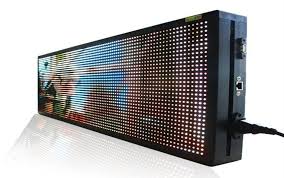
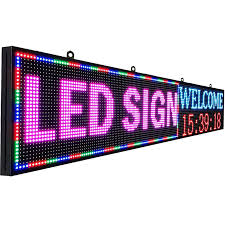
LED LCD screens combine Liquid Crystal Display (LCD) technology with Light Emitting Diode (LED) backlighting systems. Unlike traditional LCDs which utilize cold cathode fluorescent lamp (CCFL) backlights, LED-backlit LCDs replace these with LED arrays, offering several operational benefits:
- Higher brightness and energy efficiency: LEDs achieve luminance levels exceeding 1000 cd/m² in many commercial products, compared to typically<400 cd/m² for CCFL units.
- Enhanced color gamut and uniformity: Utilizing quantum-dot enhanced LED backlights widens the color gamut up to DCI-P3 or Rec.2020 standards.
- Slimmer panels: LEDs enable thinner backlight assemblies, reducing overall panel thickness.
- Improved lifespan and environmental impact: LEDs have longer lifetimes (>50,000 hours) and lower toxic material content.
The panel itself consists of multiple layers: a TFT (thin-film transistor) LCD panel for image formation, color filter layers, a liquid crystal layer sandwiched between two polarizers, and the LED backlight system.
2. Types of LED Backlighting: Edge-lit vs Full-array
Edge-lit LED Backlighting places LEDs on the edge of the screen's frame. Light is guided through a light guide plate (LGP) to evenly illuminate the LCD panel. Its advantages include slimmer profile and lower costs but tends to exhibit less uniform brightness and local dimming flexibility.
Full-array LED Backlighting, on the other hand, involves a uniform grid of LEDs directly behind the LCD panel. This arrangement supports advanced features such as local dimming zones, significantly improving contrast ratios by controlling brightness in specific screen areas. Full-array backlights are prevalent in premium and professional-grade screens, capable of contrast ratios exceeding 1,000,000:1 in HDR models.
3. Quantum Dot Enhancement Film (QDEF) and Color Performance
Integrating Quantum Dot films in LED LCD displays elevates color accuracy and luminance efficiency. Quantum dots emit highly pure spectral colors when excited by blue LEDs, surpassing traditional phosphor-based white LEDs. This technology enables compliance with stringent standards like Rec.2020 color space, essential for broadcast, cinematic, medical imaging, and professional design applications.
According to the Society for Information Display (SID), displays utilizing QDEF achieve upwards of 95% coverage of the DCI-P3 gamut with superior power efficiency.
4. Manufacturing Workflow and Quality Assurance
The manufacturing process of LED LCD screens involves multiple precise stages:
- Substrate preparation: High-quality glass substrates undergo cleaning and deposition of thin-film transistor (TFT) layers using sputtering and photolithography equipment.
- Liquid crystal filling and sealing: Handling liquid crystals demands clean room environments (ISO Class 5 or better) to avoid contaminants, ensuring uniform alignment via rubbing and curing techniques.
- Backlight assembly: LEDs arranged on printed circuit boards (PCBs) undergo binning for luminance and color consistency, followed by assembly with light guides, diffusers, and quantum dot films if applicable.
- Module integration: The backlight unit (BLU) is integrated with the LCD panel, polarizers, and driver electronics.
- Testing and calibration: Automated optical inspection (AOI) systems inspect pixel defects, luminance uniformity, color shift, and response times. Standards such as ISO 13406-2 for pixel defect classification guide quality assessment.
- Burn-in and reliability testing: Accelerated aging tests under varied temperature and humidity conditions ascertain long-term reliability.
5. Technical Parameters and Industry Standards
Key technical parameters must be optimized and verified:
- Resolution and Pixel Density: Common resolutions range from Full HD (1920x1080) to 8K UHD (7680x4320). Pixel pitch for small-to-medium screens typically lies between 0.2mm to 0.5mm.
- Brightness: Typically from 250 nits for general office displays up to 1500 nits or more in professional HDR displays.
- Contrast Ratio: Depending on the local dimming capability and panel technology, typical static contrast ratio reaches 1000:1 for IPS panels and can surpass 5000:1 for VA panels.
- Color Gamut: Measured against sRGB, AdobeRGB, DCI-P3, or Rec.2020 standards.
- Response Time: Critical for gaming and high-motion applications, current LED LCDs achieve grey-to-grey transitions in 1-5 ms ranges.
- Viewing Angles: IPS panels provide viewing angles up to 178 degrees horizontally and vertically, vital for collaborative displays.
- Power Consumption: LED backlighting contributes significantly to efficiency, with some models consuming less than 20 W for 24-inch monitors.
Standards such as IEC 61747-8 for LCD module reliability, ANSI/CTA-861.3 for HDR metadata, and guidelines from the DisplayHDR certification by VESA ensure product compliance and performance benchmark adherence.
6. Innovations and Trends
- Mini-LED and Micro-LED Integration: Mini-LED backlighting significantly improves local dimming zones and contrast. While Micro-LEDs promise emissive self-illumination rivaling OLEDs, current manufacturing challenges and costs limit widespread adoption.
- Flexible and Transparent Displays: Advances in printable electronics and flexible TFT substrates enable curved or even foldable LED LCD solutions.
- Advanced Driver ICs: Integration of more intelligent driver integrated circuits (ICs) allows dynamic backlight control and improved power efficiency.
- Sustainability: Industry movement towards recyclable materials, low blue light emissions, and reduced hazardous substances align with regulations such as RoHS and WEEE.
7. Case Study: Implementing Full-array Mini-LED Backlighting in a 65-inch 4K LCD Display
A leading manufacturer recently upgraded their flagship 65-inch 4K LED LCD panel by incorporating a full-array Mini-LED backlight with 10,000 dimming zones. This configuration boosts peak brightness to 2000 nits and contrast above 1,000,000:1, surpassing DisplayHDR 1400 certification.
Key insights from the project included:
- Thermal management: Dense LED arrays required innovative heat dissipation designs utilizing copper heat pipes and thermally conductive pads.
- Calibration process: Extensive factory calibration using spectroradiometers ensured color accuracy within ΔE< 2.
- Cost challenges: Mini-LED module costs remained higher than conventional LEDs but trending downward with higher production volumes.
8. Conclusion
Understanding LED LCD screen manufacturing necessitates a multifaceted knowledge of optoelectronics, materials science, precision engineering, and quality systems. With ongoing innovation in backlighting like Mini-LED, Quantum Dot technology, and pixel circuitry, LED LCD displays continue to push performance boundaries, serving versatile and demanding applications worldwide. Industry adherence to standards and rigorous testing underpins the credibility and quality that end-users expect.
For engineers and manufacturers, continually evolving technical expertise and process optimization remain critical to delivering superior displays in an increasingly competitive market.
References:
- Society for Information Display (SID), “Display Technology Handbook,” 2023 Edition
- VESA, “DisplayHDR Standard Versions 1.0 to 2.0,” Video Electronics Standards Association, 2022
- IEC 61747-8: “Liquid Crystal Display Modules – Reliability Tests,” International Electrotechnical Commission, 2020
- ANSI/CTA-861.3: “HDR Metadata for Narrow Color Gamut Displays,” Consumer Technology Association, 2021
- Peng et al., “Mini-LED Backlight Technology and Thermal Management,” Journal of Display Technology, Vol. 16, No. 3, 2020













