

Advancements and Practical Insights in LED LCD Screen Manufacturing for Modern Displays
The LED LCD screen manufacturing industry has experienced significant evolution over the past decade, driven by rapid advancements in technology, shrinking component sizes, and an increasing demand for high-performance displays. As a professional engineer specializing in LED LCD displays, it is essential to dissect the core technical parameters, practical applications, advantages, prevalent challenges, and the recent trends transforming this field.
Understanding LED LCD Technology
At its core, LED LCD (Light Emitting Diode Liquid Crystal Display) technology combines the liquid crystal display panel with LED backlighting. Unlike traditional CCFL backlights, LED backlights provide higher brightness, improved color accuracy, and better energy efficiency. The primary components involve a liquid crystal matrix controlled by thin-film transistors (TFT), a polarizing filter, color filters, and the LED backlights positioned behind or along the edges of the panel.
Key Technical Parameters
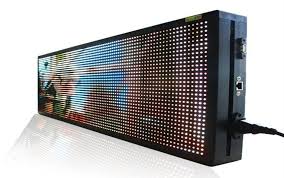
1. Resolution: Modern LED LCDs now support resolutions up to 8K (7680x4320 pixels), allowing unparalleled image detail. The pixel density, often measured in PPI (pixels per inch), directly impacts display sharpness. A higher PPI is particularly critical in applications such as medical imaging and professional video editing.
2. Refresh Rate: Typically ranging from 60Hz to 240Hz, the refresh rate determines how many times per second the display updates. Higher refresh rates ensure smoother motion rendering—vital in gaming, AR/VR, and live broadcasting environments.
3. Contrast Ratio: The ratio of the luminance of the brightest white to the darkest black. High contrast ratios (e.g., 5000:1 or more) are essential for vivid, vibrant images and deeper blacks, often achieved through advanced local dimming techniques.
4. Color Gamut and Accuracy: Modern LED LCD displays cover wide color spaces such as DCI-P3 and AdobeRGB, with color accuracy metrics (Delta E values) below 2 being industry standards for professional-grade displays.
5. Viewing Angles: Typically 178 degrees horizontally and vertically, wide viewing angles ensure consistent image quality without color shifting when observed from off-center positions.
Practical Applications and Industry Use-Cases
LED LCD screens have grown indispensable across many industries:
- Consumer Electronics: Smartphones, tablets, laptops, and televisions increasingly deploy LED LCD technology, leveraging its balance between cost, image quality, and power consumption.
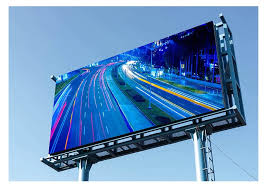
- Digital Signage and Advertising: Large-format LED LCD displays provide bright, high-definition visuals under various ambient lighting conditions, pivotal for outdoor and indoor advertising.
- Medical Imaging: Precision color and high resolution aid in diagnostic imaging, where details can impact clinical decisions.
- Automotive Displays: Instrument dashboards and infotainment systems utilize OLED and LED LCDs for clear information display, enhanced by ruggedness and low power consumption.
- Broadcast and Professional Video: High refresh rate and color fidelity enable content creators to produce and preview professional-grade footage accurately.
Advantages of LED LCD Technology
- Energy Efficiency: Compared to Cold Cathode Fluorescent Lamps (CCFL), LEDs consume less power, contributing to longer device battery life and reduced operational costs.
- Slim Form Factor: LED backlighting supports thinner and lighter displays, crucial for modern ultra-slim devices.
- Improved Brightness and Lifespan: LED backlights provide brighter images and longer lifespan (up to 100,000 hours) with minimal degradation.
- Environmental Friendliness: LEDs avoid mercury usage present in CCFL backlights, making them a more environmentally sustainable option.
Common Challenges and Mitigation Strategies
- Backlight Bleeding: Uneven LED backlight distribution can cause light leakage around screen edges, impacting image uniformity. Manufacturers combat this with improved diffuser layers and tighter assembly controls.
- Color Shift and Viewing Angles: While IPS (In-Plane Switching) panels have improved viewing angles, limitations remain. Emerging technologies like mini-LEDs and quantum dot enhancement layers (QDEF) help reduce this problem.
- Heat Management: High brightness LEDs generate heat, which can degrade the liquid crystal panel. Thermal management solutions, including heat sinks and advanced materials, are critical in manufacturing.
- Cost Constraints: Premium technologies (e.g., 8K resolution, high refresh rates) add to production costs, which manufacturers address through yield improvement and automation.
Emerging Trends and Future Directions
1. Mini-LED and Micro-LED Integration: Mini-LED backlights use thousands of tiny LEDs, enabling finer local dimming zones, better contrast ratios, and energy savings. Micro-LED technology, although in early commercial stages, promises direct self-emissive displays with even higher brightness and efficiency than conventional LED LCDs.
2. Quantum Dot Enhancement Film (QDEF): Integration of quantum dot layers enhances color gamut and brightness due to their narrow emission spectra, pushing the boundaries of color accuracy.
3. Flexible and Transparent Displays: Advances in flexible substrates and transparent LED LCDs open new possibilities for foldables and augmented reality applications.
4. AI-driven Calibration: Leveraging artificial intelligence for dynamic color and brightness calibration improves uniformity and user experience over the device’s operational life.
5. Sustainability Focus: Greater emphasis is placed on recyclable materials, lower power consumption, and eliminating hazardous substances, aligning with global environmental standards like RoHS and REACH.
Conclusion
The LED LCD screen manufacturing sector continues to evolve with a clear trajectory towards higher resolution, superior color performance, improved energy efficiency, and form factor innovation. For manufacturers and engineers, understanding the nuanced balance of technology parameters, practical challenges, and application-driven design choices is critical for delivering high-quality displays that meet modern consumer and professional demands. Staying abreast of emerging trends such as mini-LED, quantum dots, and AI-calibration technologies will position the industry to meet future challenges effectively, ensuring LED LCD displays remain a dominant medium for visual expression worldwide.
References:
- Society for Information Display (SID). (2023). Display Industry Metrics and Forecast.
- International Electrotechnical Commission (IEC) Standards for Display Technologies, IEC 62368-1 (2020).
- Semiconductor Industry Association. (2023). Emerging Display Technologies Whitepaper.
- Zhou, X., & Lee, S. (2022). "Advances in Mini-LED Backlighting for LCD Panels," Journal of Display Technology, 18(7), 1234-1245.
- ITRI (Industrial Technology Research Institute). (2023). Quantum Dot Technology in Displays.













