

Advanced LED Display Manufacturing: Technologies, Applications, and Industry Trends
The evolution of LED display technology has transformed the landscape of visual communication, enabling diverse applications from outdoor billboards to indoor commercial screens. As a seasoned LED display engineer with extensive experience in design, manufacturing, and quality control, I will explore the technical foundations of LED displays, practical applications, advantages, common challenges, and the latest trends shaping this dynamic industry.
Technical Foundations and Manufacturing Parameters
LED displays are comprised of an array of light-emitting diodes arranged to create images through controlled brightness and color. Critical parameters in manufacturing include pixel pitch, brightness, refresh rate, viewing angle, and color depth.
- Pixel Pitch: The distance between the centers of adjacent pixels, typically measured in millimeters. A smaller pixel pitch (e.g., 1.5mm) equates to higher resolution, suitable for close-range viewing such as indoor environments; larger pitches (e.g., 10mm and above) are common in outdoor signage viewed from afar.
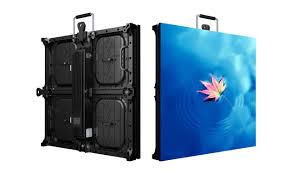
- Brightness: Outdoor displays generally require brightness levels ranging from 5,000 to 10,000 nits to maintain visibility under direct sunlight, whereas indoor screens typically operate at 800-1,200 nits.
- Refresh Rate: To eliminate flicker and deliver smooth visuals, modern LED displays utilize refresh rates exceeding 3,000 Hz, essential for broadcast-quality applications.
- Viewing Angle: Advanced LED panels incorporate wide viewing angles (120° horizontal and vertical or greater) with minimal color shift, ensuring image quality regardless of viewer position.
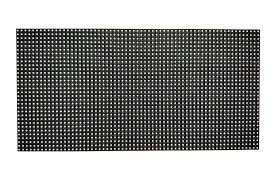
- Color Depth: Achieving color accuracy involves precise control over LED binning and calibration; 16-bit color processing per channel offers superior gradation and realism.
Practical Applications
LED displays have proliferated across multiple sectors due to their versatility:
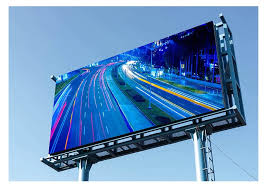
- Advertising and Digital Signage: High brightness and weather-resistant displays dominate outdoor advertising globally, offering dynamic, programmable content that outperforms traditional static billboards. Cities like Times Square and Tokyo Shibuya Crossing showcase this technology.
- Sports and Event Arenas: Large-scale LED screens deliver real-time game information, replays, and interactive content in challenging outdoor and indoor environments. Modular designs facilitate easy installation and maintenance.
- Transportation Hubs: Airports and train stations utilize LED displays for schedules, notifications, and wayfinding, prioritizing legibility and energy efficiency.
- Corporate and Control Rooms: Ultra-fine pitch LED walls offer detailed visual data for command and control centers, enabling seamless monitoring.
- Retail and Hospitality: Dynamic displays enhance customer engagement and atmosphere, integrating with digital marketing platforms.
Advantages of LED Displays
- Energy Efficiency: Compared to LCD, LED technology consumes significantly less power, especially with advancements in low-power driver ICs and adaptive brightness controls.
- Durability and Longevity: High-quality LEDs can operate reliably for over 100,000 hours, resisting environmental factors such as moisture and UV exposure.
- Scalability and Flexibility: Modular panels can be tailored to custom sizes and shapes, facilitating creative architectural integrations.
- Superior Brightness and Contrast: LEDs offer better contrast ratios, especially in high ambient lighting conditions.
- Maintenance Simplicity: Modular design allows faulty modules to be swapped quickly, minimizing downtime.
Common Challenges
Despite substantial progress, LED display manufacturing and operation face persistent issues:
- Heat Dissipation: Excessive heat can reduce LED lifespan and cause color shift. Efficient thermal management designs, such as passive heat sinks and active cooling, are integral.
- Calibration Consistency: Ensuring uniform brightness and color across large arrays requires precise factory calibration and field adjustments, often employing advanced software and hardware tools.
- Pixel Failure: Dead or stuck pixels impact image quality; thorough component screening and redundant control mechanisms mitigate this risk.
- Environmental Impact: Disposal and recycling of LED components pose sustainability challenges, prompting development of eco-friendly materials and lifecycle management protocols.
- Cost Constraints: Ultra-fine pixel pitch displays, while delivering excellent resolution, remain costly, affecting adoption in cost-sensitive markets.
Latest Trends in LED Display Technology
- MicroLED and MiniLED: These emerging technologies offer improved brightness, energy efficiency, and pixel density. MicroLED, characterized by microscopic LEDs, holds promise for seamless, bezel-free large displays and next-generation TVs.
- AI-Driven Calibration: Artificial intelligence is increasingly used to automate real-time color correction and fault detection, enhancing display consistency and reducing maintenance labor.
- Flexible and Transparent LED Displays: Innovation has led to bendable displays used in wearable devices and transparent panels for augmented reality solutions.
- Integration with IoT and Smart Systems: LED displays now commonly connect to IoT ecosystems, enabling dynamic content management, usage analytics, and energy optimization.
- Sustainability Initiatives: Manufacturers are adopting greener production methods, lower volatile organic compounds (VOC) materials, and improved recyclability to meet regulatory and consumer demands.
Case Study: Successful LED Deployment
A recent project involved retrofitting a large outdoor stadium display with a 5mm pixel pitch LED system delivering 7,500 nits brightness and a 6,000 Hz refresh rate. The modular design achieved 98% energy savings compared to previous incandescent lighting and offered seamless integration with broadcast systems. Careful thermal design and AI-enabled calibration ensured uniform color consistency during prolonged events, garnering positive feedback from operators and audiences alike. This example illustrates the importance of holistic engineering and state-of-the-art technology to meet complex operational demands.
Conclusion
The LED display industry continues to evolve rapidly with innovations driving improved performance, versatility, and sustainability. Manufacturers must balance technical rigor, cost efficiency, and environmental responsibility to meet diverse market needs. Through comprehensive understanding of manufacturing parameters, practical applications, inherent advantages, and active management of common problems, businesses can fully exploit the transformative potential of LED display technology. Staying abreast of cutting-edge trends like MicroLED and AI integration will be pivotal in securing competitive advantage and delivering exceptional visual experiences globally.
References:
1. International Electrotechnical Commission (IEC) - IEC 62661: LED Display Standards
2. Society for Information Display (SID) - Journal of the Society for Information Display
3. LED Professional Review – industry insights and case studies
4. ANSI/CTA-2065: Minimum Requirements for High-Performance LED Displays
5. “MicroLED Technology: Status and Perspective” – IEEE Transactions on Electron Devices, 2023













