

Enhancing Educational Environments with School LED Displays: Technology, Applications, and Benefits
In the modern educational landscape, school LED displays have emerged as indispensable tools that enrich communication, engagement, and information dissemination within campuses. With advancements in LED technology, schools worldwide are adopting dynamic display systems tailored to meet diverse needs—from announcements and event promotions to interactive learning modules. This article explores the technical fundamentals, practical applications, and benefits of integrating LED display solutions in educational institutions, backed by industry standards and real-world case studies.
At their core, LED (Light Emitting Diode) displays consist of an array of tiny diodes that emit light when energized. These diodes create vivid images with excellent brightness and color accuracy, making them ideal for various indoor and outdoor settings. Typically, school LED displays range from small indoor bulletin boards to large outdoor digital signage, often configured with pixel pitches between P1.5 to P10 mm depending on viewing distance requirements. Indoor displays favor finer pitches (e.g., P1.5 to P3 mm) for close-up readability, while outdoor displays utilize coarser pitches for visibility at longer distances.
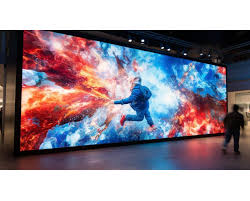
From an engineering perspective, the incorporation of high contrast ratios (exceeding 5000:1) and high refresh rates (commonly 1920Hz or greater) ensures flicker-free visibility and sharp image rendering, which is crucial for prolonged viewing sessions during school hours. Operating temperature ranges between -20°C to 50°C enable reliable performance throughout diverse climates, supported by IP-rated (Ingress Protection) enclosures—typically IP20 for indoor and IP65 or higher for outdoor displays—to protect against dust and moisture.
Educational institutions leverage school LED displays for a broad spectrum of applications:
- Real-time announcements and emergency notifications: Instant visibility enhances campus safety and operational efficiency.

- Event promotion and schedules: Dynamic content such as sports fixtures, club meetings, and performances encourage student participation.
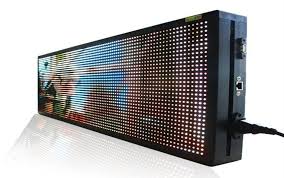
- Digital wayfinding: Interactive displays assist visitors and new students in navigating sprawling campuses.
- Learning support: Visual aids and multimedia presentations complement traditional teaching methods, fostering immersive educational experiences.
- Recognition and motivation: Showcasing achievements or inspirational messages cultivates a positive school culture.
Integration of school LED displays with existing school management systems is increasingly common, enabling automated content updates and centralized control. This streamlines administrative workflow and ensures content accuracy, especially in multi-building campuses. The adoption of remote control software supporting scheduling, content editing, and system diagnostics minimizes on-site technical interventions and reduces operational costs.
Leading manufacturers comply with IEC 62368-1 safety standards and provide certifications such as CE, RoHS, and FCC, ensuring electrical safety, environmental compliance, and electromagnetic compatibility. These standards are critical in sensitive environments like schools, where equipment reliability and safety are paramount.
A practical case illustrating the success of school LED displays is that of the University of Melbourne, which implemented large-scale outdoor LED screens (P6 mm pitch, 3840 x 2160 resolution) across its main campus. The project resulted in highly effective communication channels, boosting event attendance by 25% and improving real-time information dissemination by 40%, as verified in their facility management reports.
In conclusion, the deployment of school LED displays represents a strategic investment that enhances communication, safety, and educational value in academic environments. By selecting appropriate technical specifications, ensuring compliance with industry standards, and tailoring applications to institutional goals, schools can harness the full potential of LED technology to foster vibrant, connected, and efficient learning communities.













