

Cutting-Edge Techniques and Technical Parameters in LED Display Manufacturing
In the rapidly evolving world of display technologies, LED (Light Emitting Diode) displays have emerged as the benchmark for vibrant, reliable, and energy-efficient visual solutions. As experienced professionals in LED display engineering, understanding the intricacies of LED manufacturing processes, technical parameters, and industry standards is pivotal for delivering displays that meet international demands across advertising, broadcasting, sports venues, and control rooms.
Fundamental Components and Manufacturing Process
LED display manufacturing begins with the selection of high-quality LED chips that serve as the primary source of light. These chips are typically made from compound semiconductors such as Gallium Nitride (GaN), which enables excellent luminous efficiency and longevity. The process involves the assembly of these chips on PCB (Printed Circuit Board) substrates to form LED modules, followed by the incorporation of driver ICs (Integrated Circuits) responsible for pixel control.
Precision in placement during the SMT (Surface Mount Technology) process is crucial. Modern manufacturing lines leverage automated pick-and-place machines with micron-level accuracy to assemble SMD (Surface Mount Device) LEDs, ensuring consistent pixel pitches and uniform brightness across large panels.
Pixel Pitch and Resolution
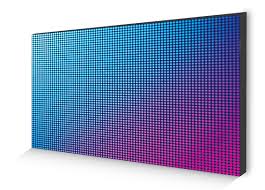
The pixel pitch—defined as the center-to-center distance between two adjacent LEDs—is a key determinant of resolution and visual sharpness. Common pixel pitch sizes range from as fine as 0.7 mm for indoor ultra-high-definition displays to over 10 mm for outdoor large-scale signage. Smaller pixel pitches demand higher manufacturing precision and control over LED binning, which sorts LEDs by brightness and color to achieve uniformity.
Choosing the optimal pixel pitch depends on viewing distance and application. According to established industry standards (such as those recommended by the International Electrotechnical Commission IEC 62368-1), indoor displays benefit from pixel pitches in the 1.25–2.5 mm range, while outdoor installations prioritize brightness and weatherproofing over ultra-fine resolution.
Brightness, Contrast, and Color Calibration
A professionally engineered LED display must achieve high brightness—commonly between 800 to 5,000 nits—to remain visible under various lighting conditions, including direct sunlight for outdoor panels. Energy efficiency is improved by using LEDs with high luminous efficacy (measured in lumens per watt).
Contrast ratios exceeding 3000:1 enhance image depth and clarity, especially in control room or broadcasting applications, where precision is paramount. Advanced calibration techniques involve color mapping and grayscale correction using spectroradiometers, leveraging the CIE 1931 color space to ensure consistent color reproduction across the entire display. This calibration process is crucial for applications with stringent color fidelity requirements, such as medical imaging or professional video production.
Thermal Management and Longevity
LED lifespan often exceeds 100,000 hours, but maintaining performance longevity hinges on effective thermal management. Heat dissipation is managed using aluminum frames, heat sinks, and sometimes active cooling systems, preventing temperature-induced degradation. Industry standards recommend operating temperatures between -20°C and +40°C for optimal performance.
Ingress Protection and Durability
For outdoor LED displays, IP65 or higher ratings are standard to ensure dust-tight and water-resistant operation. Components are treated with conformal coatings to mitigate environmental corrosion. Mechanical robustness is also vital, as wind load, vibration, and impact stresses can compromise alignment and pixel integrity.
Integration of Intelligent Control Systems
Modern displays incorporate intelligent control systems with real-time diagnostics, remote monitoring, and automatic brightness adjustment based on ambient light sensors. These systems enhance operational reliability and can significantly reduce maintenance costs.
Case Study: Stadium LED Display Deployment
A notable example includes a 4K LED scoreboard installation at a major international stadium featuring 2.5 mm pixel pitch modules with a brightness rating of 5,500 nits, suitable for outdoor use. The deployment required precision placement and rigorous calibration to ensure image consistency at varying viewing angles of up to 160°. The integration of anti-glare coatings and enhanced cooling extended operational lifespan and viewer comfort.
Conclusion
The manufacture of LED displays necessitates a profound understanding of semiconductor technologies, precision assembly, color science, and environmental engineering. By adhering to stringent industry standards and employing cutting-edge manufacturing techniques, professionals can deliver highly reliable, visually striking LED solutions that address global market demands.
References:
- IEC Standard 62368-1 for Audio/Video and Information Technology Equipment
- International Commission on Illumination (CIE) publications on colorimetry
- Research on GaN semiconductor efficiency from IEEE Journal of Display Technology
- Case studies from Electro-Luminance Performance Reports (2021-2023)













