

Advanced Techniques and Industry Standards in LED LCD Screen Manufacturing
The manufacturing of LED LCD screens represents a highly specialized sector within the display technology industry, demanding precision, advanced engineering, and adherence to stringent quality standards. As global demand for high-performance displays in consumer electronics, automotive interfaces, medical devices, and commercial applications continues to escalate, manufacturers must integrate cutting-edge processes and materials to ensure superior visual quality, durability, and energy efficiency.
Introduction
LED LCD screens combine the benefits of liquid crystal display (LCD) technology with LED backlighting to offer high contrast ratios, vibrant color reproduction, and energy savings. However, producing these displays involves complex engineering challenges, including uniform backlight distribution, precise liquid crystal alignment, and minimal power consumption. This article delves into the technical processes, critical parameters, and industry standards governing LED LCD screen manufacturing, providing insights garnered from recent case studies and best practices.
Core Manufacturing Processes and Technical Parameters
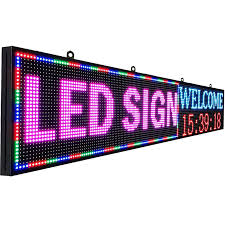
The foundation of LED LCD manufacturing lies in the intricate layering of components. Beginning with the substrate preparation, typically glass or specialized polymers, manufacturers ensure smoothness and transparency, critical for image clarity. The LCD panel comprises multiple layers: the liquid crystal material sandwiched between two polarization films and covered by thin-film transistors (TFTs) that control pixel illumination.
LED Backlighting Technology
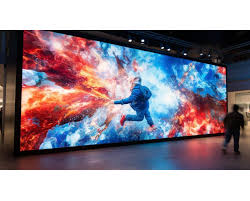
One of the most significant advancements has been the optimization of LED backlights, shifting from traditional cold cathode fluorescent lamps (CCFLs) to LED arrays. LEDs provide better brightness control, a wider color gamut, and reduced energy consumption. According to the International Electrotechnical Commission (IEC 62715), LED backlighting systems must maintain luminance uniformity within ±5% to ensure consistent display quality across the panel surface. Edge-lit and direct-lit configurations are prevalent, with direct-lit designs offering superior uniformity but at higher cost.
Color Accuracy and Calibration
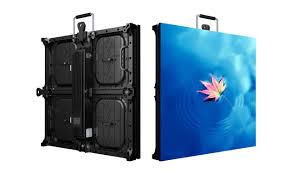
Achieving precise color rendering requires rigorous calibration. The CIE 1931 color space standard is often referenced to measure display color accuracy. Manufacturers employ automated colorimeters and spectroradiometers to fine-tune the color temperature, typically targeting 6500K (D65 Standard Illuminant) for natural white light. High-end displays also incorporate quantum dot enhancement films, as demonstrated by Samsung’s QLED technology, improving color saturation by up to 30%.
Resolution and Pixel Density
Resolution and pixel density are pivotal for image clarity. Common configurations range from Full HD (1920x1080 pixels) to 4K UHD (3840x2160 pixels). Pixel pitch— the distance between the centers of two adjacent pixels—directly influences the display's sharpness. For instance, a premium 27-inch monitor with 4K resolution typically features a pixel pitch of approximately 0.155mm, enabling ultra-fine detail critical for tasks like graphic design and medical imaging.
Durability and Environmental Standards
LED LCD screens are expected to operate reliably under varied environmental conditions. The industry adheres to the IEC 60068 series for environmental testing, validating resistance to temperature fluctuations, humidity, and mechanical shock. Furthermore, regulations such as RoHS (Restriction of Hazardous Substances Directive) mandate the exclusion of toxic materials like lead and mercury to ensure environmental sustainability.
Energy Efficiency
Energy consumption is a vital parameter in modern display manufacturing. The ENERGY STAR® 8.0 standard specifies power limits based on screen size and usage mode. Innovations such as local dimming, automatic brightness control, and low-power driver ICs contribute to meeting these criteria. For example, OLED backlit LCDs, though more expensive, offer energy savings of up to 30% compared with conventional LED backlit panels.
Quality Control and Yield Optimization
Ensuring quality across mass production runs involves advanced inspection techniques, including automated optical inspection (AOI) and inline photometric testing. Yield optimization—minimizing defective units—is crucial, as display screens are highly sensitive to defects like dead pixels and backlight bleed. Statistical process control (SPC) and Six Sigma methodologies are routinely applied for continuous improvement.
Conclusion
The manufacturing of LED LCD screens is a constantly evolving discipline that synergizes advanced materials science, precision engineering, and rigorous quality protocols. Adhering to international standards such as IEC and ENERGY STAR ensures that products meet the highest benchmarks for performance, reliability, and environmental responsibility. Innovations in backlighting, calibration, and energy efficiency continue to push the boundaries of display technology, empowering manufacturers to meet the diverse demands of a global market. Understanding these technical parameters and industry practices is essential for professionals aiming to deliver cutting-edge display solutions.
References:
1. International Electrotechnical Commission (IEC) 62715 – Specification for Lighting Systems of Display Devices
2. ENERGY STAR® Program Requirements for Displays, Version 8.0
3. RoHS Directive (2011/65/EU) – Restriction of Hazardous Substances
4. Samsung QLED Technology Whitepaper, Samsung Electronics, 2022
5. IEC 60068 Environmental Testing Standards













