

Advances and Best Practices in LED LCD Screen Manufacturing: A Technical Overview
The manufacture of LED LCD screens represents one of the most dynamic sectors within the display technology industry, combining cutting-edge engineering, precise materials science, and rigorous quality control. As global demand for high-definition displays in consumer electronics, automotive dashboards, medical devices, and industrial applications continues to surge, it is crucial for engineers and manufacturers to adhere strictly to established industry standards and leverage the latest innovations for optimal performance and durability.
1. Understanding LED LCD Technology Parameters
LED LCD screens are a hybrid technology where a liquid crystal display (LCD) panel is illuminated by an array of light emitting diodes (LEDs). This combination provides enhanced brightness, contrast, and energy efficiency compared to traditional CCFL (cold cathode fluorescent lamp) backlighting. Critical technical parameters that manufacturers must consider include:
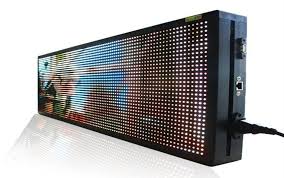
- Pixel Pitch: The distance between the centers of two adjacent pixels, typically measured in millimeters. Smaller pixel pitch (e.g., 0.8mm to 1.5mm for indoor screens) results in higher resolution and improved image sharpness.
- Brightness Levels: Measured in nits (cd/m²), LED LCD screens typically range from 300 to over 1000 nits for outdoor applications, ensuring readability under various ambient light conditions.
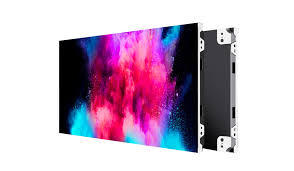
- Contrast Ratio: The ratio of the luminance of the brightest white to the darkest black a display can produce. Higher contrast ratios, such as 3000:1 or greater, enable deeper blacks and more vibrant colors.
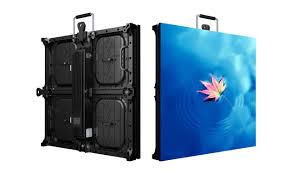
- Viewing Angle: A critical parameter, generally described in degrees, where optimal screens offer 178° both horizontally and vertically, allowing uniform image quality from multiple perspectives.
2. Material Science and Component Integration
The quality of raw materials and the precision of component assembly directly affect the lifespan and performance of LED LCD screens. For example, the selection of liquid crystal material with stable electro-optical properties under prolonged electrical stress is essential. The backlight unit must employ LEDs with consistent color temperature (typically around 6500K daylight white) and minimal luminance decay. Industry standards such as IEC 62368-1 for product safety ensure that manufacturers maintain consistent quality.
Moreover, the encapsulation technology for LEDs, whether surface-mounted devices (SMD) or chip-on-board (COB), plays a role in thermal management and color uniformity. Advanced thermal interface materials and effective heat sinking designs prevent thermal runaway and prolong service life, which industry statistics indicate can extend product life expectancy beyond 50,000 operating hours.
3. Manufacturing Best Practices and Quality Control
Ensuring the reliability of LED LCD screens involves stringent quality control protocols across all production stages:
- Cleanroom Assembly: Dust and contamination can cause pixel defects or reduce optical clarity. ISO 14644-1 class 7 or higher cleanroom environments are commonly employed.
- Automated Optical Inspection (AOI): This uses high-resolution cameras and AI algorithms to detect defects such as dead pixels, color uniformity issues, and backlight inconsistencies at high speed.
- Electrostatic Discharge (ESD) Management: Adherence to ANSI/ESD S20.20 standards minimizes risk during handling sensitive semiconductors of LEDs and driver ICs.
- Color Calibration: Post-assembly, professional calibration using spectroradiometers ensures color accuracy matching industry-recognized standards such as sRGB or DCI-P3 color gamut profiles.
4. Industry Case Studies and Trends
Leading manufacturers have adopted novel approaches such as quantum dot enhancement layers (QDEL) to improve color gamut and efficiency. For instance, Samsung’s QLED technology integrates quantum dots as a nanocrystal layer that converts blue LED backlight into highly saturated red and green, pushing color reproduction closer to 100% DCI-P3, highly sought in professional imaging applications.
Moreover, the adoption of mini-LED and micro-LED backlighting is gaining traction, achieving even higher brightness and local dimming zones, which improves contrast ratios significantly compared to traditional backlit LCDs.
5. Environmental and Energy Efficiency Considerations
Sustainability measures are becoming paramount in LED LCD manufacturing. Utilizing lead-free soldering processes, recyclable packaging, and energy-efficient components align with regulations such as the EU’s RoHS and WEEE directives. Manufacturers also strive to meet Energy Star certifications by optimizing power consumption without compromising display brightness or longevity.
Conclusion
The manufacture of LED LCD screens demands a detailed understanding of electronic, optical, and material technologies, supported by strict adherence to international standards. Through continuous innovation—such as quantum dot enhancement, mini-LED advancements—and robust quality controls, the industry pushes the boundaries of display quality and efficiency. International manufacturers benefit from integrating these best practices to meet evolving market requirements for durability, color accuracy, energy efficiency, and user experience.
By focusing on precise pixel geometry, superior materials, and rigorous testing, the LED LCD industry ensures the production of reliable products tailored for diverse environmental conditions and application demands worldwide.













