

Professional Insights into LED LCD Screen Manufacturing: Applications, Advantages, Challenges, and Emerging Trends
In the evolving landscape of display technology, LED LCD screens have entrenched themselves as a cornerstone in various sectors due to their superior visual performance, energy efficiency, and adaptability. As a professional LED display engineer with extensive experience in manufacturing and deployment, this article elucidates the practical applications, inherent advantages, common manufacturing challenges, and the latest technological trends shaping the future of LED LCD screens.
LED LCD screens integrate Light Emitting Diode (LED) backlighting with Liquid Crystal Display (LCD) panels, leveraging the high luminance and long lifespan of LEDs alongside the precise color modulation capabilities of LCDs. This synergy forms the basis for displays with exceptional brightness, color accuracy, and energy efficiency.
Practical Applications
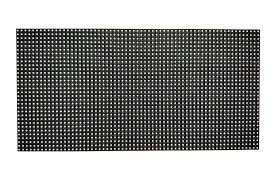
LED LCD technology is widely adopted in numerous applications. In consumer electronics, it powers smartphones, tablets, laptops, and televisions, delivering sharp image quality and low power consumption. Commercial environments utilize large-format LED LCD displays for digital signage, video walls, and interactive kiosks, where visibility under various lighting conditions is critical. In the automotive industry, LED LCDs serve as instrument clusters and infotainment displays, prized for their durability and clarity under variable ambient light. Additionally, sectors such as healthcare benefit from medical-grade LED LCD monitors used in diagnostics that require precise color representation and uniformity.
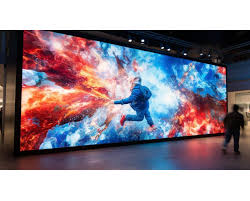
Advantages
From a manufacturing and user perspective, LED LCD screens offer several advantages:
1. High Brightness and Contrast: Modern LED backlighting facilitates brightness levels exceeding 1000 nits, enabling outdoor visibility and HDR content displays. The local dimming capability enhances contrast ratios significantly.
2. Energy Efficiency: Compared to traditional CCFL backlighting, LEDs consume up to 40% less power while providing consistent brightness, contributing to sustainability and lower operating costs (Energy Star Guidelines, EPA).
3. Long Lifespan and Reliability: LEDs boast lifespans surpassing 50,000 hours, reducing maintenance and replacement frequency—critical in industrial and commercial deployments.
4. Slim Form Factor: Using edge-lit or direct-lit LED arrays allows for thinner displays, which is vital for modern design aesthetics and portable device integration.
Common Manufacturing Challenges
While LED LCD manufacturing has matured, several challenges persist:
- Uniformity and Color Calibration: Ensuring uniform backlight distribution and color consistency across large screens demands precise quality control and advanced calibration techniques. Variations may cause ‘clouding’ or color shifts, impacting user experience.
- Thermal Management: High brightness LED backlighting generates heat, which, if unmanaged, can degrade LCD performance and lifespan. Incorporating effective heat sinks, thermal pads, and temperature sensors is necessary to enhance reliability.
- Supply Chain and Component Variability: Sourcing consistent quality LED modules and LCD panels remains crucial, with geopolitical factors occasionally affecting component availability and cost.
- Integration of Advanced Features: Incorporating touch sensitivity, HDR compatibility, and wide color gamut support requires complex electronics integration and rigorous testing protocols.
Emerging Trends
In response to market demands and technological advances, several trends are propelling LED LCD screen development:
- Mini-LED and Micro-LED Backlighting: These technologies use thousands of tiny LEDs to improve local dimming precision, offering superior contrast ratios and energy efficiency. Mini-LEDs have become prevalent in premium laptops and TVs, aligning with VESA DisplayHDR standards.
- Quantum Dot Enhancement: Integrating quantum dot films enhances color gamut and brightness without significantly increasing power consumption, achieving standards like DCI-P3 and Rec. 2020 within consumer displays.
- AI-Powered Calibration: Automated calibration processes using artificial intelligence algorithms improve panel uniformity and adaptive brightness control, reducing human error and production time.
- Flexible and Transparent Displays: Although primarily LCD or OLED-based currently, research is ongoing into flexible LED LCD configurations for automotive and wearable applications, expanding the horizon of form factors and functionalities.
Technical Parameters to Consider
When evaluating or producing LED LCD screens, key technical parameters include:
- Resolution: Ranging from HD (1280x720) to 8K (7680x4320) for consumer and professional applications.
- Brightness: Typical ranges from 300 to 1500 nits depending on application.
- Contrast Ratio: Static contrast of 1000:1 is standard, whereas dynamic contrast can exceed 100,000:1 with local dimming.
- Color Gamut: Coverage of sRGB 100%, DCI-P3 >90%, and Rec.2020 for high-end applications.
- Response Time: Usually between 1ms to 8ms, important for gaming and video playback.
- Viewing Angle: 178° horizontal and vertical viewing angles to minimize color and brightness distortion.
Conclusion
The manufacture and application of LED LCD screens represent a mature yet continuously evolving field where performance, reliability, and aesthetics fuse to meet diverse global demands. Understanding the practical applications, leveraging advantages, overcoming manufacturing hurdles, and embracing cutting-edge trends ensures professionals remain at the forefront of this dynamic industry. For manufacturers and end-users alike, LED LCD technology promises sustained growth and innovation underpinned by rigorous quality standards and research-backed enhancements.
References:
- Energy Star Program Requirements for Displays Version 8.0, EPA, 2023
- Society for Information Display (SID) Standards and Guidelines
- VESA DisplayHDR Certification Program
- Quantum Dot Displays: Fundamentals and Applications, Nanophotonics Journal, 2022
- Thermal Management of LED Displays, IEEE Transactions on Components, Packaging and Manufacturing Technology, 2021













