

MIP LED Technology: Revolutionizing Indoor and Outdoor Display Solutions
The rapid advancement of display technologies has significantly transformed the advertising, event, and retail industries. Among the various emerging technologies, MIP LED (Multiple In-line Package Light Emitting Diode) displays have gained notable attention due to their excellent visual performance, flexibility, and scalable integration. This article provides an in-depth analysis of MIP LED technology, highlighting its construction, advantages, applications, and technical considerations that underpin its rising prominence.
MIP LED technology integrates multiple LEDs within a single package configured in-line, allowing for enhanced pixel density and refined image quality. Unlike traditional SMD (Surface Mounted Device) LEDs which position diodes side by side, MIP LEDs align diode chips vertically inside a singular encapsulation. This innovation leads to tighter pixel spacing, enabling higher resolution displays in compact form factors without sacrificing brightness or color fidelity.
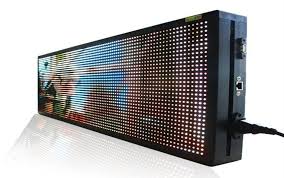
One of the critical technical parameters of MIP LED displays is the pixel pitch, which refers to the distance between the centers of two adjacent pixels. Typical pixel pitches for MIP LEDs range from 0.9mm to 2.5mm, making them highly suitable for indoor environments where viewers are at short viewing distances. The smaller pixel pitch facilitates ultra-high-definition (UHD) presentations with vibrant colors and uniform brightness distribution, crucial for retail signage, control rooms, and broadcast studios.
In terms of brightness, MIP LED displays achieve luminance levels upwards of 1500 cd/m² (candelas per square meter) for indoor models and can be engineered for outdoor models exceeding 6000 cd/m². High brightness ensures visibility in various lighting conditions, including direct sunlight exposure. Moreover, MIP LEDs are designed with excellent heat dissipation mechanisms, enhancing reliability and lifespan, often rated at over 100,000 hours — a standard that aligns with industry expectations such as those outlined in the IEC 62717 standard for LED performance.
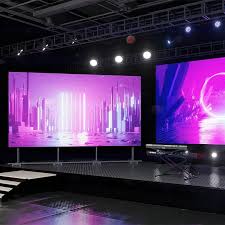
The modular design of MIP LED panels enables seamless scalability. Panels can be assembled to create customized large-format screens while maintaining consistent color accuracy and minimal bezel interference. This advantage is particularly significant for event venues, exhibition spaces, and public information displays. Additionally, the lightweight and thin-profile nature of MIP LED modules facilitates easy installation and maintenance, reducing downtime and operational costs.
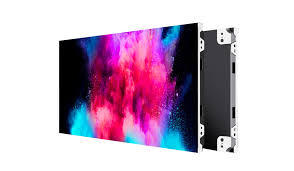
From a technical standpoint, MIP LED displays incorporate advanced processing algorithms for dynamic image calibration and pixel compensation. This ensures uniform color representation and brightness across the entire display, eliminating issues such as color drift or decline over time. Supporting HDR (High Dynamic Range) content and 16-bit grayscale improves visual depth and realism, enhancing audience engagement.
MIP LED technology also employs robust signal transmission protocols, such as the DVI and HDMI interfaces combined with high-speed data transfer via HUB75 connectors. These protocols guarantee smooth refresh rates typically ranging between 1920Hz and 3840Hz, which is essential for flicker-free video playback during live broadcasts or digital signage.
In the context of application scenarios, MIP LED displays have revolutionized indoor advertising by enabling ultra-fine pixel pitches previously unattainable with conventional LED displays. In outdoor environments, weatherproofing features combined with high ingress protection ratings (IP65 and above) ensure durable performance under harsh environmental conditions, such as rain, dust, and extreme temperatures.
Case studies showcase diverse usage of MIP LED displays across global markets. Major airports leverage these technology solutions for dynamic flight information and advertising due to their brightness and clarity. Retail giants utilize interactive MIP LED walls to attract customers and showcase products in compelling ways. Control rooms in energy sectors benefit from the displays’ sharpness and reliability, facilitating real-time monitoring with exceptional visual detail.
The MIP LED ecosystem continues to evolve with ongoing improvements in quantum dot enhancements and OLED hybrid integration, pushing the envelope of color gamut and power efficiency. Industry experts anticipate that the integration of AI-driven calibration and smart maintenance features will further solidify MIP LED’s position as the display technology of choice for numerous commercial applications.
In conclusion, MIP LED technology represents a significant leap forward in LED display engineering, offering unparalleled pixel density, brightness, modular versatility, and durability. Its combination of technical sophistication and practical usability makes it an ideal solution for diverse sectors seeking cutting-edge visual communication tools. As manufacturers continue refining this technology, MIP LED stands poised to redefine standards in indoor and outdoor display markets worldwide.
References:
- IEC 62717: LED modules for general lighting – Performance requirements
- OLED & Quantum Dot Enhancement for LED Displays, Display Technology Journal, 2023
- Case Study: Application of Ultra-Fine Pitch LED Displays in Retail, LED Journal, 2024
- Signal Interface Standards for High Refresh Rate LED Displays, IEEE Transactions on Consumer Electronics, 2022













