

OLED vs Micro LED Display Technology: Key Differences and Industry Applications
In the evolving landscape of display technologies, OLED (Organic Light Emitting Diode) and Micro LED have emerged as two leading contenders, each offering unique advantages and technical characteristics. Understanding the core differences between OLED and Micro LED is essential for designers, manufacturers, and consumers aiming to make informed decisions regarding display quality, efficiency, and application suitability.
Technology Fundamentals
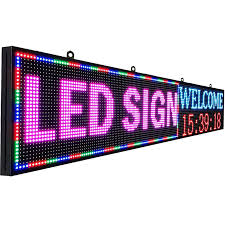
OLED displays utilize organic compounds that emit light when an electric current passes through them. Each pixel in an OLED display is an individual organic light emitter, enabling true blacks and exceptional contrast because pixels can be completely turned off. Micro LED, on the other hand, employs microscopic inorganic LEDs as individual pixels. Each Micro LED pixel is a tiny, inorganic light emitter, which promises higher brightness levels, greater energy efficiency, and longer lifespan than OLEDs.
Picture Quality and Contrast
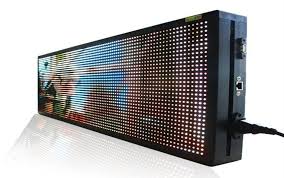
OLED displays are renowned for their infinite contrast ratio. Since OLED pixels emit light independently and can be turned off completely, deep black levels and vibrant colors are achievable, catering well to applications requiring high contrast and wide color gamuts. According to the International Electrotechnical Commission (IEC) 61966-2-1 colorimetry standard, OLED panels typically cover up to 99% of the DCI-P3 color space, making them ideal for professional-level color accuracy.
Micro LED technology also offers excellent contrast and color performance but can achieve much higher peak brightness—up to 10,000 nits in some implementations—making Micro LED displays suitable for environments with strong ambient light, such as outdoor digital signage and heads-up displays (HUDs).
Brightness and Energy Efficiency
Micro LED displays outshine OLED in brightness and energy efficiency. Due to their inorganic semiconductor nature, Micro LEDs can emit intense light with less power consumption, a significant advantage for battery-powered devices and large-scale displays. Data from industry leaders like Samsung and Sony indicate Micro LED panels consume roughly 15-30% less power than comparable OLED screens when displaying high-brightness content.
Durability and Lifespan
A critical consideration in display technology is durability. OLED devices are prone to burn-in and degradation over time, primarily because organic materials age with use, particularly blue light-emitting pixels. Micro LED, formed from inorganic materials like gallium nitride (GaN), exhibits superior longevity and resistance to burn-in, which can translate into longer device life cycles, especially for high-demand commercial applications.
Manufacturing and Cost Challenges
While OLED technology has matured, enabling mass production at various sizes and resolutions, Micro LED production remains complex and relatively expensive. The Micro LED manufacturing process involves precise placement of millions of microscopic LEDs (often less than 100 micrometers) onto substrates, requiring advanced transfer and bonding techniques. These challenges currently limit Micro LED’s availability primarily to niche, premium applications, although mass production advancements are ongoing.
Applications and Market Trends
OLED technology is widely used in smartphones, TVs, and wearable devices due to its excellent contrast and flexible form factors. Brands like LG, Sony, and Apple incorporate OLED displays for high-end visual performance and thin designs.
Micro LED is positioned for future use in large-format displays, augmented reality (AR), virtual reality (VR), and automotive HUDs, where high brightness, robustness, and energy efficiency are critical. Companies such as Samsung and Sony are investing heavily in Micro LED development, anticipating broader commercial adoption over the next decade.
Conclusion
In summary, OLED and Micro LED technologies each bring distinct advantages to the display industry. OLED excels in superior contrast ratios, color accuracy, and flexible designs, while Micro LED offers groundbreaking brightness, power efficiency, and durability. The choice between OLED vs Micro LED depends heavily on application needs, cost considerations, and production feasibility.
Both technologies adhere to stringent industry standards like IEC and SMPTE, ensuring consistent colorimetry and luminance performance. As research and manufacturing techniques evolve, Micro LED is poised to complement or even surpass OLED in high-end display segments, making it a technology worth monitoring for both industry professionals and informed consumers.













