

Advanced Technology and Applications of LED Display Bars in Modern Visual Solutions
LED display bars represent a significant advancement in digital signage and visual communication technology, combining high brightness, energy efficiency, and versatile form factors to deliver exceptional display performance. Widely used in both indoor and outdoor environments, these display bars are essential components in a broad spectrum of applications, ranging from advertising to information dissemination and architectural decoration.
At their core, LED display bars consist of linear arrays of light-emitting diodes arranged on a narrow substrate, designed to provide uniform illumination and crisp visuals. The modular design of these display bars allows seamless integration into larger display panels or to function independently as dynamic signage elements. With pixel pitches varying typically from 1.5mm to 10mm, LED display bars accommodate a variety of resolution requirements, enabling detailed content presentation even in confined or angled spaces.
One critical technical parameter of LED display bars is their luminance, which often exceeds 1000 nits for indoor models and can reach up to 7000 nits or more for outdoor versions to ensure visibility under direct sunlight. This high brightness is achieved through advanced LED epitaxial materials and efficient heat dissipation mechanisms embedded within the bar’s construction. Additionally, the color gamut of modern LED display bars can cover up to 120% of the NTSC color space, providing vivid and true-to-life color reproduction crucial for brand-sensitive advertising and high-impact visual storytelling.
Durability and reliability are paramount in the design of LED display bars. They typically comply with international standards such as IP65 for waterproof and dustproof protection for outdoor usage, as outlined in the IEC 60529 standard. This ensures uninterrupted performance in harsh weather conditions, a vital attribute for applications such as transportation hubs, stadiums, and retail facades. Furthermore, LED display bars employ high-quality driver ICs and integrate real-time monitoring systems for temperature, voltage, and current, preventing premature failure and facilitating maintenance.
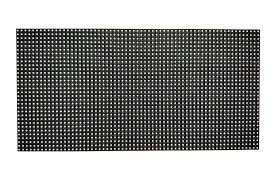
From an installation perspective, LED display bars provide significant flexibility. Their slim, lightweight profiles allow mounting on curved surfaces, corners, or within narrow architectural elements where traditional flat panel displays cannot be used. The ease of connectivity via standard interfaces such as HDMI, DVI, or dedicated LED driver protocols (e.g., SPI or HUB75) supports seamless integration into existing AV infrastructure.
In terms of applications, LED display bars hold a crucial role beyond traditional advertising. Their utilization in smart cities as part of interactive information kiosks or dynamic safety signage showcases their adaptability. The customizable nature of LED display bars facilitates tailor-made solutions that can display real-time data, environmental alerts, or promotional content dynamically. Case studies from metropolitan environments demonstrate improved engagement rates where LED display bars were integrated into transit shelters and retail store entrances, boosting passenger information clarity and customer foot traffic respectively.
Leading manufacturers emphasize energy efficiency through innovations in low-voltage operation and intelligent brightness adjustment, aligning with global energy standards such as Energy Star and EU’s Ecodesign Directive. This not only reduces operational costs but also aligns with corporate social responsibility goals.
In conclusion, LED display bars serve as a versatile, high-performance component in modern visual display technologies. Their combination of superior brightness, flexibility, durability, and integration capability positions them as a critical tool for modern digital communication strategies. As the technology evolves, integration with AI-driven content management and IoT connectivity will further enhance their capabilities, opening new horizons for interactive and immersive experiences.
References:
- IEC 60529: Degrees of protection provided by enclosures (IP Code)
- Energy Star Program: LED Display Equipment
- “Advances in LED Technology for Signage,” Journal of Display Technology, IEEE, 2023
- Case Study: Smart City Digital Signage Deployments, International LED Consortium, 2022













