

Advanced Manufacturing Techniques and Quality Control in LED Display Screen Production
The rapid evolution of LED display technology has revolutionized visual communication across various industries, including advertising, broadcasting, sports, and entertainment. As the demand for high-resolution, energy-efficient, and durable LED display screens increases, manufacturers face the challenge of adopting cutting-edge production techniques and stringent quality control measures to deliver products that meet international standards. This article delves into the advanced manufacturing processes of LED display screens, highlighting technical parameters, quality assurance methods, and industry best practices to ensure optimal performance and longevity.
Introduction
LED display screens utilize an array of light-emitting diodes to create vibrant imagery with enhanced brightness and contrast compared to traditional display technologies. Given their versatility and scalability, LED displays have become the preferred choice for both indoor and outdoor applications. However, producing high-quality LED screens requires a deep understanding of materials, assembly technologies, and electronic engineering principles. This article outlines the key aspects of LED display manufacturing, supported by industry standards such as IEC 62087 for power measurement and ISO 9001 for quality management.
Main Body
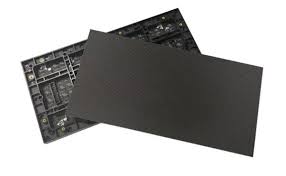
1. Raw Material Selection and LED Chip Technology
At the core of any LED display is the LED chip itself. Manufacturers commonly use GaN (Gallium Nitride)-based LEDs for their superior luminous efficacy and longevity. Key parameters include:
- Peak wavelength: Typically 620-630 nm for red, 520-530 nm for green, and 450-460 nm for blue LEDs.
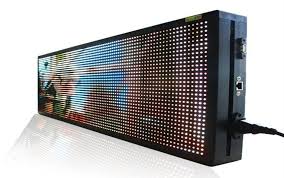
- Luminous intensity: Measured in millicandela (mcd), influencing overall screen brightness.
- Bin sorting: LEDs are sorted by color, brightness, and voltage to ensure uniformity, a process critical for achieving consistent image quality.
2. PCB Design and Module Assembly
Printed circuit boards (PCBs) serve as the backbone for mounting LEDs and associated electronics. High-frequency, double-sided surface-mount technology (SMT) PCBs are preferred to minimize signal loss and heat dissipation issues. Key considerations:
- Material: FR4 or higher-grade substrates with low thermal resistance.
- Trace width and spacing designed per IPC-2221 standards ensure reliable current flow.
- Modular assembly enables scalability and ease of maintenance, commonly using modules sized 160mm x 160mm or 320mm x 320mm, configured into cabinets.
3. Soldering and Component Placement
Automated soldering, such as reflow and wave soldering, ensures precise component placement and consistent electrical connections, reducing defects caused by manual processes. Parameters:
- Solder paste composition optimized for lead-free (RoHS) compliance.
- Precise temperature profiling prevents component damage, with peak reflow temperatures typically around 245°C.
4. Backplane and Cabinet Fabrication
Structural integrity and thermal management are crucial for LED screen durability. Die-cast aluminum cabinets provide lightweight and excellent heat dissipation. Industry standards recommend:
- Cabinet flatness deviation ≤ 0.2 mm to ensure seamless panel alignment.
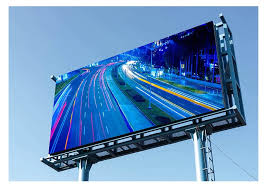
- IP rating: Outdoor LED screens commonly require IP65 or above for dust and water resistance.
5. Quality Control and Testing
Quality assurance is mandatory throughout the production lifecycle to meet performance benchmarks and customer expectations.
- Pixel Failure Rate: According to IEC 61000-4-2 standards, pixel defect rates should not exceed 0.0002%.
- Color Calibration: Using spectroradiometers to measure color coordinates (CIE 1931) ensures color uniformity within ΔE ≤ 2.
- Brightness and Contrast Testing: Light output often ranges between 1,000-7,000 nits depending on application, with contrast ratios commonly exceeding 3,000:1.
- Environmental Stress Testing: Temperature and humidity cycling simulate operating conditions (-30°C to +60°C with RH up to 95%).
6. Software Integration and Control Systems
Advanced LED displays incorporate sophisticated driver ICs (e.g., MBI5153, ICN2153) and control systems to optimize refresh rates (>3840 Hz), grayscale levels (≥14 bits), and power consumption. Real-time monitoring systems help detect anomalies such as dead pixels or power surges, thereby reducing downtime.
Conclusion
The manufacture of LED display screens is a multifaceted process that hinges on meticulous material selection, precise assembly techniques, and rigorous quality control. Adherence to international standards and continuous innovation in chip technology, PCB design, and software integration result in displays that deliver superior image quality, durability, and energy efficiency. As global demand for LED screens expands across diverse sectors, manufacturers must prioritize process optimization and quality assurance to maintain competitive advantage and meet evolving market expectations.
Incorporating best practices and leveraging emerging technologies, such as mini-LED and micro-LED arrays, will further push the boundaries of display performance. Industry professionals should stay informed of technological trends and standards to ensure the production of reliable, high-performance LED display solutions.













