

Advanced LED Display Technology: Comprehensive Manufacturing Insights and Industry Applications
In today’s digital era, LED display technology stands at the forefront of visual communication, influencing industries ranging from advertising to transportation, sports, and beyond. With ongoing advancements in materials science, electronics, and software integration, the manufacturing of LED displays has become a sophisticated, multi-disciplinary process requiring rigorous quality control and deep engineering expertise. This article delves into the advanced technological principles, manufacturing procedures, key technical parameters, and practical considerations that define modern LED display production, supported by authoritative industry data and case studies.
Understanding LED Display Technology
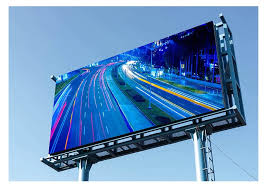
LED (Light Emitting Diode) displays comprise arrays of individually controllable light sources which emit light when electrically biased. The primary LED display types include:
- Monochrome Displays: Utilized in basic messaging and industrial signage.
- Full-Color Displays: Use Red-Green-Blue (RGB) subpixels to produce a broad color spectrum.
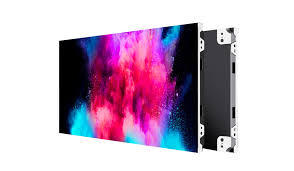
- Surface-Mounted Device (SMD) LED Displays: Compact LEDs mounted directly on printed circuit boards offering high resolution suitable for indoor and some outdoor applications.
- Chip-on-Board (COB) LED Displays: Allow denser LED packing for ultra-high resolution.
Modern large-scale applications increasingly rely on modular panel construction to facilitate scalability and maintenance. These panels typically involve millions of pixels, each requiring precise calibration to ensure uniform color and brightness.
Critical Technical Parameters
Successful LED display manufacturing hinges on adherence to stringent parameters:
- Pixel Pitch: Defines the center-to-center spacing of neighboring pixels, measured in millimeters (e.g., 1.25mm to 20mm). Smaller pixel pitches yield higher resolution but increase cost and complexity.
- Brightness: Outdoor displays require high luminance levels, often exceeding 5,000 nits for daylight visibility, whereas indoor displays operate at 300-800 nits.
- Viewing Angle: Measured in degrees; optimal designs ensure color and brightness consistency from wide horizontal (120°+) and vertical (60°+) perspectives.
- Refresh Rate: Rates above 1920Hz reduce flicker and improve image clarity, especially important for broadcast and camera filming.
- Color Accuracy and Uniformity: Achieved through precise LED binning and calibration, critical in retail, control rooms, and studio environments.
Industry Standards and Testing
Compliance with global standards such as IEC 62368-1 for safety and UL certification ensures product reliability and user safety. Optical testing employs goniophotometry to assess viewing angles and brightness uniformity. Electrical testing checks for transient voltage and current tolerances to prevent failures under peak loads.
Manufacturing Process Overview
Manufacturing LED displays integrates multiple disciplines:
1. LED Chip Fabrication: Using epitaxial growth techniques (such as MOCVD), developers create semiconductor wafers, later diced and mounted.
2. PCB Assembly: Fabrication of high-precision PCBs with tight impedance control to support high-frequency signals.
3. LED Mounting and Soldering: Automated pick-and-place machinery positions LEDs; advanced soldering methods like reflow ensure mechanical stability and electrical connectivity.
4. Panel Integration: Multiple PCBs align into modules. Precision fittings and connectors maintain electrical continuity and thermal management.
5. Calibration and Testing: Automated systems measure brightness, color metrics, and pixel operation, applying software-driven corrections.
6. Housing and Enclosure: High-grade aluminum or composite materials provide structural integrity and thermal dissipation.
7. Quality Assurance: End-to-end inspection from visual audits, environmental stress testing (temperature/humidity cycling), to electromagnetic compatibility (EMC) testing.
Thermal Management
Effective heat dissipation directly impacts LED lifespan and performance. Today’s LED modules employ heat sinks, thermally conductive adhesives, and active cooling when necessary. Numerical simulations (CFD modeling) optimize airflow and thermal profiles ensuring operational stability at ambient temperatures up to 50°C.
Applications and Case Studies
- Sports Stadium Displays: For example, the Allianz Arena’s massive LED boards utilize pixel pitches of approximately 10mm, with brightness levels exceeding 5,500 nits, ensuring clear visibility for spectators and broadcast cameras.
- Retail and Advertising: Times Square’s LED billboards implement high refresh rates (>3840Hz) reducing flicker in high-speed camera capture environments. Pixel pitches here are typically 4mm or finer for crisp imagery.
- Transportation: LED displays used in rail systems for passenger information adopt robust enclosures with IP65+ ratings for weather resistance and feature anti-glare surfaces to maintain legibility.
Future Trends
With microLED and miniLED technologies gaining traction, manufacturers focus on higher pixel density, better energy efficiency, and enhanced HDR capabilities. Integration with AI-driven calibration systems promises adaptive brightness and color tuning responding to ambient light and content dynamics, optimizing viewer experience and power consumption.
Conclusion
The manufacturing of LED displays embodies a synergy of semiconductor technology, precision electronics, materials science, and system integration. Mastery of technical parameters and adherence to industry standards ensure products meet dynamic market demands from indoor corporate communications to monumental outdoor advertising. As technology advances, LED displays will continue transforming how humans visually engage with information and entertainment.
References
- International Electrotechnical Commission (IEC). IEC 62368-1: Audio/video, information and communication technology equipment – Safety requirements.
- UL Standards for Safety of LED Displays. Underwriters Laboratories.
- Solid State Lighting Program: U.S. Department of Energy. LED Lighting Facts.
- Display Industry Experts Group Reports, 2023.
- Case study: Allianz Arena LED installation, Philips Lighting, 2021.













