

Advanced LED Display Technology: Manufacturing Processes, Technical Parameters, and Industry Applications
In the rapidly evolving landscape of digital display technologies, Light Emitting Diode (LED) displays stand out as a cornerstone of visual communication, offering superior brightness, contrast, and operational flexibility compared to traditional display types such as LCD or plasma. This article delves into the comprehensive technical and manufacturing aspects of LED displays, outlining the essential engineering parameters, industry best practices, and emerging trends that define state-of-the-art LED display technology today.
Introduction to LED Display Technology
LED displays operate by illuminating thousands to millions of tiny semiconductor diodes that emit light when an electric current passes through them. There are two primary LED display types: Direct View LED and LED Backlit LCD. Direct View LED displays consist of LEDs directly forming the image on the screen surface, while LED Backlit LCDs utilize LEDs as the backlighting source behind an LCD panel. The former is prevalent in large-scale applications such as outdoor billboards and stadium screens, whereas the latter is common in consumer electronics like monitors, televisions, and smartphones due to finer pixel pitch and better integration in compact devices.
Key Manufacturing Processes
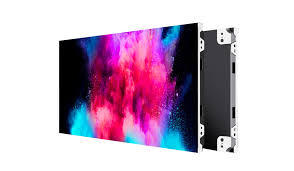
The LED display manufacturing chain involves several critical steps that mandate precise control over both materials science and process engineering:
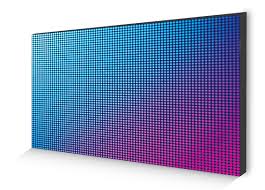
1. LED Chip Fabrication: This begins with epitaxial growth of semiconductor layers (commonly GaN, InGaN, AlGaInP) on substrates such as sapphire or silicon carbide. These processes must achieve atomic-level uniformity to ensure consistent luminous efficiency and lifespan. Industry-standard molecular beam epitaxy (MBE) and metal-organic chemical vapor deposition (MOCVD) are widely adopted to create high-brightness LED chips.
2. Encapsulation and Packaging: After dicing, the chips are encapsulated using phosphor materials for white LEDs or wavelength conversion materials for color LEDs. Packaging influences thermal dissipation, optical efficiency, and mechanical protection—critical factors affecting display reliability.
3. Module Assembly: LED chips are mounted on printed circuit boards (PCBs) with highly controlled pitch and alignment. Surface mount technology (SMT) and automated pick-and-place machines ensure precision below tens of microns, maximizing pixel density which directly correlates to image resolution.
4. Screen Integration: Modules are integrated into panels supported by controllers and driver circuits governed by complex electronic designs. Integration must consider heat management (thermal conductivity above 1 W/m·K in substrates), electromagnetic interference (EMI) shielding, and waterproofing standards (often at least IP65 in outdoor applications).
Technical Parameters and Performance Metrics
When evaluating LED displays, several technical parameters govern their suitability for specific applications:
- Pixel Pitch: The distance between the centers of adjacent pixels; ranges from sub-0.9 mm in micro-LED displays for smartphones to over 20 mm for large outdoor signs. Pixel pitch critically affects viewing distance and image clarity.
- Brightness: Measured in nits (cd/m²), outdoor LED displays commonly exceed 5,000 nits for visibility under direct sunlight. Indoor displays typically range from 300 to 1,000 nits.
- Refresh Rate: Ideal maximum refresh rates exceed 1,920 Hz to prevent flicker in high-motion video rendering, especially for LED walls intended for broadcast or live events.
- Color Gamut and Accuracy: Adherence to Rec. 709 or DCI-P3 color spaces ensures vivid and precise color reproduction. Advances in quantum dot enhancement and phosphor technology enable wider gamuts.
- Viewing Angle: Typical viewing angles exceed 120 degrees horizontally and vertically, crucial for audience engagement in public installations.
- Lifespan and Reliability: LEDs can deliver 100,000 hours of operation with minimal brightness degradation, validated through accelerated life testing (ALT) based on standards such as IEC 62717.
Industry Applications and Case Studies
- Outdoor Advertising: High-brightness weather-resistant LED billboards use modular designs enabling scalability and ease of maintenance. A case study involving Times Square digital signage demonstrates how P3.9 pixel pitch screens balance clarity and cost.
- Sports Arenas and Stadiums: LED display technology provides dynamic content from scores to instant replays. The thermal management system often incorporates liquid cooling to maintain optimal performance under intense loads.
- Retail and Exhibitions: Ultra-fine pitch indoor LED displays deliver immersive brand interactions. Advanced calibration systems adjust color temperature and brightness dynamically in response to ambient light sensors, enhancing shopper experience.
- Transportation Hubs: LED displays in airports and train stations require rapid refresh, multilingual support, and high contrast for readability under variable lighting.
Emerging Trends and Future Perspectives
Cutting-edge developments include micro-LED displays that promise self-emissive pixel-level control at resolutions surpassing OLED displays, enabling breakthrough form factors for AR/VR devices. Moreover, integration of AI-driven content optimization and IoT connectivity streamlines system management and predictive maintenance to reduce downtime.
The industry is also converging towards sustainability with innovations in eco-friendly manufacturing, lower power consumption via smart dimming, and recyclable materials in display assemblies.
Conclusion
LED display technology exemplifies a mature yet continually innovating field combining semiconductor physics, precision engineering, and digital signal processing. Understanding the intricate manufacturing steps and technical specifications helps stakeholders design, evaluate, and deploy LED display solutions that meet stringent performance criteria and operational longevity. As global demand accelerates for vivid, scalable, and energy-efficient displays, the industry must maintain rigorous quality standards, informed by authoritative guidelines such as IEEE and ICDM (International Committee for Display Metrology), to drive the next generation of visual media innovations.
References:
- IEEE Std 1789-2015: IEEE Recommended Practices for Modulating Current in High-Brightness LEDs for Mitigating Health Risks to Viewers
- ICDM 2019 Measurement Standard: Uniformity and Brightness in LED Displays
- "Light Emitting Diode Display Technology and Applications" by Kazuaki Azuma et al., IEEE Transactions on Electron Devices, 2020
- Maier, S. A., "Plasmonics: Fundamentals and Applications," Springer, 2018
- Industry White Paper: "Advancements in Micro-LED Display Manufacturing," Display Supply Chain Consultants (DSCC), 2023













