

Advancements and Best Practices in LED Display Manufacturing: A Comprehensive Guide for Industry Professionals
The LED display industry has witnessed remarkable evolution over the past decade, driven by advancements in semiconductor technology, material science, and precision manufacturing processes. With applications ranging from outdoor advertising to high-resolution indoor screens and digital signage, the demand for superior quality, durability, and energy efficiency has never been higher. This article aims to provide an authoritative, professional, and technical deep dive into the key aspects of LED display manufacturing, addressing design principles, component selection, assembly standards, quality testing, and latest industry trends.
#Understanding LED Display Technology Fundamentals
At its core, an LED display consists of an array of light-emitting diodes precisely controlled to form images or video content. The three primary types are:
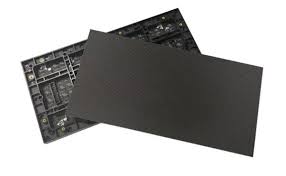
- SMD (Surface Mounted Device) LEDs – Compact, capable of producing all three primary colors (red, green, blue) from a single package, allowing high pixel density and rich color reproduction.
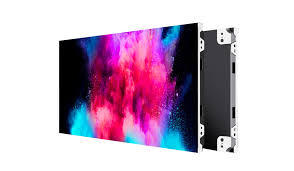
- DIP (Dual In-Line Package) LEDs – Typically used for outdoor displays requiring high brightness and durability.
- Mini and Micro LEDs – Emerging technologies focusing on ultra-high resolution and contrast for premium displays.
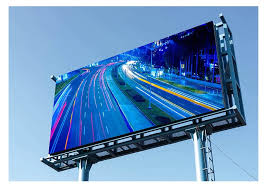
Modern LED screens are usually modular, constructed from interconnected cabinets measuring from 500mmx500mm to 1000mmx1000mm. The pixel pitch, defined as the distance between adjacent LED centers, is a critical parameter influencing resolution and viewing distance. For example, a 1.2mm pixel pitch is prevalent in indoor environments requiring close viewing proximity, while a 10mm pitch suits large-scale outdoor billboards.
#Key Technical Parameters in LED Display Manufacturing
1. Pixel Pitch and Resolution:
The pixel pitch directly affects the pixel density (pixels per square meter) and overall image resolution. For instance:
- P1.2 (1.2mm pitch) can deliver over 690,000 pixels/m², suited for high-definition indoor screens.
- P10 (10mm pitch) offers approximately 10,000 pixels/m², ideal for long-distance outdoor visibility.
2. Brightness and Contrast Ratio:
Outdoor LED displays typically require brightness levels exceeding 5,000 nits to counter sunlight glare, whereas indoor displays range from 800 to 1,200 nits. LED binning technology ensures consistent luminance and color uniformity across the entire panel, improving overall picture quality.
3. Refresh Rate and Gray Scale:
High refresh rates (>3840 Hz) are essential to eliminate flickering, especially for screens that will be captured on cameras or video equipment. Gray scale control enhances image depth, allowing for over 14-bit depth in premium displays, resulting in rich, detailed visuals.
4. Viewing Angle:
LED displays should maintain a horizontal and vertical viewing angle of at least 140°, ensuring image integrity over broad audience perspectives.
#Material and Component Selection
Manufacturing a high-quality LED display begins with selecting the right components:
- LED Chip Quality: Use of high-purity gallium nitride (GaN) or indium gallium nitride (InGaN) LED chips ensures brightness efficiency and long operational life. Leading manufacturers like Cree and Nichia have set industry benchmarks.
- PCB and Driver ICs: High-grade FR-4 or flexible PCBs paired with advanced driver ICs (e.g., MBI5124, ICN2038) allow for precise current regulation and thermal management.
- Encapsulation and Lens: Optics must be designed to maximize light output and minimize angular color shift. Silicone encapsulating materials enhance LED longevity by protecting chips from moisture and mechanical stress.
#Manufacturing Process and Assembly
The production line typically includes:
- Automated LED Placement: Using precision pick-and-place machinery to achieve exact LED positioning with minimal deviation.
- Reflow Soldering: Controlled heating cycles for reliable joint formation without damaging components.
- Cabinet Assembly: Robust cabinet frames, often aluminum alloy to balance weight and heat dissipation, are integrated with drive electronics and power supplies.
- Sealing and Weatherproofing: IP rating certification necessitates rigorous sealing against dust, water ingress, and oxidation, particularly for outdoor modules.
#Quality Control and Industry Standards
Maintaining stringent quality standards is paramount. Key industry standards include:
- IEC 62087 for energy consumption measurement.
- CIE 1931 colorimetry standards for accurate chromaticity.
- RoHS Compliance to ensure no hazardous substances are present.
- IP65-IP68 Ratings for outdoor module waterproofing.
In-line defect detection systems, such as AOI (Automated Optical Inspection), electrical stress testing, and burn-in procedures, identify faults before shipment. Lifecycle testing completes the validation, simulating environmental stresses to guarantee longevity up to 100,000 operational hours.
#Case Study: Implementing Mini LED Technology in Indoor Displays
A leading electronics company recently transitioned to mini LED technology to meet rising customer demand for higher contrast and HDR capability in commercial signage. By adopting 0.9mm pixel pitch mini LEDs with 14-bit grayscale and a refresh rate of 5,000 Hz, the new displays exhibited superior visual fidelity and smoother motion rendering. The integration of thermal management techniques, including passive heat sinks and optimized PCB layouts, also improved reliability significantly.
#Emerging Trends and Future Outlook
- Micro LED Displays: Promising near OLED-level contrast and efficiency without burn-in issues, Micro LED technology is rapidly making headway in premium TVs and VR applications.
- Flexible LED Panels: With bendable backplanes, displays can be curved or folded, opening up new creative possibilities in design and installation.
- AI-Driven Calibration: Advanced algorithms are employed to perform real-time calibration for color consistency and brightness uniformity across large panels.
- Sustainability Focus: Manufacturers are adopting greener materials, energy-efficient components, and design-for-recycling principles to minimize environmental impact.
#Conclusion
The LED display manufacturing sector is a dynamic field blending cutting-edge electronics, materials science, and precision engineering. By focusing on technical excellence, rigorous quality control, and staying abreast of market trends, manufacturers can deliver displays that meet the highest standards of performance and reliability. This clarity of focus ensures LED displays continue to serve as vital communication and entertainment platforms worldwide.
References
1. CIE 1931 Colorimetry Standards – Commission Internationale de l’Eclairage
2. IEC 62087: Energy Consumption Measurement – International Electrotechnical Commission
3. “Advances in LED Chip Technology,” IEEE Transactions on Electron Devices, 2023
4. Nichia Corporation, Product Datasheets and Technical Documents
5. Cree Inc., LED Performance and Reliability Whitepapers













