

Advancements and Applications of Small Pixel Pitch LED Displays in Modern Visual Technology
In recent years, small pixel pitch LED displays have revolutionized the visual technology landscape, offering clarity, color accuracy, and immersive viewing experiences. As the demand for high-resolution screens surges across industries—from control rooms and broadcasting to corporate environments and retail—these displays with pixel pitches typically ranging from 0.9mm to 2.5mm are rapidly becoming the go-to solution for indoor applications where image precision is paramount.
Understanding Small Pixel Pitch LED Displays
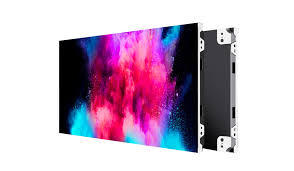
Pixel pitch refers to the distance between the centers of adjacent pixels and directly influences the display’s resolution and viewing distance. Smaller pixel pitch means more pixels per unit area, culminating in sharper images and finer details. For instance, a 1.25mm pitch LED screen houses significantly more pixels within the same surface area than a 2.5mm pitch screen, allowing for ultra-high-definition (UHD) content presentation free from visible pixelation even when viewed up close.
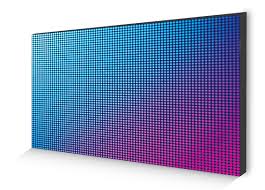
Technically, small pixel pitch LEDs are often SMD (Surface-Mount Device) types, utilizing tri-color diodes in compact arrangements to deliver vivid colors and high contrast ratios. Typical specifications for these displays include a brightness range of 800 to 1200 nits, ensuring clear visibility under typical indoor lighting, and a refresh rate of 1920Hz or higher to eliminate flicker during video playback, which is crucial for broadcast and live event applications.
Manufacturing and Technical Challenges
The production of small pixel pitch LED modules demands precision engineering and rigorous quality control. Tight tolerances are necessary to align pixels perfectly without dead spots or color inconsistencies. Advances in surface-mount technology and automated optical inspection (AOI) systems have improved yield rates and reliability.
Thermal management is another key consideration. Due to the dense arrangement of LEDs, heat dissipation is challenging yet essential to maintain performance and prolong lifespan. Manufacturers adopt materials with high thermal conductivity in circuit boards and integrate heat sinks or cooling fans in the cabinetry design. Industry standards such as IEC 62368-1 for safety requirements and IEC 60950-1 ensure reliability and user protection.
Applications Driving Market Growth
Small pixel pitch LED displays serve diverse sectors:
- Broadcast Studios: Offering accurate color reproduction and ultra-clear critical for live broadcasts.
- Control and Command Centers: Enabling operators to discern fine data details on large video walls.
- Corporate and Conference Rooms: Enhancing presentations with sharp text graphics for impactful communication.
- Retail and Advertising: Captivating consumers with high-definition promotional content at close viewing distances.
Case studies underline their effectiveness; for example, global news networks have upgraded to 1.2mm pitch LED walls, enhancing broadcast quality without needing traditional projection systems. Similarly, control rooms benefit from multi-screen layouts that maintain consistent brightness and minimal bezels for seamless imagery.
Future Trends and Innovations
Improvements in miniaturization, LED chip efficiency, and driver IC technology continue to push the envelope. Emerging micro-LED displays promise even smaller pixel pitches below 1mm with superior energy efficiency and color gamut.
Integration with AI-driven content management systems and advanced calibration tools enhances color uniformity and auto-adjusts brightness based on ambient light, improving user experience. Moreover, modular designs promote easier installation and maintenance, crucial for large-scale deployments.
Conclusion
Small pixel pitch LED displays represent a significant leap forward in display technology, merging technical sophistication with functional versatility. Their ability to deliver vibrant, sharp images in compact form factors has made them indispensable across multiple professional environments. As technological advances persist, these displays will further reshape how visual information is presented and consumed globally.
For professionals selecting LED solutions, understanding the interplay of pixel pitch, brightness, refresh rates, and thermal design is essential to ensure optimal performance tailored to specific application needs.













