

Commercial LED Displays: Technology, Applications, and Industry Insights
Commercial LED displays have become a pivotal technology in modern visual communication, offering unparalleled brightness, durability, and versatility across diverse industries. From retail environments and transportation hubs to advertising billboards and corporate settings, commercial LED displays provide dynamic, high-impact visuals that enhance engagement and information delivery.
Understanding Commercial LED Displays
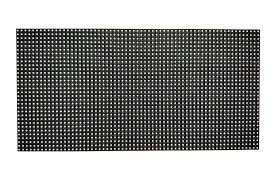
Commercial LED displays utilize Light Emitting Diodes (LEDs) arranged in matrices to produce vivid images and videos. The architecture involves both discrete LEDs and Surface-Mounted Device (SMD) technology, where multiple diodes—typically red, green, and blue—are combined per pixel for full-color output. The technological evolution has emphasized improvements in pixel pitch, brightness, color accuracy, and power efficiency.
Key technical parameters include:
- Pixel Pitch: This dimension, measured in millimeters (mm), defines the distance between the centers of adjacent pixels. A lower pixel pitch (e.g., 1.5 mm to 4 mm) is critical for close-up viewing scenarios like indoor retail displays, ensuring crisp and seamless images. Outdoor commercial displays typically feature larger pixel pitches (e.g., 6 mm to 20 mm) to balance viewing distance and cost.
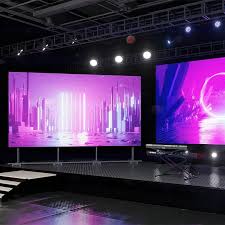
- Brightness: Commercial LED displays often deliver luminance levels ranging from 800 to over 10,000 nits (cd/m²), depending on the environment. Outdoor displays require higher brightness (typically >6,000 nits) to counteract direct sunlight and maintain visibility.
- Refresh Rate: High refresh rates (above 1920 Hz) prevent flickering and ghosting effects, which are essential for smooth video playback and optimal viewing comfort.
- Viewing Angle: Wide horizontal and vertical viewing angles (up to 160° or more) ensure that content remains visible from various directions, crucial for public spaces.
Applications and Industry Use Cases
1. Retail and Point of Sale: Indoor commercial LED displays create vibrant product advertisements and promotional content. The ability to update messaging remotely and dynamically makes LED displays integral to omnichannel retail strategies. Case studies from major retail brands demonstrate up to 30% increase in customer engagement through targeted LED campaigns.
2. Transportation and Public Information: Airports, train stations, and urban transit benefit from commercial LED displays for real-time arrival updates, wayfinding, and advertising. Durability and brightness ensure continuous operation in challenging environments.
3. Outdoor Advertising: Billboards and stadium perimeter displays leverage high-brightness commercial LED panels to command attention. Advanced weatherproofing (IP65 or higher rating) and robust structural designs ensure reliability under harsh conditions.
4. Corporate and Event Venues: Conference centers and trade shows use indoor large-format LED screens for presentations and branding, utilizing modular designs for scalability and easy installation.
Manufacturing and Materials
The production of high-quality commercial LED displays demands precision in component selection and assembly. Semiconductor-grade LEDs with low bin variance are essential to maintain uniform brightness and color consistency. Advanced PCB substrates with efficient thermal management, such as aluminum-backed boards, enhance longevity. Industry standards like IEC 62031 (LED modules for general lighting) outline safety and performance requirements, while UL 8750 governs LED lighting safety in the US.
The integration of control systems featuring FPGA-based processors and Ethernet communication protocols enables real-time content management and diagnostics. Software ecosystems comply with protocols like HDBaseT and DVI for seamless multimedia integration and synchronization across multiple displays.
Challenges and Future Trends
Despite their advantages, commercial LED displays face challenges including heat dissipation, power consumption, and initial capital expenditure. Innovations in mini-LED and micro-LED technologies promise further improvements in pixel density and energy efficiency, potentially revolutionizing the commercial display market.
Sustainability is also gaining focus, with manufacturers adopting lead-free soldering, recyclable materials, and energy-saving designs aligned with RoHS (Restriction of Hazardous Substances) and WEEE (Waste Electrical and Electronic Equipment) directives.
Conclusion
Commercial LED displays represent a mature, impactful technology essential for modern business communication. Their ability to deliver bright, adaptable, and durable visual experiences makes them indispensable across various sectors. By understanding technical specifications, industry applications, and technological trends, stakeholders can optimize their deployment strategies to achieve maximum ROI and competitive advantage.
For engineers, integrators, and business leaders, staying abreast of advancements and standards ensures the effective implementation and maintenance of commercial LED display solutions that meet evolving market demands.













