

Advanced Technologies and Quality Standards in LED LCD Screen Manufacturing
In the dynamic and highly competitive global market, LED LCD screens have become a cornerstone technology for a plethora of applications ranging from consumer electronics to industrial displays. As a professional LED display engineer with extensive experience, I will delve into the advanced manufacturing techniques, core technical parameters, and industry standards that define the state-of-the-art in LED LCD screen production. This in-depth analysis aims to provide insightful knowledge for engineers, manufacturers, and procurement professionals seeking excellence in LED LCD solutions.
Fundamental Components and Manufacturing Processes
LED LCD screen manufacturing is a complex process that integrates multiple layers of materials and technologies. The key components include the LED backlight, liquid crystal panel, driver ICs, polarizers, and protective glass layers. The LED backlight often employs surface-mounted device (SMD) LEDs or mini-LED arrays for enhanced brightness and uniformity, critical for high dynamic range (HDR) displays. According to industry benchmarks like the International Electrotechnical Commission (IEC) 60068-2 standards, these components are tested rigorously for environmental resilience such as temperature cycling and humidity resistance.
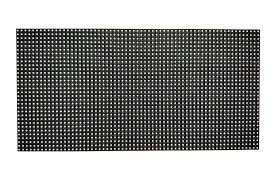
The assembly process combines advanced Clean Room environments (Class 100 or better) to prevent dust contamination which can degrade pixel accuracy and image quality. Automated optical inspection (AOI) and in-line electro-optical testing ensure high yield rates, often above 95% in cutting-edge manufacturing lines. Notably, the adoption of thin-film transistor (TFT) technology within LCD panels facilitates precise control over pixel switching speeds essential for high refresh rate applications up to 240Hz used in gaming and professional monitors.
Technical Parameters and Performance Metrics
When assessing LED LCD displays, critical technical parameters include luminance, contrast ratio, color gamut, response time, and viewing angle. Typical luminance values range from 300 cd/m² in consumer-grade devices to over 1,000 cd/m² on professional HDR monitors. Contrast ratios exceeding 1000:1 are standard, although improvements with local dimming and mini-LED backlight zones allow ratios beyond 5,000:1, offering deep blacks and vibrant color fidelity.
Color reproduction is frequently evaluated against standards like sRGB, Adobe RGB, and DCI-P3. High-end LED LCD screens achieve over 99% coverage of the DCI-P3 space, meeting the stringent demands of digital cinema and broadcast media. Response time, critical for reducing ghosting in fast-moving images, typically falls under 8 milliseconds gray-to-gray in mid-tier displays, with specialized models reaching as low as 1 ms using overdrive technologies.
Innovations in LED Backlighting Technology
The evolution from traditional edge-lit LED backlights to full-array local dimming (FALD) and mini-LED backlighting has revolutionized performance. Mini-LED technology, featuring thousands of tiny LEDs, enables finer control of backlight zones, reducing blooming effects and enhancing HDR performance. According to recent publications by the Society for Information Display (SID), mini-LED displays provide at least a 30% improvement in peak brightness and uniformity over conventional LEDs while maintaining power efficiency.
Moreover, quantum dot enhancements are frequently integrated to boost color accuracy and efficiency further. These nanocrystal layers convert LED emission to pure colors and increase light output without compromising lifetime or reliability. Implementations adhering to ANSI C78.377-2017 standards ensure consistent color temperatures typically around 6500K (D65), preferred for natural viewing experiences.
Quality Assurance and Reliability Testing
To guarantee long-term performance and reliability, LED LCD screens undergo extensive quality assurance protocols. These include accelerated aging tests, mechanical shock, and vibration assessments compliant with MIL-STD-810G standards, particularly for industrial and military applications. Moisture ingress protection is validated through IP66 or higher certification when intended for outdoor deployments.
Reliability data collected over millions of operational hours highlight that LED lifetime exceeds 50,000 hours at typical brightness levels, supported by robust thermal management solutions including copper heat spreaders and active cooling in extreme cases. Failure Mode and Effects Analysis (FMEA) is systematically employed during design and production phases to preemptively address potential defects or degradation mechanisms.
Global Market Trends and Environmental Considerations
The LED LCD display industry is also embracing sustainability practices. Manufacturers are optimizing materials to reduce rare earth and heavy metal usage, aligning products with RoHS (Restriction of Hazardous Substances) and WEEE (Waste Electrical and Electronic Equipment) directives. Additionally, energy efficiency is a top design parameter, with ENERGY STAR certifications guiding the industry towards greener displays.
The international demand for high-resolution 4K and 8K LED LCD panels is accelerating advancements in manufacturing precision, with pixel pitch shrinking below 0.5 mm for fine-pitch indoor led screens and below 1.2 mm for direct-view LED LCD modules. These technological strides ensure sharper images and more immersive viewing experiences.
Conclusion
Mastering LED LCD screen manufacturing requires a deep understanding of intricate technologies, stringent quality control standards, and forward-thinking innovation. With ongoing developments in mini-LED backlighting, TFT panel enhancements, and environmental sustainability, the industry continues to push the boundaries of visual performance. For companies invested in display technology, aligning with international standards while leveraging cutting-edge manufacturing techniques is indispensable to maintaining competitive advantage and delivering high-quality LED LCD products worldwide.













