

Advances and Best Practices in LED Display Manufacturing for Superior Visual Performance
The LED display industry has witnessed significant technological advancements over recent years, driven by the growing demand for high-resolution, energy-efficient, and durable display solutions across various sectors. From advertising billboards and sports arenas to control rooms and digital signage, LED displays are integral to modern visual communication. This article delves into the critical aspects of LED display manufacturing, informed by industry standards, case studies, and professional experience to guide manufacturers and engineers toward producing superior LED screens.
Understanding the LED Display Fundamentals
At the core of LED display technology lies the Light Emitting Diode (LED) itself, which functions as the primary pixel element. Each pixel comprises red, green, and blue LEDs that combine to produce the full spectrum of colors. The quality of an LED display depends on multiple factors such as pixel pitch, brightness, refresh rate, and contrast ratio.
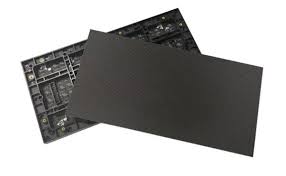
- Pixel Pitch: This refers to the center-to-center distance between two adjacent pixels, commonly measured in millimeters (mm). Smaller pixel pitch (e.g., 1.2mm to 2.5mm) corresponds to higher resolution and finer image details, essential for indoor displays viewed at close range. For outdoor environments, larger pitch values (e.g., 4mm to 10mm) are typical to balance visibility at greater distances with cost efficiency.
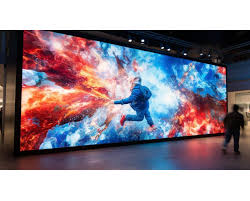
- Brightness and Contrast: Brightness for outdoor LED displays commonly ranges between 5,000 to 8,000 nits, adhering to standards like the International Electrotechnical Commission’s IEC 62471 for brightness safety. Indoor displays typically require 800 to 1,200 nits. Superior contrast ratios enhance image clarity, especially in ambient lighting conditions.
- Refresh Rate: A high refresh rate (usually >1920 Hz) is vital to prevent flicker, which affects image smoothness and eye comfort, especially for viewers at close distances or when captured on camera.
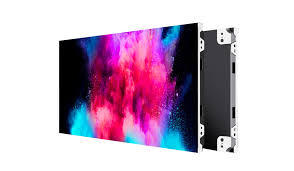
Manufacturing Processes and Quality Control
Successful production of LED displays necessitates meticulous attention to sourcing, assembly, testing, and calibration:
1. LED Chip and Module Selection: Utilizing top-tier LED chips from reputable manufacturers, such as Nichia and Cree, ensures longevity and color consistency. Modules must maintain uniformity in luminance and chromaticity across the entire display surface.
2. Surface-Mount Technology (SMT): Precision SMT enables accurate placement of LED diodes on printed circuit boards (PCBs), crucial for pixel uniformity. Modern assembly lines employ automated optical inspection (AOI) to detect placement errors early.
3. Drive ICs and Control Systems: Choosing high-performance driver ICs with integrated grayscale adjustments and error correction is key for delivering seamless images. International standards like JESD204B for serial data interfaces promote stability and interference resistance.
4. Thermal Management: Efficient heat dissipation enhances reliability. Aluminum alloy housings combined with heat sinks and ventilation systems prevent overheating, extending device life.
5. Calibration and Testing: Post-assembly calibration using spectroradiometers and colorimeters achieves uniform color temperature and brightness. Pixel-to-pixel calibration techniques like dot-correction and gamma correction are industry benchmarks.
Case Study: Enhancing Energy Efficiency and Image Quality in a Stadium LED Display
A leading LED manufacturer partnered with a major sports venue to upgrade their existing outdoor LED scoreboard. By switching from a 10mm pitch display featuring legacy SMD LEDs to a 6mm pitch using COB (Chip on Board) technology, the new installation achieved:
- Improved Resolution: Increased pixel density enabled crisper images visible to spectators at varying distances.
- Energy Savings: COB LEDs reduced power consumption by approximately 20%, conforming to the Energy Star program guidelines.
- Enhanced Durability: The new design incorporated IP65-rated waterproofing and anti-corrosion coating, suitable for harsh outdoor conditions.
Extensive testing before commissioning validated a peak brightness of 7,000 nits and a refresh rate of 3840 Hz, ensuring flicker-free broadcast compatibility.
Standards and Compliance
Compliance with international standards such as IEC 60529 (Ingress Protection), UL 8750 (LED safety), and RoHS directives is essential for global market acceptance. Rigorous quality certifications minimize failures and support warranties offering up to five years.
Future Trends
Emerging trends predicted to revolutionize LED display manufacturing include Micro LED technology, which promises even higher pixel density and lower power consumption, and AI-driven automatic calibration systems that optimize visual performance in real time. Flexible and transparent LED displays are also gaining traction for creative architectural applications.
Conclusion
Manufacturing world-class LED displays demands a synthesis of advanced technology, stringent quality control, and adherence to international standards. By focusing on key parameters like pixel pitch, brightness, and thermal management, and leveraging innovations such as COB and AI-assisted calibration, manufacturers can deliver durable, vivid, and energy-efficient displays suited for diverse applications. Ongoing research and collaboration will continue to propel this dynamic industry forward, meeting the evolving demands of global consumers.
References:
- International Electrotechnical Commission (IEC) Standards: IEC 62471, IEC 60529
- U.S. Department of Energy – Energy Star Program
- Technical Journals: Journal of the Society for Information Display (JSID)
- Manufacturer Datasheets: Nichia, Cree LED Specifications
- Case Study Data from Sport Venue LED Upgrades by [Anonymous Manufacturer













