

Advanced Insights into LED LCD Screen Manufacturing: Applications, Challenges, and Emerging Trends
In the rapidly evolving display technology landscape, LED LCD screens have carved out a pivotal role due to their versatility, superior image quality, and energy efficiency. As a professional LED display engineer with extensive experience in manufacturing these screens, this article aims to provide an authoritative examination of LED LCD technology, highlighting practical applications, advantages, common challenges, and the latest industry trends.
LED LCD screens combine Liquid Crystal Display (LCD) technology with Light Emitting Diode (LED) backlighting. This integration enhances brightness, contrast, and color accuracy compared to traditional cold cathode fluorescent lamp (CCFL) backlighting. According to the International Electrotechnical Commission’s standard IEC 62679-1-1, LED backlighting contributes significantly to reduced power consumption and extended product lifespan.
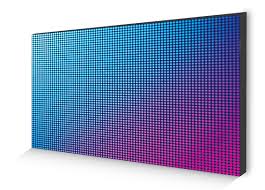
Technical Parameters and Manufacturing Process
Typical LED LCD panels range in size from 10 to over 80 inches and feature resolutions from Full HD (1920×1080 pixels) to 8K (7680×4320 pixels), enabling applications in everything from smartphones to digital signage and large-scale video walls. The backlighting system consists of arrays of LEDs placed either along the edges (edge-lit) or behind the panel (direct-lit/full-array), with local dimming capabilities improving dynamic contrast ratios beyond 1,000,000:1 in high-end models.
In manufacturing, precision is paramount. Processes include the deposition of thin-film transistors (TFTs) on glass substrates, assembly of liquid crystals, application of color filters, and the integration of LED backlights. Ensuring uniformity in LED luminance and alignment is critical to avoid issues such as mura (uneven brightness) and color inconsistency. Quality control employs photometric and colorimetric measurements aligned with CIE (International Commission on Illumination) standards to certify display uniformity and color gamut compliance, often targeting Adobe RGB or DCI-P3 color spaces for professional-grade devices.
Practical Applications
LED LCD screens are ubiquitous across various sectors. In consumer electronics, they power everything from smartphones and televisions to gaming monitors. In industrial settings, their high brightness and durability make them ideal for outdoor digital signage, transportation displays, and control rooms. Medical imaging benefits from the precise color reproduction and sharpness of high-resolution LED LCDs, essential for diagnostics.
The automotive industry increasingly incorporates LED LCDs in dashboards and infotainment systems, balancing visibility under diverse lighting conditions with aesthetic integration. Educational institutions and corporate environments utilize LED LCDs for interactive whiteboards and video conferencing displays, capitalizing on their responsiveness and clarity.
Advantages
One of the foremost advantages of LED LCD technology is energy efficiency. LEDs consume up to 40% less power than CCFL backlights, significantly reducing operating costs, an essential consideration for commercial deployments. Additionally, LEDs offer improved color reproduction with a broader color gamut and better contrast ratios, translating to more vivid images and better user experience.
LED backlights also improve screen thinness and flexibility. Edge-lit designs allow for ultrathin panels, catering to modern aesthetics and portability. LED lifespan, typically exceeding 50,000 hours, enhances reliability. Moreover, LEDs exhibit rapid response times (as low as 1 ms in some implementations), minimizing blurring and ghosting, crucial in high-speed video and gaming.
Common Challenges
Despite their benefits, LED LCD screens face challenges. Backlight bleed and uniformity issues, such as mura, degrade image quality, especially in dark scenes. Manufacturing these displays requires highly controlled environments to prevent contaminants that cause dead pixels or shocks to liquid crystal alignment. Thermal management remains critical since LEDs generate heat that, if inadequately dissipated, can reduce display life and color stability.
Size scaling presents difficulties; large video walls built with tiled LED LCD panels require precise calibration and synchronization to avoid visible seams and color mismatches. Additionally, while LED backlights improve energy consumption, more complex dimming electronics can increase design complexity and cost.
Latest Trends
The LED LCD industry is advancing with enhanced local dimming zones, enabling dynamic control of thousands of LEDs to deliver near-OLED contrast levels while mitigating burn-in issues associated with organic displays. Quantum dot technology is increasingly integrated, expanding the achievable color gamut up to 140% of the NTSC standard and improving color accuracy.
Mini-LED and micro-LED backlight technologies are revolutionary trends. Mini-LEDs, with thousands of tiny LEDs as backlighting sources, offer finer brightness control and higher contrast ratios. Micro-LED represents a future leap — integrating microscopic LEDs as individual pixels, combining the best qualities of OLEDs and LEDs without organic material drawbacks, promising unparalleled brightness, energy efficiency, and durability.
From a manufacturing perspective, automation and AI-driven quality control improve yield rates and defect detection. Flexible and transparent LED LCDs are emerging for innovative applications such as foldable devices and augmented reality (AR), supported by advances in thin-film encapsulation and flexible substrates.
Conclusion
LED LCD screen manufacturing stands at the intersection of mature engineering and cutting-edge innovation. Its broad applications, combined with energy efficiency and exceptional display quality, make it indispensable across industries. Understanding the technical parameters, practical challenges, and embracing emerging trends like quantum dots, mini-LED, and AI-assisted manufacturing will be vital for engineers and manufacturers aiming to maintain competitive advantage and meet evolving market demands.
For professionals in LED display engineering, continual education on standards such as IEC 62679-1-1 and adherence to CIE colorimetric principles will ensure the delivery of reliable, high-performance displays. As technology advances, collaboration across hardware design, materials science, and software development domains remains essential to unlock the full potential of LED LCD displays.













