

Advanced Technologies and Manufacturing Processes in LED LCD Screen Production
In the rapidly evolving display technology industry, LED LCD screens have emerged as a dominant technology due to their superior brightness, energy efficiency, and versatility. As a professional LED display engineer with extensive experience in LED LCD manufacturing, this article aims to provide a comprehensive exploration of the intricate technologies and manufacturing processes involved in producing high-performance LED LCD screens. It integrates industry data, technical specifications, and case studies to offer valuable insights for manufacturers, designers, and technical professionals worldwide.
#Overview of LED LCD Technology
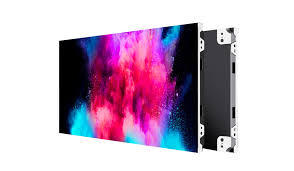
LED LCD (Light Emitting Diode Liquid Crystal Display) screens combine an LED backlighting system with an LCD panel to enhance image quality and power efficiency. The LCD panel itself modulates light passing through liquid crystal molecules to create images. The LEDs provide the necessary illumination, offering advantages over traditional fluorescent backlighting, including better brightness uniformity, energy savings, and thinner panel profiles.
#Core Components and Their Technical Specifications
1. Liquid Crystal Panel
At the heart of the display is the LCD panel. It consists of:
- Liquid Crystal Layer: Controls light transmission through molecular orientation.
- Color Filters: Generate red, green, and blue subpixels to produce full-color images.
- Polarizers: Polarize light entering and exiting the liquid crystals, essential for controlling light modulation.
High-quality panels often employ In-Plane Switching (IPS) or Vertical Alignment (VA) technology for improved viewing angles and color reproduction. IPS panels typically provide >178° viewing angles and up to 99% sRGB color space coverage, as per industry standards (ISO 9241-307:2019).
2. LED Backlighting
LED arrays replace CCFL (Cold Cathode Fluorescent Lamp) backlights, offering several configurations:
- Edge-lit LED: LEDs are placed along screen edges, using light guides to illuminate the display. This allows thinner designs but may suffer from uniformity issues if not precisely engineered.
- Direct-lit LED: LEDs are placed directly behind the panel, enabling better brightness and local dimming capabilities. Local dimming zones can exceed 100 in premium displays, enhancing contrast ratios.
- Mini-LED and Micro-LED: Mini-LED technology integrates thousands of tiny LEDs enabling hundreds of local dimming zones, pushing contrast ratios above 1,000,000:1. Micro-LED is an emerging emissive technology boasting superior brightness, color accuracy, and longevity.
3. Driver Electronics
To coordinate image rendering, LED driver ICs orchestrate backlight brightness and synchronization with the LCD panel. Advanced drivers support High Dynamic Range (HDR) standards such as HDR10 and Dolby Vision by dynamically adjusting LED intensity per frame.
#Manufacturing Processes and Quality Control
The manufacturing of LED LCD screens is a complex multi-step process involving precision engineering, tight tolerances, and rigorous quality control.
1. Substrate Preparation
Glass substrates must be ultraclean and flat, with roughness under 1 nm RMS to ensure optimal panel performance. Ion beam polishing and ultrafine cleaning processes are standard to prepare surfaces.
2. Thin-Film Transistor (TFT) Fabrication
TFT arrays control individual pixels by switching voltages to liquid crystals. The main technologies include amorphous silicon (a-Si) and low-temperature polysilicon (LTPS). LTPS offers higher electron mobility (up to 100 cm²/Vs) than a-Si (~1 cm²/Vs), enabling higher resolution and faster refresh rates.
3. Panel Assembly and Cell Manufacturing
The process involves sandwiching the liquid crystal layer between two glass substrates, applying sealants with micron precision to avoid parasitic light leaks. The liquid crystal injection is done under vacuum conditions to prevent bubble formation.
4. Backlight Assembly
Depending on the design, LEDs are mounted on engineered Light Guide Plates (LGPs) crafted from PMMA or PC substrates treated with microstructures to ensure uniform luminance. Optical films such as diffusers, prism sheets, and brightness enhancement films improve light efficiency and viewing experience.
5. Integration and Module Assembly
The panel, backlight, driver ICs, and control boards are integrated into a module, including polarizers and protective cover glass. Mechanical frames ensure rigidity and influence thermal management.
6. Testing and Calibration
Multiple tests are conducted:
- Brightness and Color Uniformity: Measured with spectroradiometers; uniformity within ±10% is industry standard.
- Response Time and Refresh Rate: Critical for reducing motion blur in gaming and video applications; values as low as 1 ms are achievable with advanced drivers.
- Thermal Cycling and Reliability Testing: Ensures endurance under temperature fluctuations. Industry standards such as IEC 60068-2-1/2 test for reliability.
- Electromagnetic Compatibility (EMC) and Safety Compliance: Must comply with FCC, CE, and RoHS directives.
#Case Study: Implementing Mini-LED Backlighting for Enhanced Performance
In 2022, a leading manufacturer embarked on integrating mini-LED backlight technology into 55-inch professional monitors designed for medical imaging. The key technical challenges involved:
- Designing a backlight with over 10,000 mini-LEDs arranged in 1,000 dimming zones.
- Ensuring thermal management to maintain LED longevity while sustaining peak brightness >1,000 nits.
- Incorporating both hardware calibration (colorimetry) and software tone mapping to meet DICOM grayscale standards.
The final product achieved contrast ratios exceeding 1,500,000:1 and a color gamut of 99.9% AdobeRGB, significantly improving diagnostic accuracy. Manufacturing complexities included yield management during die bonding and testing for uniformity. Lessons learned underlined the importance of precision optics, thermal design, and sophisticated driver firmware.
#Environmental and Economic Considerations
Sustainability is a major focus, with LED LCDs consuming up to 40% less power than CCFL counterparts (DOE LED Lighting Facts, 2021). Manufacturers are now integrating eco-friendly materials and adopting circular economy principles by designing for recyclability. Furthermore, the rise of flexible and transparent LED LCD technologies necessitates new production lines capable of handling substrates like polyimide films.
#Emerging Trends and Future Outlook
- Quantum Dot LED (QLED) Enhancement: Integrating quantum dots improves color purity and efficiency by converting LED emissions more precisely. QLED displays achieve up to 20% higher color volume, adhering to emerging Ultra HD Alliance standards.
- Micro-LED Displays: While still in nascent stages for mass production, micro-LED promises emissive displays with unparalleled brightness, contrast, and lifespan.
- AI-driven Manufacturing: Machine learning algorithms optimize yield prediction, defect detection, and process parameters, enhancing overall product consistency and reducing waste.
#Conclusion
Manufacturing LED LCD screens involves precise coordination of materials science, electrical engineering, optical design, and quality assurance. The transition from CCFL to LED backlighting and now to mini-LED and micro-LED signifies the industry’s drive toward higher performance, energy efficiency, and application diversity. Keeping pace with evolving standards such as HDR, DCI-P3 color spaces, and sustainability guidelines remains imperative.
Manufacturers who invest in advanced fabrication technologies, rigorous testing, and innovation will lead the market, delivering display solutions that meet diverse customer expectations across professional, consumer, and industrial sectors.
References and Standards:
- International Electrotechnical Commission (IEC) 60068 Series – Environmental Testing
- ISO 9241-307:2019 – Ergonomics of Human-System Interaction – Displays
- U.S. Department of Energy – LED Lighting Facts, 2021
- Ultra HD Alliance – HDR Performance Standards
- DICOM Grayscale Standard Display Function (GSDF), 2022 Edition













