

Comprehensive Guide to LED Display Manufacturing: Technical Insights and Industry Standards
The rapid evolution of LED display technology has revolutionized the visual communication industry, offering unparalleled brightness, color accuracy, and versatility. As a professional LED display engineer with extensive experience in LED and LCD screen manufacturing, this article provides an authoritative examination of the complete LED display manufacturing process, technical parameters, and industry standards. The goal is to equip stakeholders—from engineers to buyers—with critical knowledge based on industry expertise and case studies.
Introduction
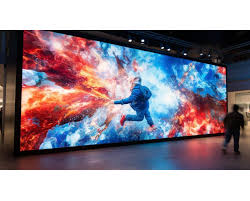
LED (Light Emitting Diode) displays have become the cornerstone of modern digital signage, video walls, and outdoor advertising solutions. Unlike traditional LCD screens, LED displays leverage semiconductor diodes to produce light directly, enabling superior brightness and energy efficiency. Understanding the manufacturing intricacies and technical specifications is essential for optimizing performance and durability.
Main Body
1. Overview of LED Display Types
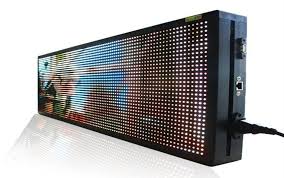
LED displays primarily fall into two categories: Direct View LED (DV-LED) and LED-backlit LCD. Direct View LEDs use diodes arranged in pixel matrices to emit light, eliminating the need for backlighting. This leads to extremely high contrast ratios, superior viewing angles (up to 160° horizontally and vertically), and pixel pitch variations ranging from 0.7mm for indoor fine-pitch displays to 20mm or higher for outdoor large-format displays.
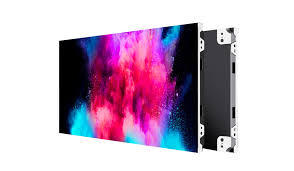
In contrast, LED-backlit LCDs incorporate LED light sources behind an LCD panel, balancing cost and performance, typically used for television or computer monitors. The focus here is on uniformity and color gamut, but they lag in brightness and viewing angles compared to DV-LED.
2. Key Technical Parameters in LED Manufacturing
- Pixel Pitch: Critical for image resolution and viewing distance. Micro-LED displays with pitches below 1mm cater to control rooms and broadcast studios, while 4-10mm pitches suit indoor advertising.
- Brightness: Measured in nits (cd/m²); typical indoor LED displays have brightness around 800-1200 nits, while outdoor models often exceed 5,000 nits for daylight visibility.
- Refresh Rate: Higher refresh rates (≥3840Hz) reduce flicker and motion blur, crucial for broadcast and high-definition applications.
- Color Accuracy and Bit Depth: True 16-bit processing enables smooth gradients and reduces color banding, enhancing image quality.
- Power Consumption: Efficient LED drivers and ICs reduce power draw; average consumption is roughly 200-300 W/m² for outdoor large panels.
- Thermal Management: Because LED modules generate heat, effective heat dissipation systems—heat sinks, thermal pads, and forced air cooling—extend lifespan (typically 50,000+ hours).
3. Manufacturing Process Summary
The fabrication of LED displays involves multiple stages: substrate preparation, chip mounting, wire bonding, encapsulation, testing, and calibration. Precision machinery places LEDs onto printed circuit boards (PCBs), followed by rigorous binning to maintain uniform brightness and color temperature.
Strict adherence to IPC-A-610 standards for electronic assemblies ensures solder quality and structural integrity. High Reliability testing (thermal cycling, moisture resistance) guarantees durability, especially for outdoor installations.
4. Quality Control and Industry Standards
International standards such as IEC 62368-1 (safety requirements for audiovisual equipment) and RoHS compliance (restriction of hazardous substances) govern LED manufacturing. Additionally, ISO 9001 certification processes are crucial to ensure consistent production quality.
Calibration involves advanced photometric equipment and software to adjust gamma, color temperature, and brightness uniformity across panels, enhancing visual coherence in multi-screen arrays.
5. Case Studies and Practical Applications
- At a major sports stadium in Europe, deploying a P3.9 outdoor LED display with a refresh rate of 3840Hz improved live broadcast quality and spectator experience during daylight.
- A control room installation used micro-LED panels with a 0.9mm pixel pitch to provide critical data visualization with zero flicker and high contrast. This deployment adhered to stringent EMC (Electromagnetic Compatibility) standards to avoid interference with sensitive equipment.
These examples illustrate how adherence to technical parameters and standards results in operational excellence.
Conclusion
Manufacturing LED displays requires a confluence of advanced technology, rigorous quality control, and adherence to global industry standards. Understanding pixel pitch, brightness levels, refresh rate, and calibration techniques is fundamental for delivering high-performance LED screens that meet users’ expectations across various applications. With continuous advancements in micro-LED and energy-efficient driver ICs, the LED display industry is poised for further innovations in image quality, durability, and sustainability.
For engineers and manufacturers, mastering these technical parameters and standards not only enhances product reliability but also strengthens market competitiveness within the dynamic global digital display sector.













