

Advances in LED Display Manufacturing: Enhancing Performance and Reliability through Industry Innovations
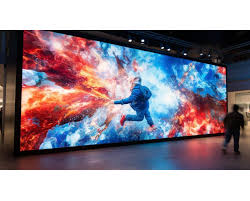
In the rapidly evolving landscape of digital displays, LED (Light Emitting Diode) technology has cemented its position as the preferred choice for diverse applications ranging from large outdoor billboards to intricate indoor screens. As an experienced LED display engineer with years of involvement in both manufacturing and R&D, I present a comprehensive overview of the critical technological advancements and manufacturing practices that ensure LED displays meet today's demanding standards.
LED display manufacturing is fundamentally influenced by the dual imperatives of performance and reliability. Achieving optimal brightness, color accuracy, and longevity requires a multi-faceted approach involving raw material selection, design architecture, assembly precision, and rigorous quality control.
Panel Design and Pixel Configuration
A vital starting point for any LED display is the pixel configuration. Contemporary LED panels employ SMD (Surface Mounted Device) packages due to their compactness and enhanced color consistency. The choice of pixel pitch—the distance between adjacent LED pixels—is a key parameter influencing resolution and viewing distance. For example, a pixel pitch of 1.2 mm is typical for indoor HD displays, whereas outdoor installations generally prefer 10 mm or greater to balance cost and visibility at long distances. Industry standards such as those outlined by the International Electrotechnical Commission (IEC 62717) provide guidelines on luminance and color performance, ensuring displays deliver consistent output.
Materials and LED Chip Selection
The quality and type of LED chips significantly impact display brightness and lifespan. High-intensity InGaN (Indium Gallium Nitride) LEDs are favored for blue and green elements due to their high luminous efficiency and thermal stability, while AlGaInP LEDs serve red pixels effectively. In recent years, developments in mini-LED and micro-LED technologies have offered higher pixel densities and improved contrast ratios, albeit at increased manufacturing complexity and cost.
Thermal Management
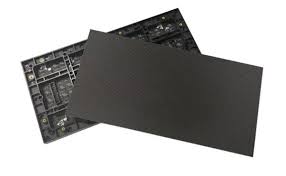
Efficient heat dissipation is critical to maintaining LED performance and extending service life. LED brightness degrades exponentially with temperature increases; hence, precise thermal management solutions such as aluminum heat sinks, active cooling systems, and thermally conductive polymers are integrated during module assembly. According to JEDEC standards (e.g., JESD51 series), thermal design must maintain the LED junction temperature typically below 85°C to ensure longevity.
Manufacturing Precision and Quality Control
The assembly process involves precise placement of LEDs on PCBs (Printed Circuit Boards) using automated pick-and-place machines with micron-level accuracy. Reflow soldering is conducted under carefully controlled atmospheres to prevent oxidation, ensuring electrical integrity. Post-assembly, comprehensive testing including photometric measurement, electrical stress testing, and environmental simulation (such as humidity and vibration tests) is carried out. These tests align with industry standards like MIL-STD-810 for environmental durability and UL certification for safety.
Calibration and Color Uniformity
Achieving uniform color reproduction across large displays is a complex challenge due to variations in LED output and aging. Advanced calibration methods involve both hardware and software solutions. On the hardware side, integrated photodiodes can measure light output for real-time adjustments. Software algorithms then correct color and brightness variations, leveraging gamma correction and color lookup tables. This process is essential to maintain consistent image quality, particularly in video wall applications.
Emerging Trends: Mini-LED and Micro-LED Displays
Cutting-edge research focuses on mini-LED and micro-LED technologies that offer superior contrast ratios, faster response times, and broader color gamuts compared to traditional LED panels. Mini-LED backlighting, used in high-end LCD TVs, combines thousands of small LEDs for localized dimming, dramatically enhancing image depth. Micro-LED displays, consisting of microscopic diodes directly responsible for individual pixels, promise self-emissive displays without the burn-in drawbacks of OLED. However, mass production challenges such as precise assembly and yield rates remain significant hurdles.
Sustainability and Energy Efficiency
Energy consumption is a growing concern in LED display manufacturing. Innovations in driver ICs (Integrated Circuits) and power supply design contribute to lower power dissipation, while advances in LED materials enable higher luminous efficacy. Environmentally, manufacturers are adopting lead-free solder and recyclable packaging, complying with directives like RoHS (Restriction of Hazardous Substances) and WEEE (Waste Electrical and Electronic Equipment).
In conclusion, the LED display manufacturing industry has made remarkable progress by integrating high-precision engineering with advanced materials science. Through adherence to rigorous quality standards and continuous innovation, current LED displays deliver exceptional image quality, durability, and energy efficiency. These improvements enable a broad spectrum of applications in advertising, transportation, sports, and entertainment, meeting the expectations of a global and discerning user base.
For professionals seeking to deepen their mastery of LED display technology, engagement with standards bodies, participation in industry consortia such as the DisplayHDR Alliance, and ongoing collaboration with component suppliers are essential. These strategies ensure that products are not only cutting-edge but reliable and scalable across global markets.













