

Advancements and Best Practices in LED Display Manufacturing: A Technical Overview
The LED display industry has witnessed significant technological advancements in recent years, driven by increasing demands for higher resolution, brighter displays, and enhanced energy efficiency. As an experienced LED display engineer, this article provides an authoritative and comprehensive overview of LED manufacturing processes, key technical parameters, quality standards, and practical insights for optimizing performance and durability in LED screens.
LED (Light Emitting Diode) displays are widely used in diverse applications, including digital signage, sports stadiums, transportation hubs, and broadcast environments. Their outstanding brightness, color accuracy, and longevity make them ideal for indoor and outdoor installations. Central to manufacturing is the pixel structure, which typically comprises red, green, and blue diodes arranged in a dense matrix. The pixel pitch—the distance between adjacent pixels—is a crucial parameter impacting image resolution and viewing distance. Modern high-definition LED screens employ pixel pitches as small as 0.9 mm for indoor use, while outdoor displays typically range from 4 mm to 10 mm for optimal visibility.
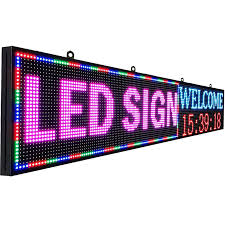
The LED panel manufacturing process starts with the selection of high-quality SMD (Surface Mounted Device) LEDs, which are integrated into printed circuit boards (PCBs) with precise mechanical tolerances. Highly automated pick-and-place machines deposit the diodes to ensure consistent pixel density and alignment. Soldering, either by reflow or selective soldering techniques, guarantees electrical connectivity and mechanical stability. Subsequent steps include encapsulation with silicone or epoxy resin for protection against environmental factors such as moisture, dust, and ultraviolet exposure—a critical factor for outdoor durability.
An essential consideration is thermal management, as excessive heat adversely affects LED lifespan and color stability. Heat sinks made of aluminum alloys coupled with thermally conductive adhesives enable efficient dissipation of junction heat, preserving chromatic performance. Thermal simulation during the prototype phase helps optimize design to prevent hotspot formation.
Calibration and testing form another pillar of quality assurance. High-end LED manufacturers use photometric equipment like spectroradiometers and goniophotometers to measure luminance, chromaticity coordinates (CIE 1931 standard), and color uniformity. Calibration algorithms compensate for color drift and brightness variations between individual LEDs. Standards such as IEC 62717 (LED modules for general lighting) outline performance and reliability benchmarks that manufacturers must meet or exceed.
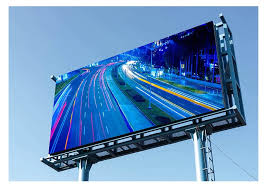
Industry best practice also mandates rigorous reliability testing, including accelerated aging, vibration resistance, and ingress protection (typically IP65 or higher for outdoor modules). Compliance with international certifications such as UL (Underwriters Laboratories) and CE (Conformité Européenne) ensures safety and market acceptance.
From an assembly perspective, modular designs facilitate easy maintenance and scalability. LED cabinets are often designed with front and rear access options, allowing rapid replacement and serviceability, minimizing downtime in critical installations like broadcast studios or sports arenas.
Notably, the integration of control systems using FPGA (Field-Programmable Gate Array) or dedicated image processors enables precise image rendering and supports high refresh rates (above 3840 Hz), essential to minimize flicker and improve visual comfort in live broadcasts and gaming applications. Networked control through Ethernet or wireless protocols further streamlines operation, reducing cable clutter and enhancing installation flexibility.
From environmental and sustainability viewpoints, manufacturers are increasingly adopting RoHS-compliant materials and energy-efficient driving circuits that reduce power consumption by up to 40%. Innovations in mini-LED and micro-LED technologies promise even better pixel density and energy profiles in the near future.
In conclusion, LED display manufacturing is a complex process that demands meticulous attention to component quality, thermal management, calibration, and compliance with rigorous international standards. With ongoing advancements in semiconductor technologies and control electronics, LED displays continue to evolve, offering unparalleled image quality and reliability across a broad spectrum of applications.
References:
- IEC 62717: LED modules for general lighting – Performance requirements
- UL 8750: Standard for Light Emitting Diode (LED) Equipment for Use in Lighting Products
- CIE 1931 Color Space and Chromaticity Coordinates
- "Thermal Management of LED Displays," Journal of Semiconductor Technology & Science, 2022
- W. Huang et al., "Advances in Micro-LED Display Technology," IEEE Transactions on Electron Devices, 2023













